Sep17

Enterprise value is not an something abstract. It is a financial structure built from measurable components, and each of those components is influenced, directly or indirectly, by the way an organization manages its contracts (yup they are indeed). This article develops a line of thought that contract management is not an operational back office function but a strategic discipline that shapes corporate valuation, reduces risk premia applied by capital providers, and strengthens the narrative that publicly listed companies and private firms alike present to financiers, acquirers, and capital markets. The argument proceeds from the mechanics of valuation to the signals that private equity and venture capital already read, and closes with the proposition that large listed companies will inevitably follow the same trajectory.
Corporate valuation rests on a combination of earnings, growth expectations, and risk assessment. The most widely used proxy for operational earnings is EBITDA, (earnings before interest, taxes, depreciation, and amortization). EBITDA captures the cash generating capacity of the core business before capital structure and accounting conventions distort the picture. When analysts and investors apply a multiple to EBITDA, that multiple reflects expectations about future sales growth, organizational soundness, competitive positioning, and the quality of commitments the company has secured on the buying side. Each of these elements is a contractual matter.
Future sales are not forecasts drawn from hope or loose expectations or nice make believe stories. They are anchored in committed revenue, framework agreements, master service agreements, and multi year supply contracts. The strength and visibility of those commitments determine how much weight a valuation model assigns to forward revenue. Organizational soundness, the second factor, is partly a function of how well the company governs its supplier relationships, manages performance obligations, and controls the risk of disruption in its delivery chain. A company that can demonstrate structured oversight of its contractual ecosystem presents a lower operational risk profile, which supports a higher multiple. On the buying side, the commitments a company has made, its purchase obligations, volume guarantees, penalty clauses, and termination exposures, define the contingent liabilities that sit beneath the income statement. These commitments are not footnotes. They are balance sheet realities that sophisticated evaluators factor into their assessment of cash flow stability and downside risk.
Contract management is the discipline that governs all of these inputs across the total enterprise. It is the structured process through which an organization creates, executes, monitors, and closes its contractual commitments. When contract management is performed with rigor, the organization produces cleaner earnings visibility, stronger supplier governance, and a defensible position on obligation exposure. When it is neglected, the same components degrade. Revenue forecasts lose their anchor, supplier risk accumulates silently, and contingent liabilities remain unquantified until they materialize as financial shocks. The connection between contract management and enterprise value is therefore not theoretical. It is structural.
The phrase "in control" carries specific weight in corporate finance. It is not a general assertion of competence; it is more. It is a demonstrable state that financiers, acquirers, and regulators expect to see evidence of before they commit capital. When a company prepares for a merger or acquisition, attracts banking facilities, or issues debt instruments, the due diligence process examines whether the organization understands and controls its commercial ecosystem. That ecosystem is composed of contracts: supplier agreements, customer commitments, partnership arrangements, intellectual property licenses, non disclosure obligations, service level agreements, and the web of mutual expectations that bind the company to its external parties.
A due diligence team that finds a well maintained contract portfolio, with clear ownership, tracked obligations, documented performance history, and a process for managing renewals and exits, concludes that the organization is in control. A due diligence team that finds scattered documents, untracked commitments, unmanaged renewals, and no central view of obligation exposure concludes the opposite. The difference between these two findings translates directly into valuation adjustments. Acquirers apply discounts for unquantified risk. Banks price uncertainty into their cost of capital. Debt investors demand higher coupons when they cannot see the full picture of contingent obligations. In every case, the absence of contract management discipline imposes a financial penalty that may not appear on any single line item but is embedded in the multiple, the rate, or the covenant package.
Being in control of the ecosystem means something more specific than having contracts filed in a repository. It means that the organization can answer, at any moment, what it has committed to, what has been committed to it, what performance is expected, what exposure exists if those expectations are not met, and what the financial impact of termination or breach would be. This level of visibility requires a process, not a software tool. Tools support the process, but the process itself is a management discipline, and it is the discipline that financiers evaluate. Contract management, understood in this way, is the operational expression of being in control.
Private equity firms and venture capital investors have developed a more refined understanding of contractual ecosystems than most other capital providers. Their business model depends on acquiring companies, improving their performance, and exiting at a higher valuation, which means they have a direct financial incentive to identify value drivers that others overlook. Over the past decade, leading private equity firms have begun to assess contract portfolios, obligation exposure, and supplier risk as integral parts of their due diligence and post acquisition portfolio management.
The rationale is straightforward. A private equity firm that acquires a company with a fragmented contract landscape inherits hidden risk: untracked renewal dates that may trigger automatic price escalations, supplier agreements with unfavorable termination terms that complicate cost reduction programs, and customer contracts with performance clauses that may not survive operational restructuring. These risks are not visible in the financial statements alone. They live in the contracts, and they become visible only when someone reads, structures, and analyzes the contractual portfolio. Private equity firms that invest in contract management capability, either within their portfolio companies or through specialized partners, capture value that less disciplined buyers leave on the table. They reduce the risk discount applied at acquisition, they identify cost optimization opportunities embedded in supplier terms, and they present a cleaner, more defensible narrative at exit.
Venture capital firms, particularly those investing in later stage companies approaching profitability, apply a similar logic. A scaling company that can demonstrate disciplined contract management presents a lower operational risk profile to subsequent investors. Its revenue base is anchored in visible commitments rather than transactional churn. Its supplier dependencies are documented and managed. Its exposure to contractual disputes is minimized. Each of these factors supports a higher valuation at the next funding round. The venture capital community has not yet institutionalized contract management assessment to the same degree as private equity, but the trajectory is clear. Capital providers at every stage are learning that the contractual ecosystem is a value driver, not an administrative footnote.
What private equity and venture capital firms recognize today, large listed companies will recognize tomorrow. This is not a mere expectation of me. It is the pattern that capital markets follow. Sophisticated private investors identify value drivers early, build them into their acquisition and portfolio management processes, and demonstrate through their returns that these drivers matter. Public market investors, analysts, and corporate boards observe those returns, absorb the lesson, and gradually adjust their own evaluation frameworks. The lag between private market recognition and public market adoption has shortened consistently over the past two decades, driven by the increasing availability of information, the professionalization of investor relations, and the growing demand for transparency in non financial reporting.
The implication for contract management is direct. It is only a question of time before large listed companies understand that being in control of their ecosystem through structured contract management is a shareholder value strategy. The components of that strategy are already visible. Contract management improves EBITDA by reducing the cost of supplier disputes, capturing savings committed in negotiation, and preventing the revenue leakage that follows from unmanaged performance obligations. It reduces the risk discount applied by investors by providing visibility into contingent liabilities and demonstrating that the organization governs its commercial relationships with discipline. It strengthens the narrative that companies present to capital markets by transforming a fragmented set of commercial arrangements into a coherent, defensible portfolio of managed commitments.
Companies that reach this understanding first will enjoy a structural advantage. They will present cleaner financials, stronger governance narratives, and lower risk profiles to investors who are increasingly demanding transparency on operational and commercial risk. They will be better positioned for acquisitions, better positioned for debt issuance, and better positioned for the kind of strategic transactions that depend on demonstrating control. Companies that delay this understanding will continue to treat contract management as administration, and they will continue to pay for that treatment in the form of higher risk premia, lower multiples, and weaker positioning in capital markets.
The case is straightforward. Contract management is so much more than what people think it is. It is not filing. It is not repository management. It is not the administrative tail of procurement or legal. It is a strategic discipline that shapes the financial architecture of the enterprise, influences the components of valuation, and determines whether an organization can credibly claim to be in control of its commercial ecosystem. Private equity and venture capital firms have already recognized this. Public markets will follow. The organizations that act on this understanding now, by investing in contract management capability, process, and discipline, will build a foundation for shareholder value that their competitors will spend years trying to replicate.
At CATS CM, we have practiced and taught post award contract management as a structured discipline since two thousand and two. The methodology is sector agnostic because the process of managing contracts is uniform: the focus differs by sector, but the process does not. Whether the context is public transport, financial services, technology, or healthcare, the contractual ecosystem follows the same logic, and its management produces the same financial effects. The opportunity for organizations is to stop thinking of contract management as a cost center and start treating it as what the financial evidence shows it to be: a lever for shareholder value creation, a reducer of risk discounts in valuation, and a cornerstone of the governance narrative that capital providers increasingly demand.
The question for boards and executive teams is no longer whether contract management matters. The evidence from private markets has answered that. The question is whether the organization will move before its competitors do, or after.
Keywords: Economics, Ecosystems, Mergers and Acquisitions
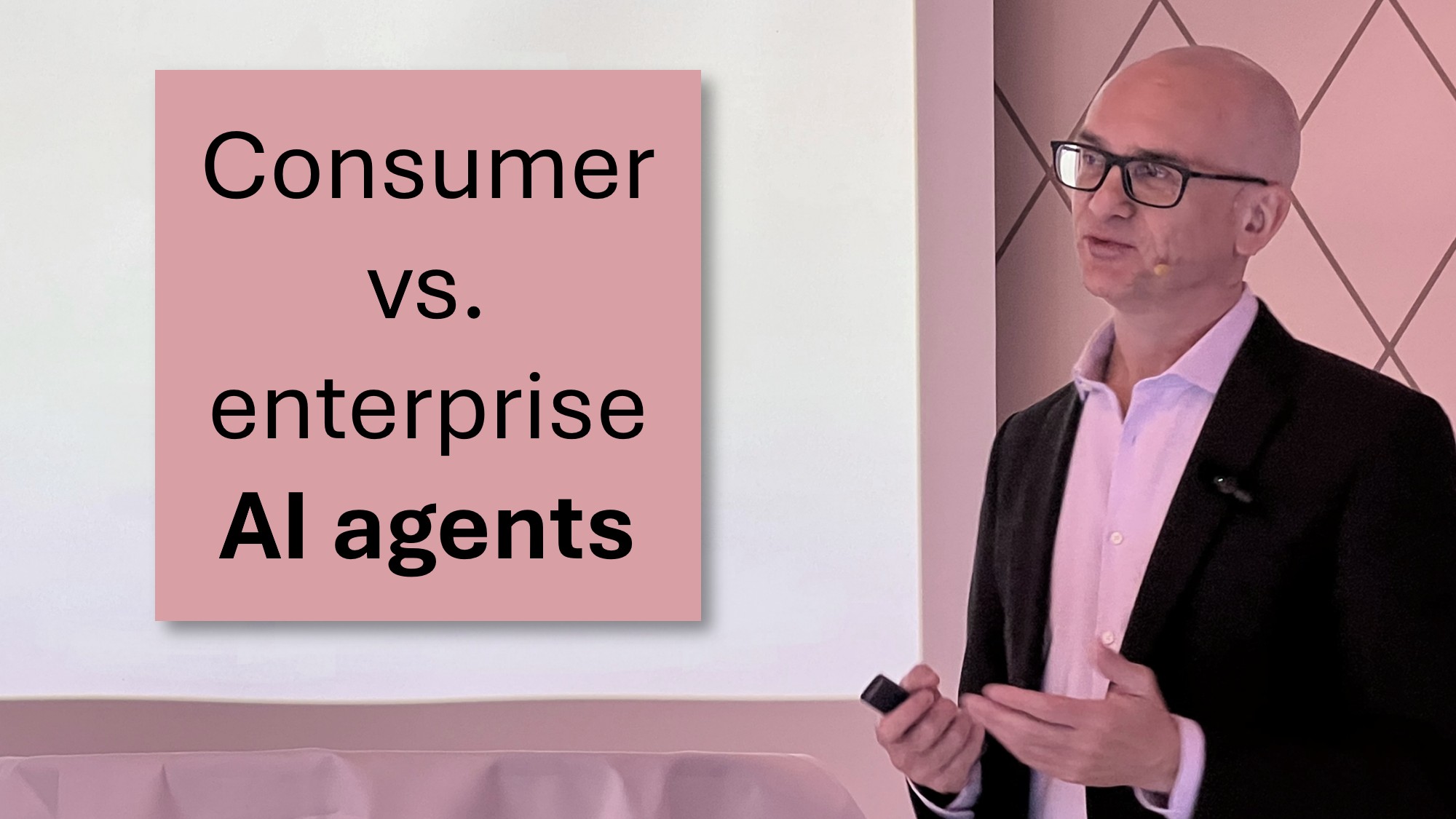 Consumer vs. enterprise AI agents
 Best Supply Chain AI Tools in 2026: SCM SENSEI AI and Ask Lora Compared
 Making Silos Permeable
 The Corix Partners Friday Reading List - October 2, 2026
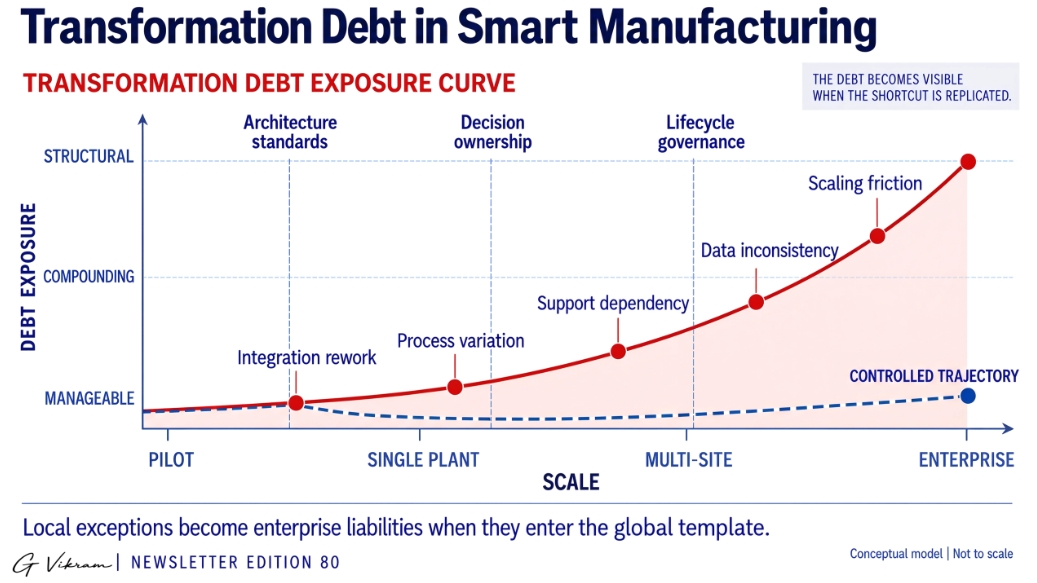 The most dangerous debt in a smart factory isn’t financial.