Jan02

How do we raise—and lead—people who thrive in uncertainty? Let them wander.
In this personal essay, marketing executive and AI strategist Stephanie Unterweger reflects on a year when her family stopped consuming and started creating. What emerged was a household workshop of experimentation: 3D printing managed by a ten-year-old project manager, luxury perfumes reverse-engineered with AI, a secret YouTube content empire, Roblox games in perpetual beta, a children's book stuck in illustration purgatory, and an app that accidentally infringed on Deloitte's intellectual property (lesson learned).
It's chaotic. It's messy. And it might be the most valuable education her kids have ever received.
After watching her daughter burn out from competitive swimming before age twelve—a casualty of early specialization—Unterweger made a different choice: prioritize curiosity over mastery, exploration over expertise. The result? Kids who teach themselves video editing, problem-solve through failure, and iterate without fear. In other words, exactly the capabilities businesses struggle to cultivate in their own talent.
This essay sits at the intersection of creativity, innovation, and education. It challenges the conventional wisdom that focus and specialization are the fastest paths to success—for children or for organizations. Instead, it makes a case for wandering: the kind of unstructured experimentation that builds adaptability, creative confidence, and the courage to be bad at something long enough to get better.
For leaders navigating a world that demands constant reskilling and creative problem-solving, the lessons here extend far beyond parenting. Innovation doesn't start with strategy decks—it starts with permission. Permission to try, to fail, to build things you have no business building, and to learn out loud.
A funny, heartfelt, and surprisingly relevant read for anyone thinking about how we develop people who can thrive in uncertainty—at home, at work, or anywhere the future demands reinvention.
Keywords: Creativity, Future of Work, Innovation
 You are not your diagnosis
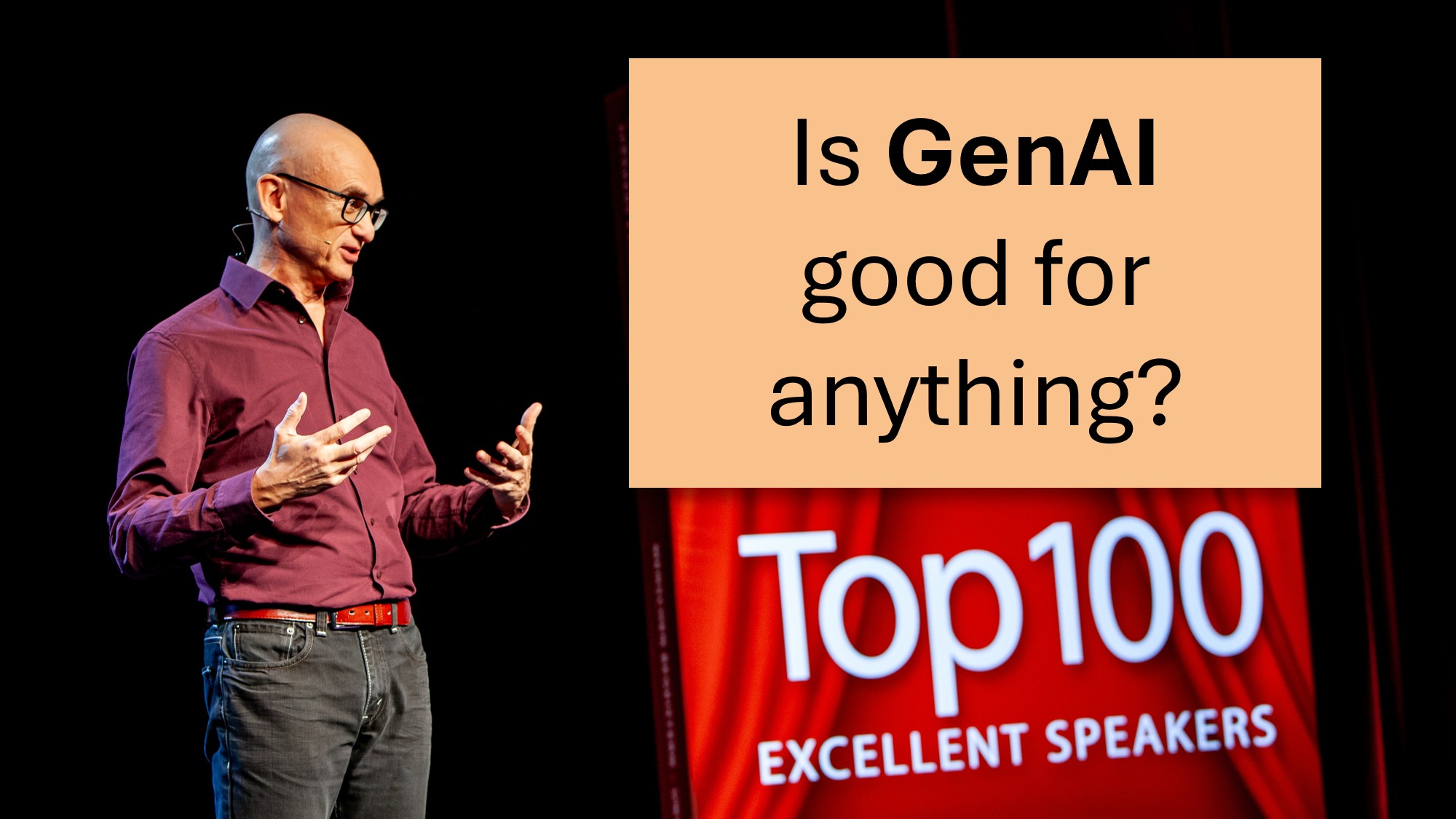 Is GenAI good for anything?
 “I didn’t write an award acceptance speech because I didn’t expect to win.”
 AI Is Exposing the Data Problems Humans Used to Hide
 "The AI may in fact be conscious." Really?