May12

Most organizations say they want empowered leaders. Fewer are willing to build the kind of environment where empowerment is actually possible.
That distinction matters more than most CEOs realize.
Because if your leadership team cannot operate without the constant guidance, approval, or intervention of the COO or CEO, you do not truly have successors in place. You have highly dependent operators with impressive titles (that you gave them).
And eventually, that becomes a serious business risk.
One of the most common things I see in succession planning is organizations mistaking proximity to leadership for leadership readiness. Someone attends executive meetings. They manage a department. They’ve worked alongside the founder or COO for years. They are trusted, loyal, and experienced.
But the real test is much simpler:
Can they lead effectively when the senior executive is on vacation? Or do they check in every day (or more)?
Can they make sound decisions without seeking reassurance every step of the way? Can they navigate ambiguity, resolve conflict, prioritize competing pressures, and move the business forward without seeking “permission?”
If not, they are not functioning as successors yet.
This is where many succession efforts quietly break down. Companies focus heavily on identifying “high potentials,” but far less attention is given to operational empowerment. Leaders are often told they are being developed while still operating inside systems that require constant escalation and approval.
That’s the difference between chaperoning a date and letting your kid go on a date alone. Do you trust them to make good decisions or not?
Empowerment is not a motivational slogan or leadership philosophy. People are either leading their function or they’re not.
Here’s a litmus test: Are leadership meetings collaborative decision-making forums or simply status updates for the CEO?
Is trust and authority truly distributed throughout the organization—or is it quietly pulled back to the top whenever stakes feel high?
Many founders and senior executives unintentionally create dependency because they built the business by being the answer to everything. That behavior often is needed during growth phases when fast decisions, strong instincts, and tight control are critical to success. But as the organization continues to grow, authority needs to be distributed and trusted or the growth stalls.
People stop taking initiative when they know decisions will eventually move upward anyway.
When the day comes that the owner wants to step back, retire, sell the company, or reduce operational involvement—they suddenly discover the business cannot function without them.
Not because there is a lack of talent.
Because there is a lack of operational independence.
Strong succession planning requires intentionally creating space for leaders to lead before the transition occurs. That means giving future successors meaningful authority, cross-functional exposure, ownership of important initiatives, and room to make decisions with real consequences attached.
It also requires senior executives to tolerate discomfort (it’s just like when your kid goes on a date alone).
Empowerment feels slower, messier, and riskier in the short term. But it is the only way leadership capability actually develops.
If every critical decision still funnels through one or two people, you have a staff, not a succession plan.
Keywords: Entrepreneurship, HR, Leadership
 Best Supply Chain AI Tools in 2026: SCM SENSEI AI and Ask Lora Compared
 Making Silos Permeable
 The Corix Partners Friday Reading List - October 2, 2026
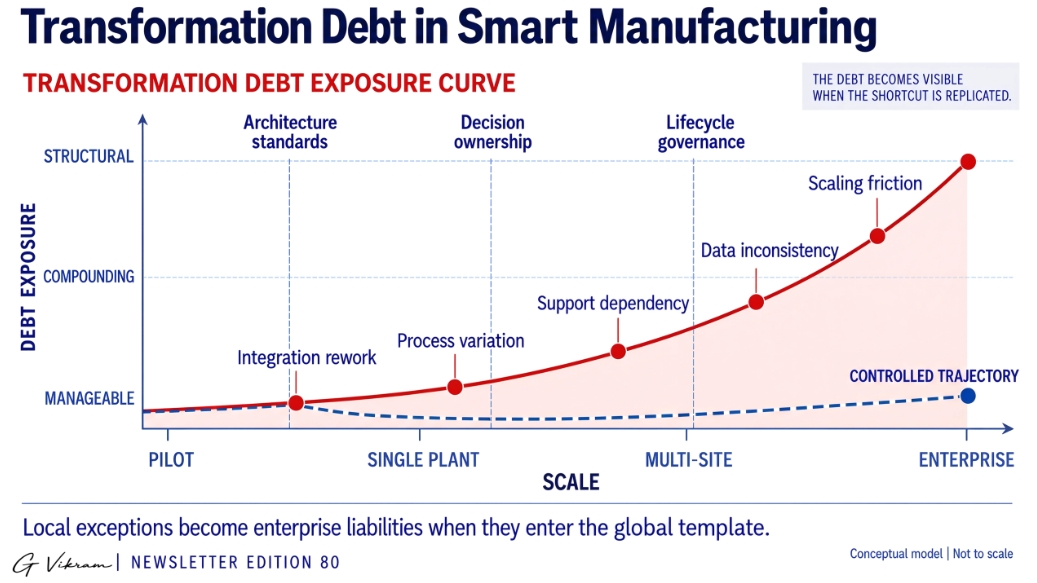 The most dangerous debt in a smart factory isn’t financial.
 Why mission changes everything, leadership lessons from two boardrooms