Jun12
Sponsored by NewsCatcher
AI systems are often described as being powered by data. But in many real-world projects, the biggest challenge is not training a model or choosing an architecture. It is finding the right data in the first place.
For common use cases, public datasets are easy to find. Researchers can download benchmark collections, businesses can purchase industry reports, and developers can access thousands of open-source datasets. The problem appears when teams need information that has never been organized into a dataset before.
Imagine a company wants to analyze every pharmaceutical merger announced in a specific year. Or perhaps an investment team needs a complete record of factory shutdowns across several countries. A cybersecurity group might want to monitor every publicly reported data breach affecting a particular industry.
In most cases, these datasets simply do not exist.
As AI adoption expands into research, compliance, intelligence, and automation workflows, more organizations are discovering that valuable insights often require creating entirely new datasets from the web itself.
Why Are So Many Valuable Datasets Missing?
The internet contains an enormous amount of information, but most of it is stored as unstructured content.
News articles, blog posts, press releases, government announcements, industry reports, and corporate updates are written for humans, not machines. Information about important events may exist online, but it is scattered across thousands of websites and presented in different formats.
This creates a major challenge for AI teams.
A machine learning model cannot easily learn from thousands of unrelated articles. Analysts cannot efficiently review millions of web pages manually. And traditional search engines were never designed to generate structured datasets.
Instead, they were designed to help users find a few relevant pages.
That distinction matters.
If your goal is to answer a question, finding the top results may be enough. If your goal is to build a complete dataset, missing information becomes a serious problem.
How Do AI Teams Find Information That Isn't Already Structured?
Many organizations begin with web search.
The traditional workflow looks simple:
This approach works for small projects but quickly breaks down at scale.
For example, imagine a research team wants to identify all warehouse fires reported in Europe during a specific quarter. Searching manually might uncover dozens of examples, but there is no guarantee that the search results contain every relevant incident.
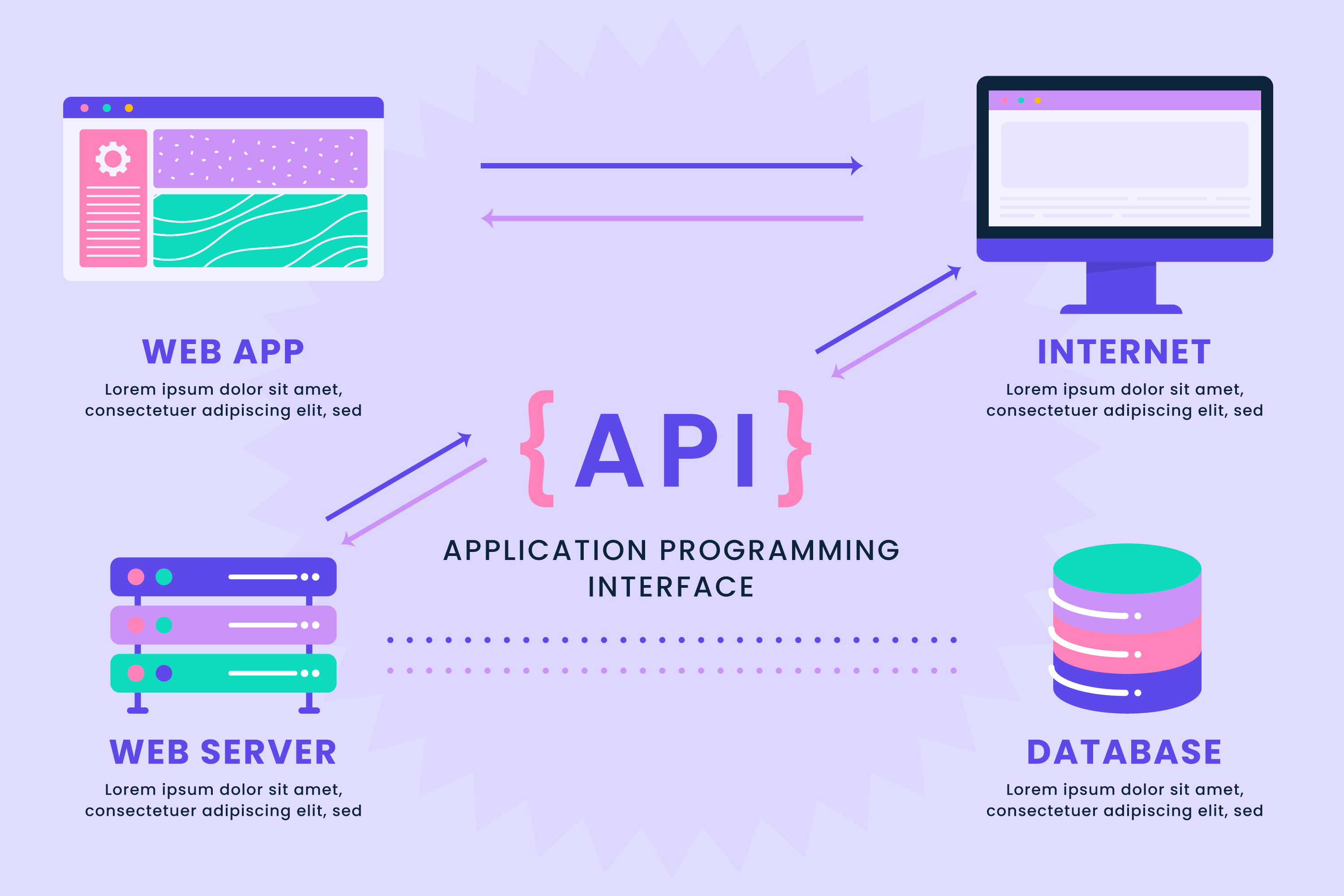
This is why modern AI teams increasingly rely on coverage-focused search systems such as Catchall web search api to discover information beyond the handful of pages typically surfaced through conventional search experiences.
Rather than prioritizing only the highest-ranked results, recall-focused systems attempt to maximize coverage across the web and return structured information that can later be transformed into datasets.
Why Is Recall More Important Than Ranking?
When building datasets, the objective changes.
Most search engines optimize for precision. They want the first page of results to be highly relevant.
Dataset creation often requires something different: recall.
Recall measures how completely a system finds relevant information. High recall means fewer missed records. Low recall means important events may never be discovered.
Consider an investment team tracking startup acquisitions.
Missing one acquisition might not seem significant. Missing fifty acquisitions could completely distort market analysis.
Similarly, a supply chain monitoring system that overlooks factory closures or transportation disruptions can produce misleading risk assessments.
This is why AI teams increasingly focus on collecting as many relevant records as possible before filtering and analyzing them.
The cost of missing information is often much higher than the cost of reviewing additional information.
How Are Raw Search Results Turned Into Datasets?
Finding information is only the first step.
The real value emerges when unstructured content is converted into structured records.
Modern AI workflows generally follow several stages:
Stage 1: Data Discovery
Relevant articles, reports, announcements, and documents are identified across multiple sources.
The objective is broad coverage rather than a small collection of highly ranked pages.
Stage 2: Information Extraction
AI systems analyze content and identify specific facts.
For example:
Instead of storing entire articles, teams extract the information that matters.
Stage 3: Record Standardization
Data from different sources rarely follows consistent formats.
One article may refer to a company by its full legal name. Another may use an abbreviation.
AI pipelines normalize these differences so records can be compared and analyzed consistently.
Stage 4: Validation
Duplicate entries, inconsistencies, and obvious errors are identified and removed.
This step is especially important when combining information from hundreds or thousands of sources.
Stage 5: Dataset Generation
The final result is a structured dataset that never previously existed.
What began as scattered web content becomes a searchable collection of records suitable for machine learning, analytics, dashboards, or monitoring systems.
What Types of Custom Datasets Are Organizations Building?
The number of possible use cases is growing rapidly.
Investment Intelligence
Investment firms build datasets covering:
These records can help identify trends before they become widely recognized.
Supply Chain Monitoring
Operations teams track:
Instead of reacting after problems occur, organizations gain earlier visibility into emerging risks.
Regulatory Intelligence
Compliance departments create datasets covering:
Automated monitoring helps organizations stay informed without requiring constant manual research.
Cybersecurity Monitoring
Security teams generate datasets related to:
These records can be incorporated directly into security workflows and internal dashboards.
Why Are AI Agents Increasing Demand for New Datasets?
The rise of AI agents is changing expectations around information gathering.
Traditional software often waits for users to request information.
AI agents are expected to proactively discover, collect, and analyze information on behalf of users.
This creates a new challenge.
Agents cannot rely solely on static databases because many important events occur in real time.
Instead, they need access to continuously updated information from across the web.
As a result, organizations are increasingly building pipelines that transform live web content into structured knowledge.
The dataset becomes a living resource rather than a one-time research project.
This shift is particularly important for applications involving market intelligence, compliance monitoring, competitive research, and operational risk management.
What Does the Future Look Like?
The next generation of AI systems will likely depend less on pre-built datasets and more on dynamically generated ones.
Organizations are beginning to realize that some of their most valuable data assets are not purchased or downloaded. They are created.
A company monitoring pharmaceutical approvals may generate a dataset that no vendor sells.
A risk team tracking global disruptions may maintain a database that updates continuously from web activity.
A research group studying emerging technologies may create records that become more comprehensive than any publicly available source.
In each case, the competitive advantage comes from transforming scattered information into structured knowledge.
The web contains an enormous amount of information, but information alone is not enough.
The organizations that gain the greatest value from AI will increasingly be those that can discover, extract, organize, and maintain datasets that did not exist before their systems created them.
Final Thoughts
The conversation around AI often focuses on models, agents, and automation. Yet many successful AI projects depend on something much simpler: access to the right data.
When the necessary dataset does not exist, teams must build it themselves.
This process requires more than traditional search. It requires comprehensive discovery, high recall, structured extraction, and continuous monitoring. The result is not merely a list of documents but a usable dataset built from real-world events.
As AI systems become more sophisticated, the ability to transform the open web into structured knowledge may become one of the most important capabilities organizations can develop. In many cases, the most valuable dataset is the one nobody has created yet.
Keywords: AI, Agentic AI
 Two Clocks, One Truck: The Army's Need for Speed Meets New Defense Sourcing Rules
 Sustainable Transformation: The Elephant and The Mouse In The Room
 The Price of Standing Alone: Strategic Autonomy in a World Where Nobody Can Do It Alone
 The Potter’s Hands: Why Great Leaders Shape Environments, Not People
 The Corix Partners Friday Reading List - October 16, 2026