
Aug15
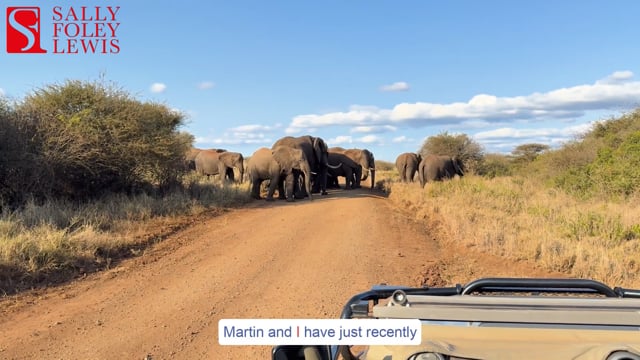
My husband and I have just returned from a trip to South Africa, we got to tick off a huge bucket list item we've had for over 15 years - a safari experience!
It was a phenomenal experience, better than what I had been dreaming it would be like!
We had blocks of 3 hours out driving and looking for animals: one afternoon spent searching for elephants to no avail but the very next morning we had word where they could be so we set off with our expert guide...
There’s a strong leadership metaphor here because elephant herds challenge the assumption that leadership means being the person visibly out front. In elephant family groups, the matriarch’s value is strongly linked to experience, social knowledge, memory and judgement, particularly when the herd faces uncertainty or threat.
The matriarch doesn’t need to physically lead every movement of the herd. Her influence comes from the herd’s accumulated experience of her judgement.
Leadership lesson: If your team can only move when you are at the front telling them what to do, you haven't really created leadership, you've created dependency.
The leadership question becomes: “If I stepped out of the way, would my people still know where we’re going and how to get there?”
That’s particularly powerful for middle managers. Your job isn't to be the GPS constantly announcing every turn. It's to make the destination and the principles for getting there sufficiently clear that people can navigate.
The matriarch's experience becomes especially valuable when the herd encounters something unfamiliar, dangerous or uncertain. Research on elephant leadership has found that older matriarchs can be better at assessing threats and responding appropriately because they possess decades of accumulated social and environmental knowledge.
Leadership lesson: Experienced leaders don't need to intervene in everything. Their greatest value may be knowing when they need to intervene. You would have no doubt read or heard that leaders need to learn when to not intervene, this is absoltuely true, but nuance here is knowing when and to what degree and when not to. Is it easy, o course not, that's leadership and if that was easy, everyone would be stepping up!
That creates a lovely distinction:
Novice leadership: “I need to have the answer.”
Mature leadership: “I know when my judgement is needed.”
For middle managers, this is the shift from being a problem solver to more of a capability builder and trusted source of judgement.
Elephants operate as a highly social group. Knowledge, behaviours and responses aren't held exclusively by one animal. Younger elephants learn through observing and interacting with more experienced members of the herd.
Leadership lesson: Your leadership shouldn't live inside you. It should live inside the team.
The strongest leader isn't necessarily the person everyone continually turns toward. It may be the leader who has created enough clarity, confidence and capability that people don't need to.
Let me know what you think: when has being out front worked and when has it stalled a project or hindered team performance or growth?
I appreciate you
Sally
Keywords: Leadership, Management
 Two Clocks, One Truck: The Army's Need for Speed Meets New Defense Sourcing Rules
 Sustainable Transformation: The Elephant and The Mouse In The Room
 The Price of Standing Alone: Strategic Autonomy in a World Where Nobody Can Do It Alone
 The Potter’s Hands: Why Great Leaders Shape Environments, Not People
 The Corix Partners Friday Reading List - October 16, 2026