
Jun19
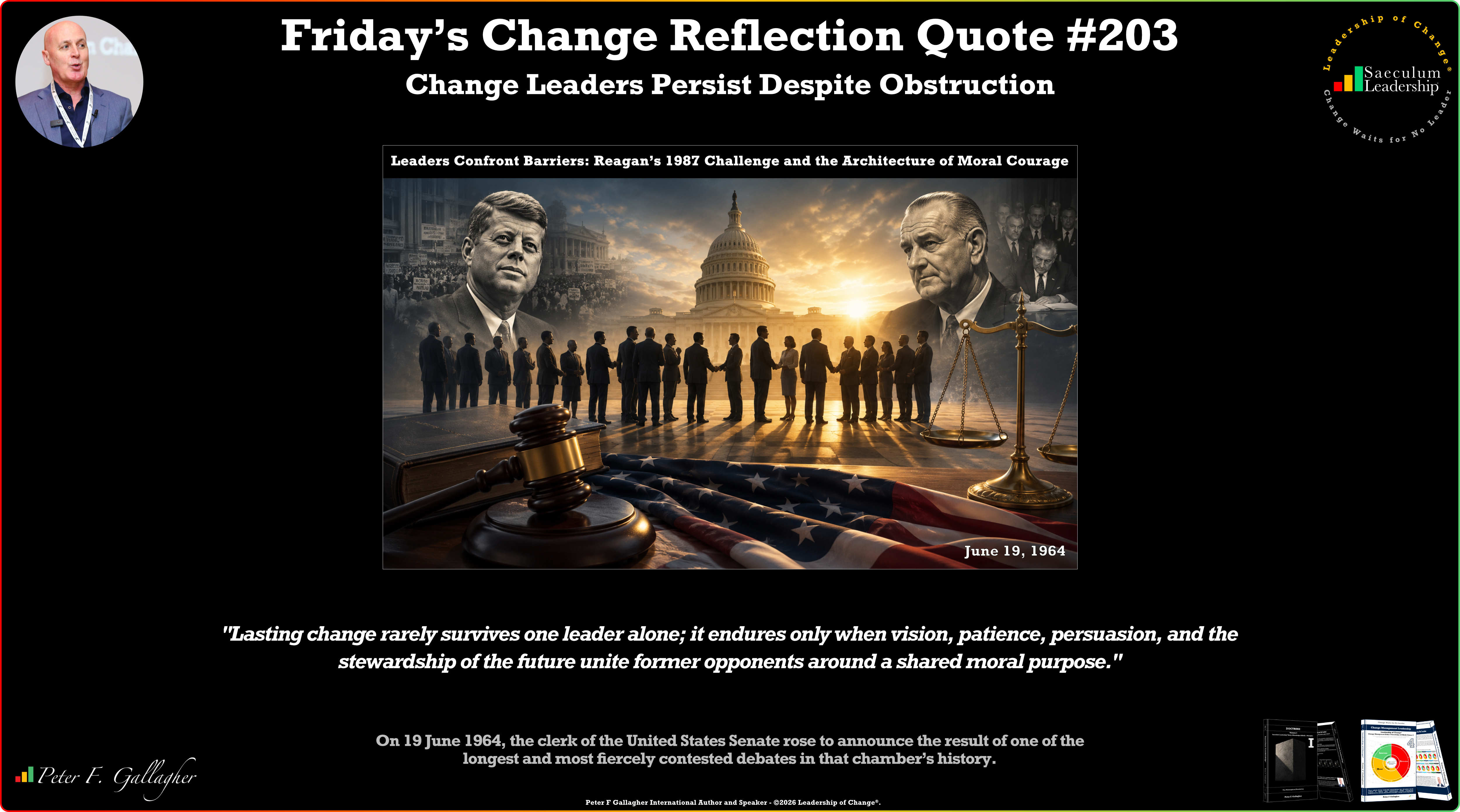
On 19 June 1964, the clerk of the United States Senate rose to announce the result of the most protracted and procedurally complex civil rights debate in Senate history. The evening vote was seventy-three in favour and twenty-seven against. With that announcement, the Civil Rights Act of 1964 cleared its final legislative hurdle in the Senate, exactly one year to the day after President John F. Kennedy had first sent his civil rights proposal to Congress.
The path to that vote had been gruelling. The bill occupied the Senate for sixty working days — the longest sustained debate over a single piece of legislation in American history. Opponents, led by a coalition of Southern Democrats, used every procedural tool available to delay and dilute the legislation. The turning point came on 10 June 1964, when the Senate voted seventy-one to twenty-nine to invoke cloture, ending debate after Senator Robert Byrd had spoken against the bill for fourteen hours and thirteen minutes. Senate Majority Leader Mike Mansfield and Minority Leader Everett Dirksen, who had once opposed civil rights legislation himself, worked together to build the bipartisan coalition needed to overcome the filibuster and bring the bill to a final vote.
Kennedy did not live to see the moment. After his assassination in November 1963, President Lyndon Johnson reframed the bill as a moral inheritance and used the full weight of his office to carry it through Congress. Two weeks after the Senate vote, on 2 July 1964, Johnson signed the Act into law, prohibiting discrimination in employment, public accommodation, and federally funded programmes, and marking the most sweeping civil rights legislation passed in the United States since Reconstruction.
This was a vision led moment of change leadership. Kennedy and Johnson articulated a clear, principled direction for the nation, and Senate leaders translated that vision into a coalition capable of carrying it through entrenched institutional resistance.
The significance of 19 June 1964 lies not only in the legislation itself but also in what it demonstrated about sustained political will and leadership perseverance. A vote that many believed impossible just months earlier was carried through patience, coalition building, and the willingness of long-standing opponents to change position when the moral and political weight of the moment became undeniable. It remains a defining example of how deeply entrenched systems can be reformed through persistence rather than force. The Senate vote of 19 June 1964 was a Saeculum Signal — the moment when accumulated generational pressure finally overwhelmed an entrenched institutional order designed to resist reform, and a new stewardship responsibility passed to those charged with carrying that moral realignment into the future.
Change Leadership Lessons: The Senate vote demonstrated that transformational change rarely succeeds through authority alone; it succeeds when leaders sustain a vision long enough for institutions, coalitions, and successors to carry it forward. Leaders of change must ensure their vision survives beyond their own tenure, allowing successors to continue the work when circumstances remove the original champion from the field. They build coalitions deliberately, recognising that lasting reform often depends on former opponents finding common ground and shared purpose. Change leaders demonstrate patience through prolonged resistance, understanding that meaningful transformation frequently demands persistence against deliberate and sustained obstruction. They time decisive intervention with care, recognising the precise moment when accumulated pressure becomes sufficient to break a long-standing deadlock. Leaders of change convert opponents through persuasion rather than force, knowing that changing minds through reasoned argument produces more durable results than command. Change Leaders Persist Despite Obstruction.
“Lasting change rarely survives one leader alone; it endures only when vision, patience, persuasion, and the stewardship of the future unite former opponents around a shared moral purpose.”
Application - Change Leadership Responsibility 3 - Intervene to Ensure Sustainable Change: The events of 19 June 1964 demonstrate that sustainable change depends on leaders recognising the precise moment when resistance has lost its legitimacy but still retains the institutional capacity to obstruct progress. Mansfield, Dirksen, and Humphrey understood that the filibuster, once a legitimate procedural tool, had become a mechanism for delaying progress that the country could no longer accept.
Change leaders must judge when established arrangements, however longstanding, are protected at the expense of the people they were meant to serve. Within organisations, this often appears when entrenched processes, cultural norms, or inherited assumptions continue despite mounting evidence that they obstruct strategic intent and organisational renewal.
Without timely intervention, resistance hardens rather than weakens. Dissent is sidelined, information is filtered, and leadership gradually loses sight of conditions shifting beyond its immediate view. By the time the cost of delay becomes obvious, the opportunity for renewal has often already passed.
Genuine intervention requires more than recognition and patience. Leaders must dismantle outdated practices, remove unnecessary obstacles, and build conditions where openness and adaptability can take hold. Sustaining change demands that capability and legitimacy remain matched to reality, and that leaders act decisively before inertia becomes irreversible decline.
Final Thoughts: The Senate vote of 19 June 1964 was a Saeculum signal, the moment a generation's accumulated moral and political pressure finally overwhelmed an entrenched order built to resist reform. AI can now model coalition dynamics and forecast where resistance will break, but no algorithm can replace the patient persuasion that turned lifelong opponents into allies. When resistance has exhausted its strength but not yet conceded, change leaders must hold their coalition steady and press the decisive vote home.
Further Reading: Change Management Leadership® - Leadership of Change® Volume 4 and Saeculum Leadership®: Doctrine – Volume I.
Peter F. Gallagher, a 20‑book author, consults, speaks, and writes on Saeculum Leadership® and Leadership of Change®. He works exclusively with boards, CEOs, and senior leadership teams to prepare and align them to effectively and proactively lead their organisations through transformation in a rapidly evolving epoch.
For insights on navigating organisational change, feel free to reach out at Peter.gallagher@a2B.consulting.
Further Reading: Change Management Leadership® - Leadership of Change® Volume 4 and Saeculum Leadership®: Doctrine – Volume I.
Peter F. Gallagher, a 20‑book author, consults, speaks, and writes on Saeculum Leadership® and Leadership of Change®. He works exclusively with boards, CEOs, and senior leadership teams to prepare and align them to effectively and proactively lead their organisations through transformation in a rapidly evolving epoch.
For further insights please visit our websites: https://www.a2b.consulting https://www.peterfgallagher.com Amazon.com: Peter F Gallagher: Books, Biography, Blog, Audiobooks, Kindle
Saeculum Leadership® Body of Knowledge (SLBoK): Volumes 1-10.A-E & I-V
~ Leadership of Change® Volume 1 - Change Management Fables
~ Leadership of Change® Volume 2 - Change Management Pocket Guide
~ Leadership of Change® Volume 3 - Change Management Handbook
~ Leadership of Change® Volume 4 - Change Management Leadership
~ Leadership of Change® Volume 5 - Change Management Adoption
~ Leadership of Change® Volume 6 - Change Management Behaviour
~ Leadership of Change® Volume 7 - Change Management Sponsorship
~ Leadership of Change® Volume 8 - Change Management Charade
~ Leadership of Change® Volume 9 - Change Management Insanity
~ Leadership of Change® Volume 10 - Change Management Dilenttante
~ Leadership of Change® Volume A - Change Management Gamification - Leadership
~ Leadership of Change® Volume B - Change Management Gamification - Adoption
Keywords: Business Strategy, Change Management, Leadership
 Two Clocks, One Truck: The Army's Need for Speed Meets New Defense Sourcing Rules
 Sustainable Transformation: The Elephant and The Mouse In The Room
 The Price of Standing Alone: Strategic Autonomy in a World Where Nobody Can Do It Alone
 The Potter’s Hands: Why Great Leaders Shape Environments, Not People
 The Corix Partners Friday Reading List - October 16, 2026