Dec29

Imagine an algorithm deciding you are ineligible for a loan. No explanation provided. No procedure to appeal. This is the looming risk we face when Artificial Intelligence (AI) evolves without an ethical compass.
From chatbots mimicking the voices of public figures to algorithmic credit scoring and recruitment systems, AI is permeating the nuances of our daily lives at an extraordinary pace. Amidst this rapid influx, a critical question arises: where does ethics stand?
The Global Landscape vs. The Indonesian Context
In regions like the European Union, the United States, and Singapore, the discourse on AI ethics has already produced relatively established frameworks. Benchmarks such as the EU AI Act, OECD AI Principles, and the NIST AI Risk Management Framework serve as foundational pillars, emphasising fairness, transparency, accountability, and explainability.
In contrast, the conversation in Indonesia is still in its infancy. While there are emerging initiatives, such as the Financial Services Authority’s (OJK) ethical guidelines for fintech and banking, and the Ministry of Communication and Digital Affairs’ (Komdigi) circular on ethical values, the landscape remains fragmented. 8Without binding regulations and integrated coordination, AI ethics in Indonesia risks becoming a mere slogan rather than a functioning support system.
Why It Matters
The absence of an AI ethical framework is not just a legal vacuum; it is a lack of a moral guide to protect human interests. This gap has the potential to erode public trust, trigger economic losses, and widen social inequality. Whether it is the use of AI in public services without clear accountability or automated loan denials without fair recourse, the stakes are high.
Ethical governance for AI has become an urgent necessity. Put simply: ethics must guide AI, while the law follows closely behind.
A Collective Responsibility
AI ethics is not a purely technical matter reserved for machine learning experts, deep learning specialists, or AI engineers. It is a collective endeavour spanning sectors and generations, touching upon law, human rights, economics, education, and national values. Consequently, we cannot leave AI governance entirely to the market, private corporations, or foreign technology providers. We need an approach rooted in local wisdom, national values, and sovereignty.
A Roadmap for Action
To tackle these challenges, I propose three strategic steps:
The Path Forward
Indonesia has a significant opportunity to become a pioneer in ethics-based AI governance in Southeast Asia, provided we move beyond being passive consumers of foreign technology. The key lies in a contextual approach that respects our national principles (Pancasila), social justice, and societal diversity.
In the digital age, ethics is not an "optional extra." It is the very foundation of trust and sustainable innovation. We must build this foundation today, or we will pay a heavy price tomorrow through a crisis of confidence, social loss, and the dominance of foreign technology. It is time to place ethics at the centre of every AI policy, ensuring it remains the compass that keeps AI aligned with humanity.
By Goutama Bachtiar, DBA (c), FRSA, SMIEEE, F FIN, FPT, MAICD
Keywords: AI Ethics, AI Governance, GRC
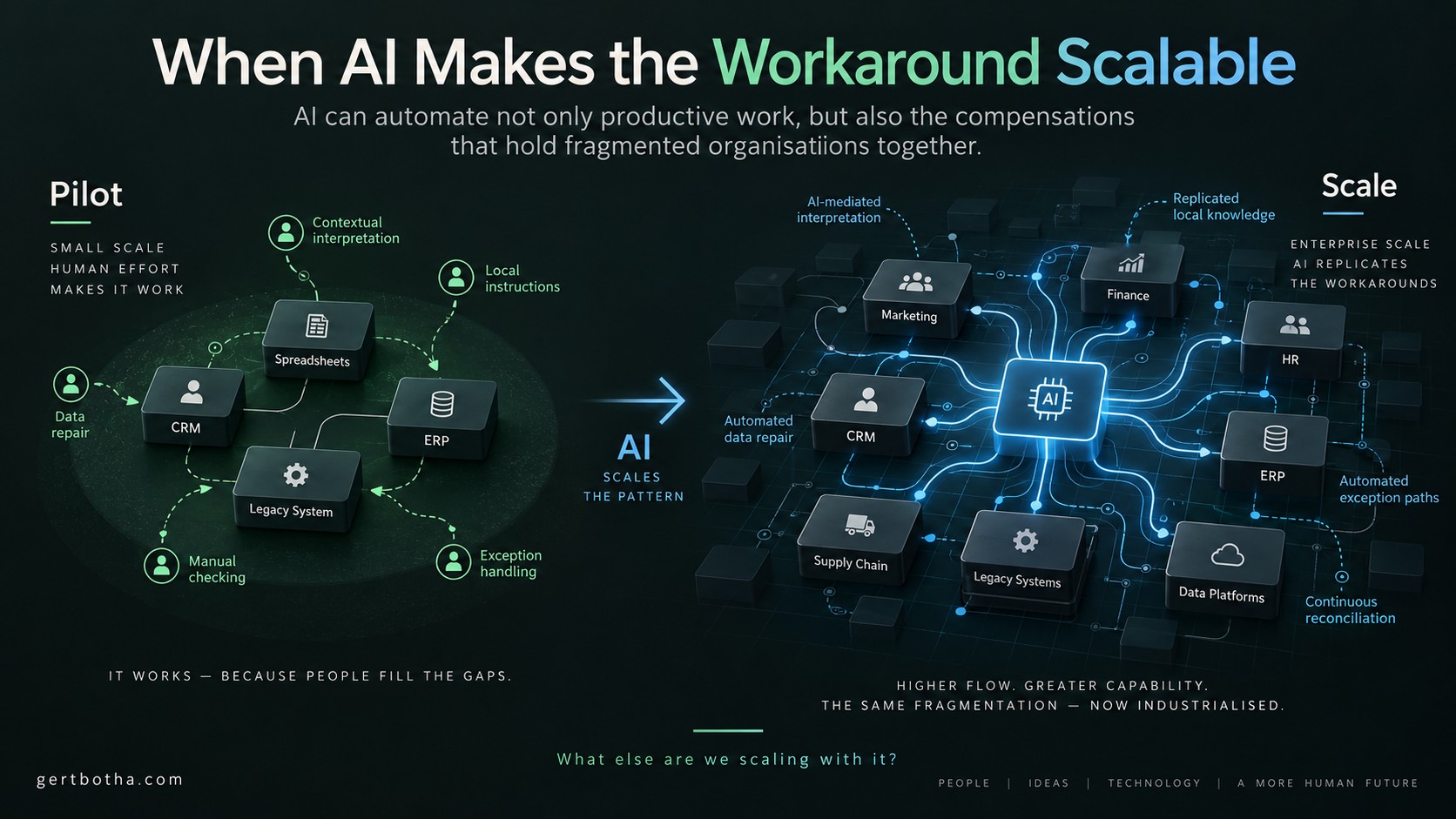 When AI Makes the Workaround Scalable
 The Age of Continuous Shocks: Why the coming downturn will be decided in your supply chain
 Friday’s Leader Reflection Quote – Saeculum Leadership Leaders Accept Decisions Create Responsibilities
 The Corix Partners Friday Reading List - October 9, 2026
 Consumer vs. enterprise AI agents