
Nov11
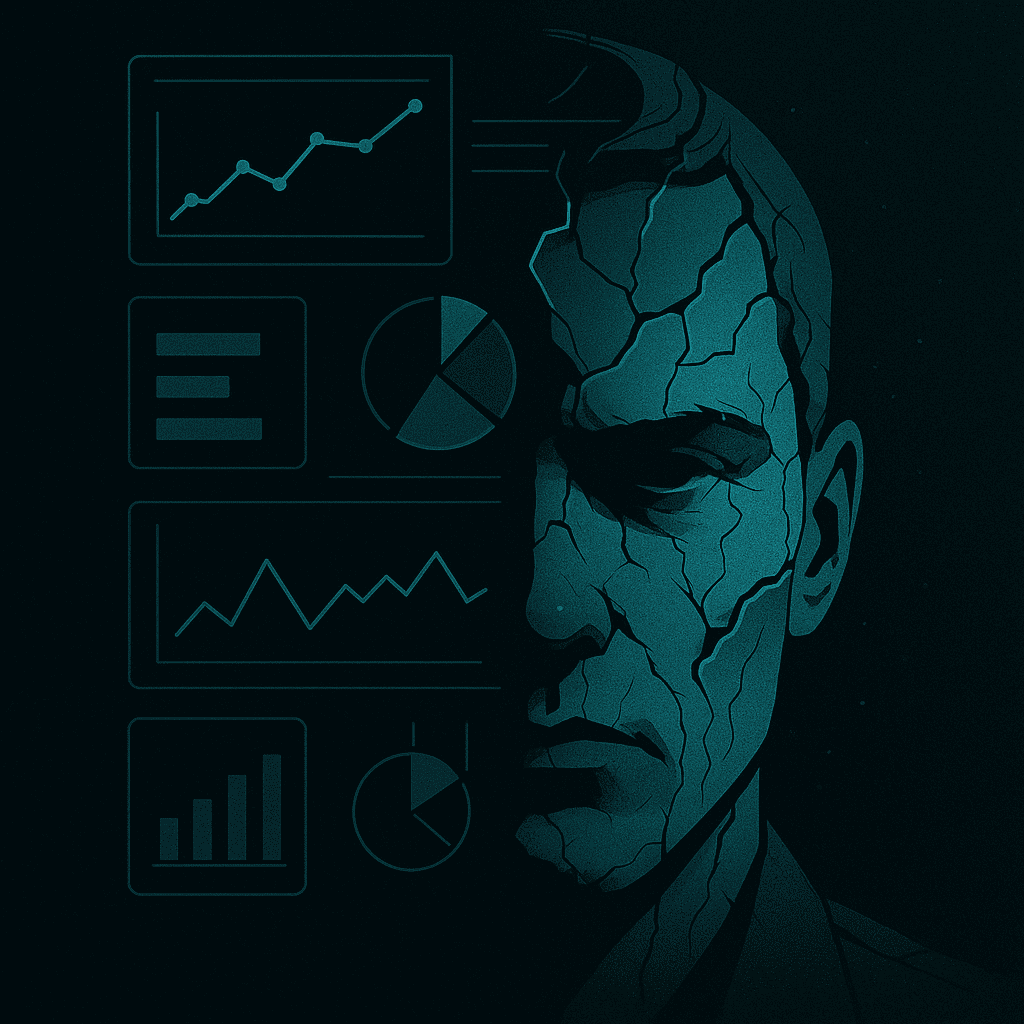
We’ve all been in those meetings.
The ones filled with slides, dashboards, and charts that seem to prove everything’s under control.
The numbers look good.
The colors are green.
And yet, nothing actually changes.
That’s the modern Decision Theater - where information performs, but insight never lands.
As organizations matured digitally, data became the language of legitimacy.
We learned to quantify, measure, and benchmark almost everything.
But somewhere along the way, data stopped being a tool for discovery and became a shield for validation.
Dashboards evolved from instruments of learning into instruments of performance - not to make better decisions, but to justify existing ones.
When every conversation is a presentation, not an exploration, the system rewards what looks credible, not what’s true.
Being data-driven is often confused with being data-aware.
In many companies, decisions still start with intuition, politics, or hierarchy, and the data simply arrives later to decorate the conclusion.
Metrics are cherry-picked. Trends are smoothed. Outliers are dismissed as anomalies rather than signals.
And slowly, the organization builds muscle memory around confirmation, not curiosity.
It feels safe. It looks rigorous.
But it’s theater - a performance designed to project competence rather than uncover reality.
Decision Theater isn’t born from incompetence. It’s a byproduct of fear and fatigue.
When failure is punished, when time is scarce, and when leaders are overloaded with noise, the temptation to simplify reality is strong.
Dashboards offer clarity, even if it’s cosmetic.
They turn uncertainty into numbers and doubt into slides.
And once those slides are approved, no one wants to reopen the script.
But this comfort comes at a cost: curiosity dies, dissent fades, and blind spots deepen.
Theater-driven decisions create organizations that look efficient but move in circles.
Projects stay “on track” long after they’ve lost relevance.
Teams keep reporting success on metrics that no longer matter.
And innovation becomes a story, not a system.
The tragedy isn’t that people lie with data.
It’s that they stop questioning it.
When that happens, data ceases to be a mirror and becomes a mask.
Escaping the Decision Theater isn’t about removing dashboards or analytics.
It’s about reintroducing truth-seeking as a habit.
Separate insight from image. Make it safe to challenge data sources and underlying assumptions.
Reward discovery, not defense. Recognize people who reveal problems early, not those who hide them well.
Shift from reports to reflection. Replace one-way presentations with discussions that probe “what we don’t yet know.”
The real power of data lies in discomfort - in exposing patterns we’d rather not see.
Every organization needs metrics.
But metrics without meaning are just decoration.
When decisions become performances, the system starts optimizing for applause, not outcomes.
The leaders who will shape the next decade won’t be the ones who manage the best dashboards.
They’ll be the ones who build the courage and the systems to see what those dashboards no longer show.
Because in transformation, truth is the only performance that scales.
Keywords: Leadership, Change Management, Transformation
 Consumer vs. enterprise AI agents
 Best Supply Chain AI Tools in 2026: SCM SENSEI AI and Ask Lora Compared
 Making Silos Permeable
 The Corix Partners Friday Reading List - October 2, 2026
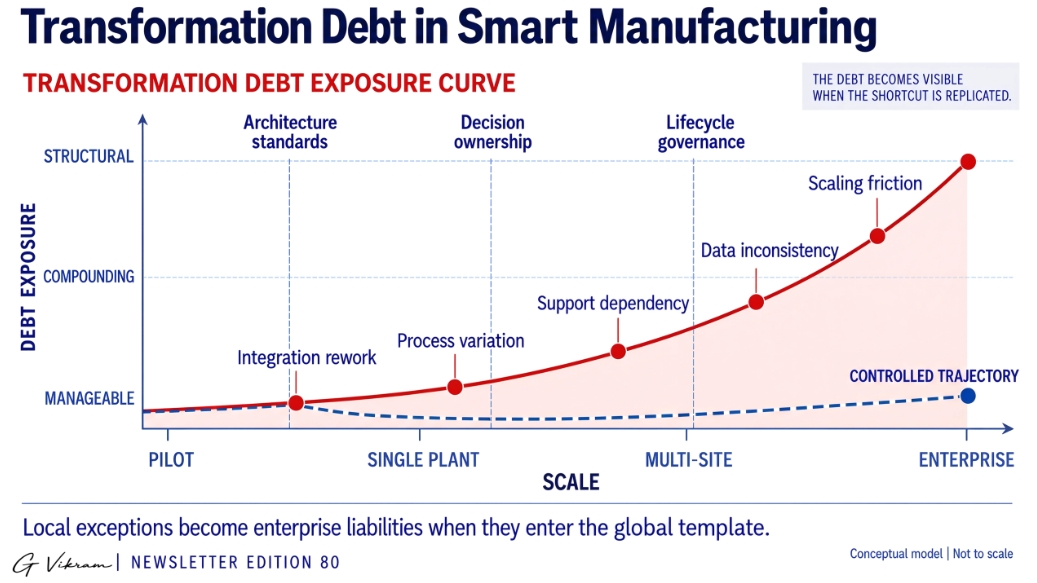 The most dangerous debt in a smart factory isn’t financial.