Aug10
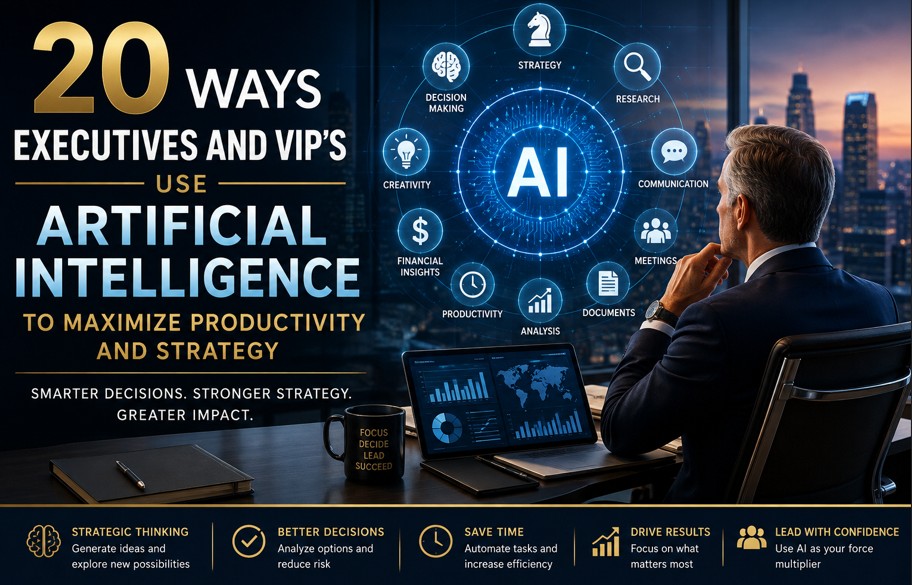
Artificial intelligence is rapidly transforming the way executives, entrepreneurs, professionals, government leaders, and organizational decision-makers work. Far more than a tool for simply generating text, AI can function as a strategic sounding board, research assistant, analyst, editor, brainstorming partner, project-management resource, executive coach, and personal productivity multiplier. For leaders who learn how to use it effectively, AI can save enormous amounts of time while improving the quality and speed of research, communication, planning, and decision-making.
In this practical executive guide, George Mentz explores 20 powerful applications of artificial intelligence for modern leadership and professional productivity. AI can help executives brainstorm strategic ideas, evaluate alternatives, identify potential weaknesses, and consider scenarios before presenting proposals to boards, colleagues, investors, clients, or other stakeholders. Instead of approaching every problem with a blank sheet of paper, leaders can use AI to generate questions, organize ideas, test assumptions, and develop alternative strategies.
Decision-making represents another important application. Executives regularly confront complex financial, legal, operational, personnel, and strategic questions involving large amounts of information. AI can help organize that information, compare alternatives, identify risks, summarize competing arguments, and highlight issues requiring additional investigation. Human judgment remains essential, but AI can dramatically accelerate the process of understanding complicated problems.
AI is also changing executive communication. Leaders can use these systems to assist in drafting and editing emails, speeches, reports, proposals, presentations, articles, books, policies, and other professional documents. AI can transform rough notes into organized drafts, improve clarity, suggest alternative language, and help executives communicate complex ideas more effectively.
Meeting preparation and research can similarly be accelerated. AI can summarize documents, organize background information, develop talking points, identify important questions, and create briefing materials. Executives preparing to meet with investors, government officials, business partners, clients, celebrities, or organizational leaders can potentially accomplish hours of preliminary research in a fraction of the traditional time.
The technology is particularly valuable for summarizing large documents. Contracts, financial reports, legal opinions, government regulations, technical papers, board minutes, and lengthy correspondence can be analyzed and condensed into executive summaries. Leaders can then identify the portions requiring closer personal or professional review.
Financial analysis, strategic planning, competitive intelligence, and project management are additional areas where AI can serve as a force multiplier. Executives can use AI to examine budgets, financial statements, market information, business plans, SWOT analyses, expansion opportunities, organizational priorities, and long-term strategies. AI can also help organize projects, establish timelines, identify potential bottlenecks, and clarify priorities.
Creativity represents another major opportunity. Leaders can brainstorm product ideas, business names, marketing campaigns, advertising concepts, educational programs, branding strategies, social-media content, and possible solutions to operational problems. AI can also help executives ask better questions by identifying perspectives, variables, risks, and possibilities they may not initially have considered.
Leadership development is becoming an important application as well. AI can simulate difficult conversations, anticipate objections, suggest negotiation approaches, and help executives prepare for performance reviews, personnel discussions, presentations, and other challenging professional situations. It can also serve as an educational tool, allowing leaders to rapidly explore unfamiliar subjects ranging from finance and law to technology, cybersecurity, international business, and foreign languages.
However, the speed and convenience of artificial intelligence create an equally important responsibility: verification.
Mentz introduces what he calls the “Minority Report” approach to AI fact-checking. Executives should remain their own subject-matter experts and independently corroborate important facts, figures, legal conclusions, financial information, and strategic recommendations. Just as major professional decisions should rarely depend upon one unverified source, leaders should not blindly accept the output of a single artificial intelligence system. Multiple sources, professional expertise, original documents, and appropriate licensed advisers should be consulted when the stakes are significant.
One of the most advanced applications discussed is the creation of a personalized AI knowledge model. Executives, authors, professors, lawyers, entrepreneurs, and other professionals may possess decades of accumulated intellectual capital scattered across books, articles, lectures, presentations, correspondence, research, reports, and other materials. Organizing this information into an AI-assisted knowledge system can transform a lifetime of work into a searchable digital resource.
Instead of repeatedly searching through old files or starting new projects from scratch, an executive can potentially locate previous ideas, quotations, research, concepts, strategies, and writings almost instantly. This creates a form of institutional and personal memory that can support future books, presentations, strategic plans, research projects, educational programs, and business decisions while helping preserve the individual's established voice and expertise.
Ultimately, artificial intelligence should not replace executive judgment—it should amplify it. The greatest value of AI lies in combining machine speed, information processing, and analytical capabilities with distinctly human qualities such as wisdom, ethics, creativity, intuition, experience, leadership, and vision.
The leaders who gain the greatest competitive advantage will not necessarily be those with access to the most sophisticated AI technology. They will be those who learn how to ask better questions, verify important information, protect their intellectual capital, integrate AI into daily workflows, and use the time they save to focus on relationships, innovation, strategy, and leadership.
Used intelligently and responsibly, artificial intelligence can become one of the most powerful force multipliers available to the modern executive.
By George Mentz
Keywords: AI, Business Strategy
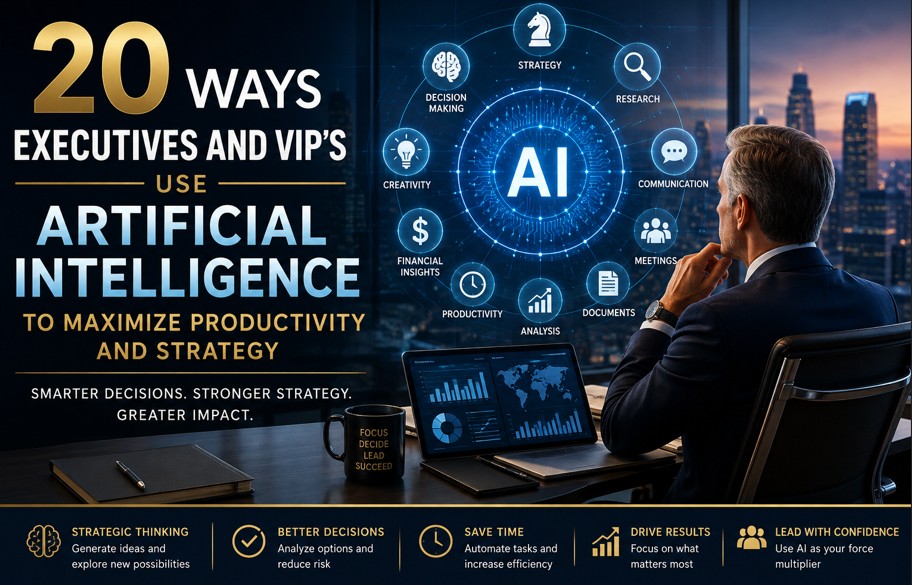 20 Ways Executives and VIP’s Use Artificial Intelligence to Maximize Productivity and Strategy20 Ways Executives and VIP’s Use Artificial Intelligence to Maximize Productivity and Strategy
 Is AI adoption more difficult in healthcare?
  Governing a New Kind of Employee
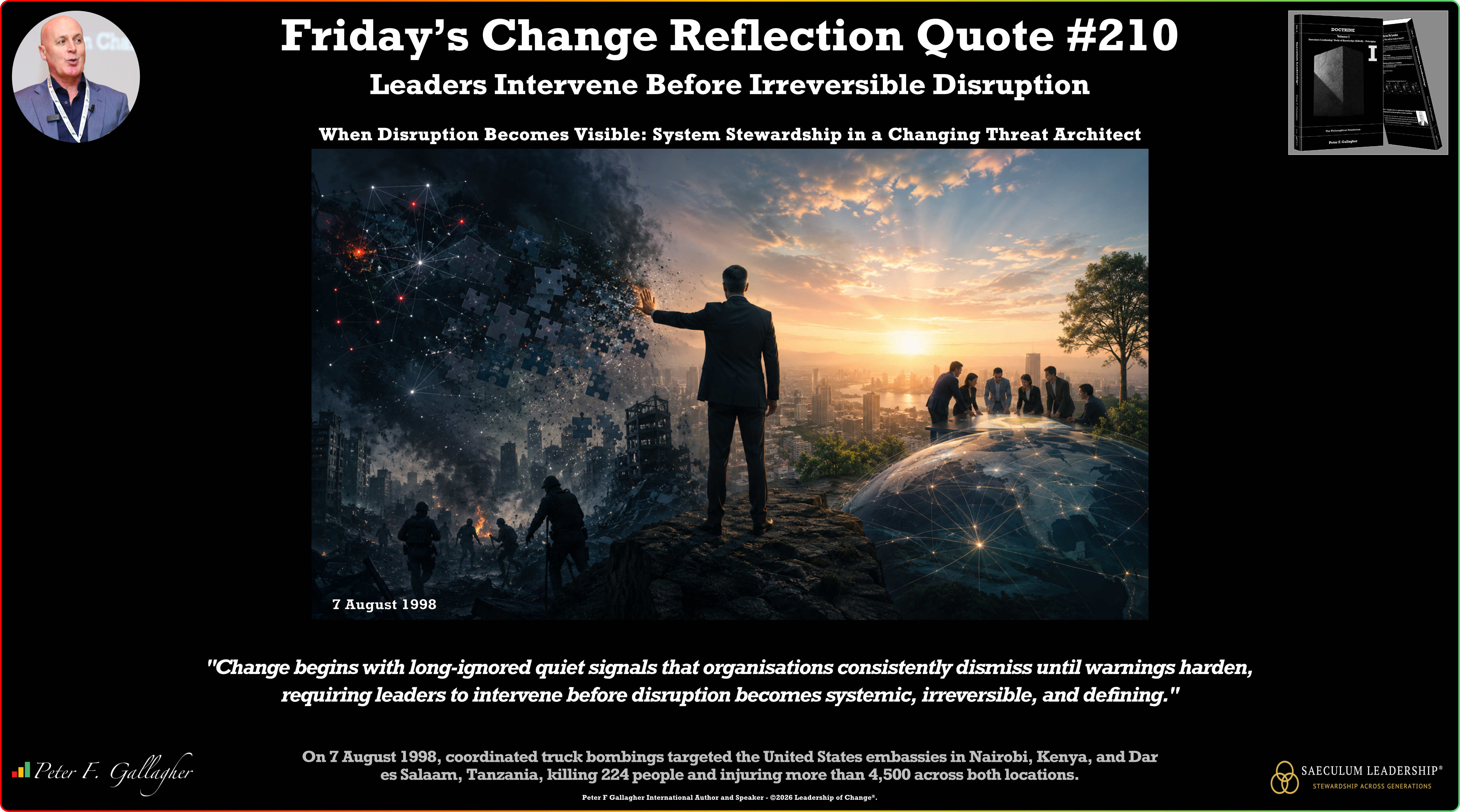 Friday’s Change Reflection Quote – Saeculum Leadership – Leaders Intervene Before Irreversible Disruption