Sep02

3 of 4 in a series on Building a Leadership Pipeline That Won’t Crack Under Pressure
One of the most expensive assumptions in business is this: "Clearly our best performer/star X should be our next CEO."
It feels logical.
After all, they've consistently delivered results. They know the business. They're respected. They've earned promotions. Customers trust them. The leadership team depends on them. There are a lot of good reasons, so why wouldn't they be the obvious choice?
Because success in one role is not the same as readiness for another.
The skills that create exceptional department leaders are often very different from the skills required to lead an entire enterprise.
A great operations executive focuses on efficiency.
A great finance leader focuses on discipline.
A great sales executive focuses on growth.
A CEO must balance all of those priorities simultaneously and sometimes “sacrifice” one for another.
That's a fundamentally different job.
In succession planning, I often ask the senior leadership team this question:
"What evidence do you have that this individual can lead the entire business?"
The response I always get is how great they are at their current job and their “potential.”
There’s never any concrete enterprise evidence (I suspect this is why they’ve called me).
Being an outstanding functional leader doesn't automatically prepare someone to allocate capital across competing priorities.
It doesn't prepare them to navigate conflicting executive personalities.
It doesn't prepare them to reassure anxious employees during uncertainty.
And it certainly doesn't prepare them to make difficult decisions with incomplete information.
Those capabilities must be developed intentionally (and the sooner the better).
One company I worked with selected an internal successor years before the owner's planned retirement.
Everyone agreed he was brilliant.
BUT there was one HUGE problem.
No one had actually prepared him to become CEO.
In fact, he was the person who eventually called me and said, "Please help. There’s no succession plan."
That was a first for me. The chosen successor had never called for help before.
His company, like many others, had confused selection with preparation.
Fortunately, we had time to change course.
Over the next several years, he expanded his responsibilities, worked across departments, participated in strategic planning, and gradually assumed more enterprise-wide leadership.
His title didn't change (yet) but his perspective did.
The goal of succession planning isn't to identify the “best” person in the company.
It's to develop leaders who can see the entire business.
That requires experiences beyond their technical expertise.
It requires exposure to customers, financial decisions, operational trade-offs, organizational culture, and long-term strategy.
The CEO needs to weigh how every major decision affects the entire organization—which is not a perspective that a department leader – no matter how great – has.
High performance is a great starting point, but it isn’t the finish line.
When owners confuse performance with readiness, they unintentionally set good people up for failure.
When companies invest years in broadening knowledge and experiences of future leaders before the transition, they dramatically increase the odds of long-term success.
Choosing a successor is a one-time event.
Preparing one is a years-long process.
And the process is what determines whether the transition succeeds.
Keywords: Entrepreneurship, HR, Leadership
 AI Is Exposing the Data Problems Humans Used to Hide
 "The AI may in fact be conscious." Really?
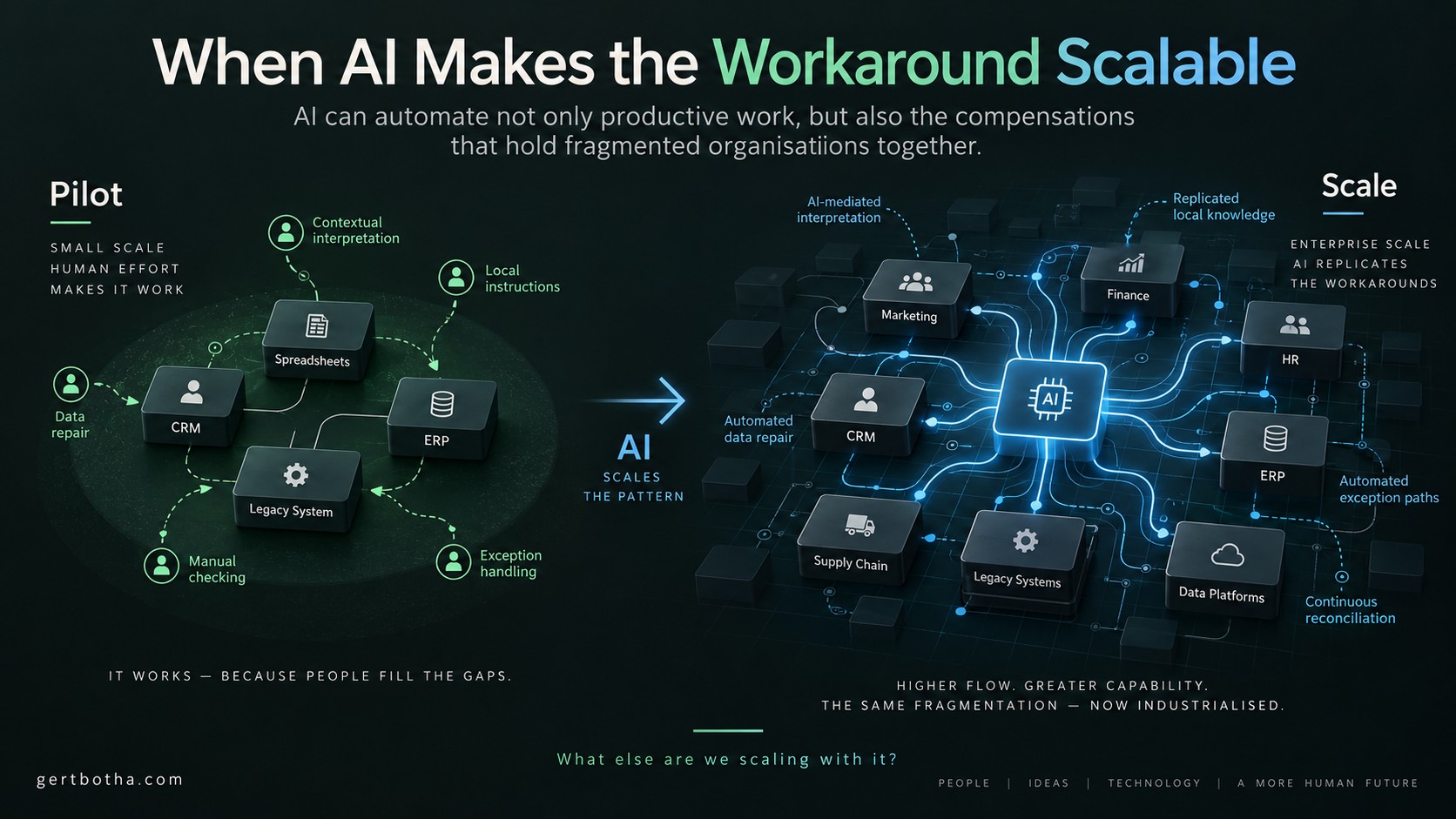 When AI Makes the Workaround Scalable
 The Age of Continuous Shocks: Why the coming downturn will be decided in your supply chain
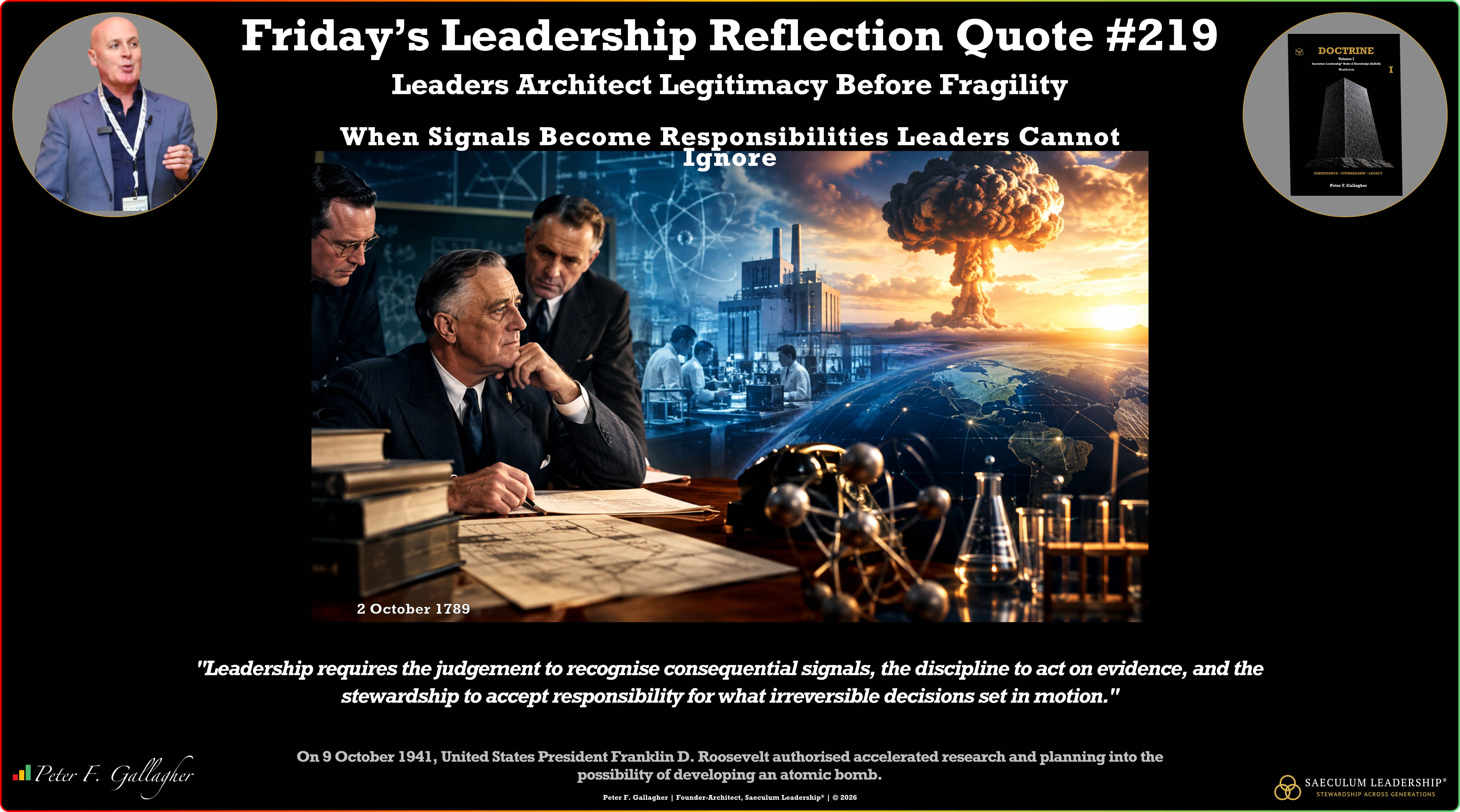 Friday’s Leader Reflection Quote – Saeculum Leadership Leaders Accept Decisions Create Responsibilities