
Jul17

We don’t always call it micromanagement.
Sometimes, it’s disguised as rigor.
Or precision.
Or high standards.
But over the years, I’ve come to realize:
What we call control often stems from fear.
The fear of being blamed for mistakes.
The fear of not being in control.
The fear of letting go.
And fear, when it leaks into leadership, doesn’t just slow progress. It stifles growth.
I once worked under a leader who insisted that nothing, not even a minor update, be shared without her explicit sign-off. Every message, every deck, every email passed through her.
The result?
The team didn’t fail.
But we didn’t move either.
People hesitated before speaking.
They waited for permission.
They second-guessed their own judgment.
Eventually, they stopped trusting themselves altogether.
That’s what happens when leadership is built around control:
You don’t just delay decisions.
You shrink confidence.
You create dependence.
And ironically, the more you try to “own” everything as a leader, the less your team owns anything.
So now, when I lead, I ask myself hard questions:
Why does this process still rely on me?
What am I afraid will happen if I let go?
Who’s already ready but waiting for space to lead?
Because the truth is:
Leadership isn’t about how much flows through you.
It’s about how much flows without you.
If your team is moving slowly, start by asking what you’re still holding onto too tightly.
It might not be about speed.
It might be about trust.
Keywords: Leadership, Change Management, Transformation
 AI Is Exposing the Data Problems Humans Used to Hide
 "The AI may in fact be conscious." Really?
 When AI Makes the Workaround Scalable
 The Age of Continuous Shocks: Why the coming downturn will be decided in your supply chain
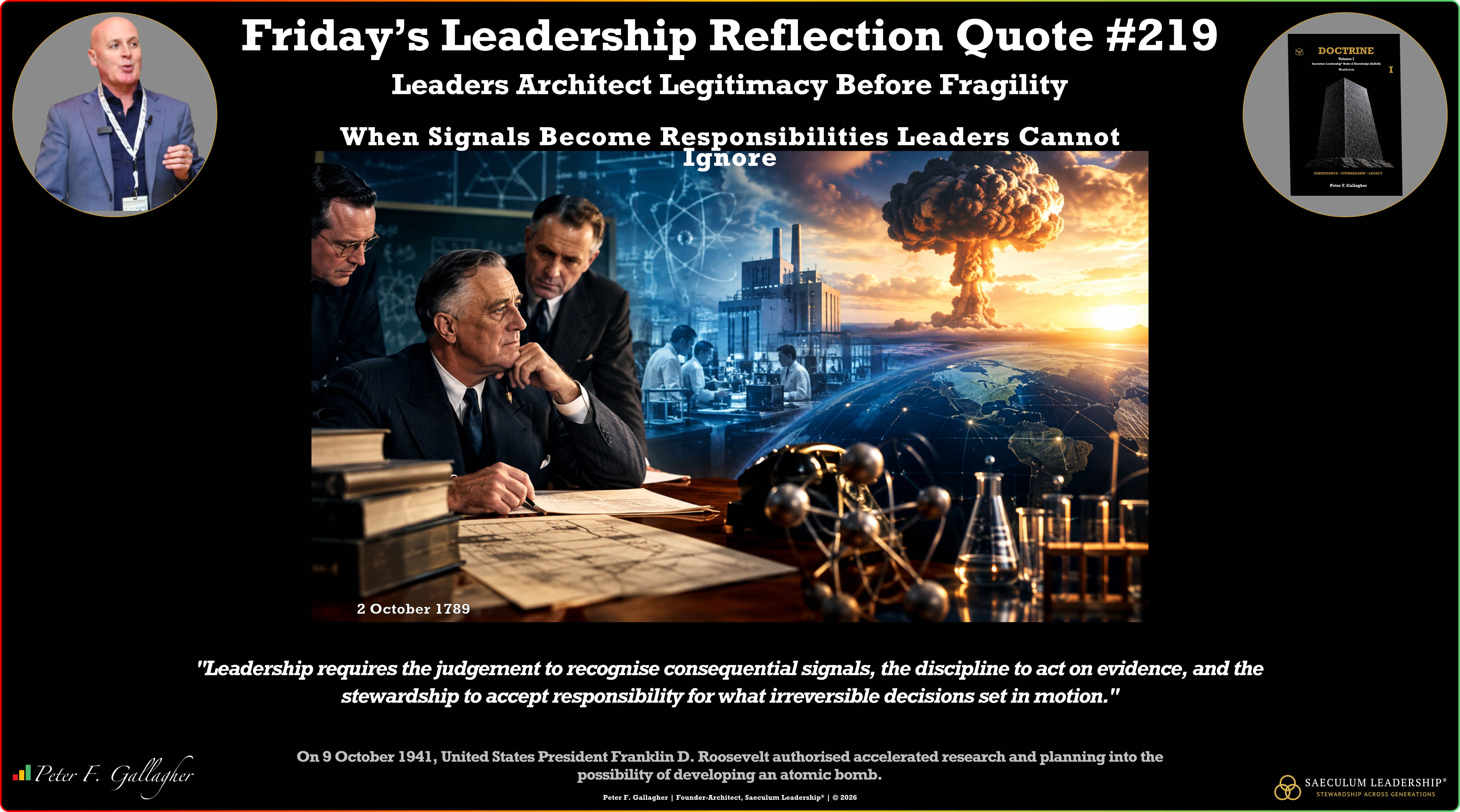 Friday’s Leader Reflection Quote – Saeculum Leadership Leaders Accept Decisions Create Responsibilities