Apr15
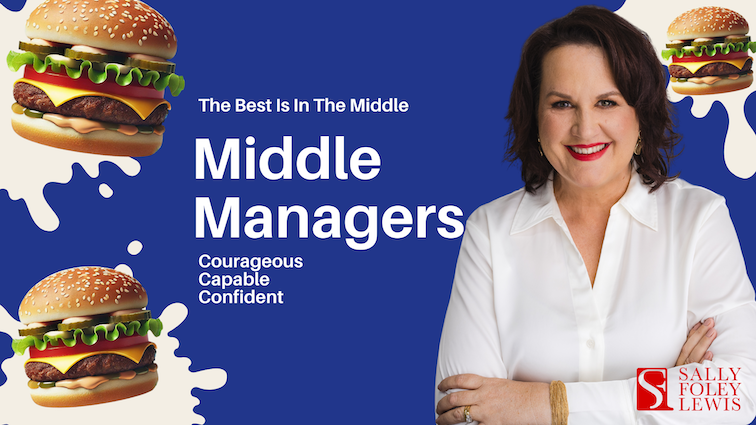
I want to chat with you about values-based decisions and the speed at which they travel.
In a busy London Pret A Manger, a barista quietly slid a free cappuccino across the counter to a frazzled commuter. There was no coupon, no points card to scan, and no manager approval needed. It was simply a human judgment call, backed by a clear, lived value: be generous. Pret gives each shop a budget for "random acts of kindness", trusting frontline teams to use their discretion. Staff are given freedom to gift items as they see fit, precisely because a loyalty card system or a call for manager approval would be slower and less personal. The Independent (1) reported on this policy, noting how it bypasses bureaucracy for speed and customer connection.
This frontline empowerment isn't just a nice story; it is the fundamental principle of high-velocity decision-making. Values-based decisions travel faster through an organisation because shared, explicit values create vital guardrails. When people know what good looks like, when they understand the core principles of the organisation’s mission, they are empowered to move quickly without waiting for layers of approval.
The Decision Velocity Matrix
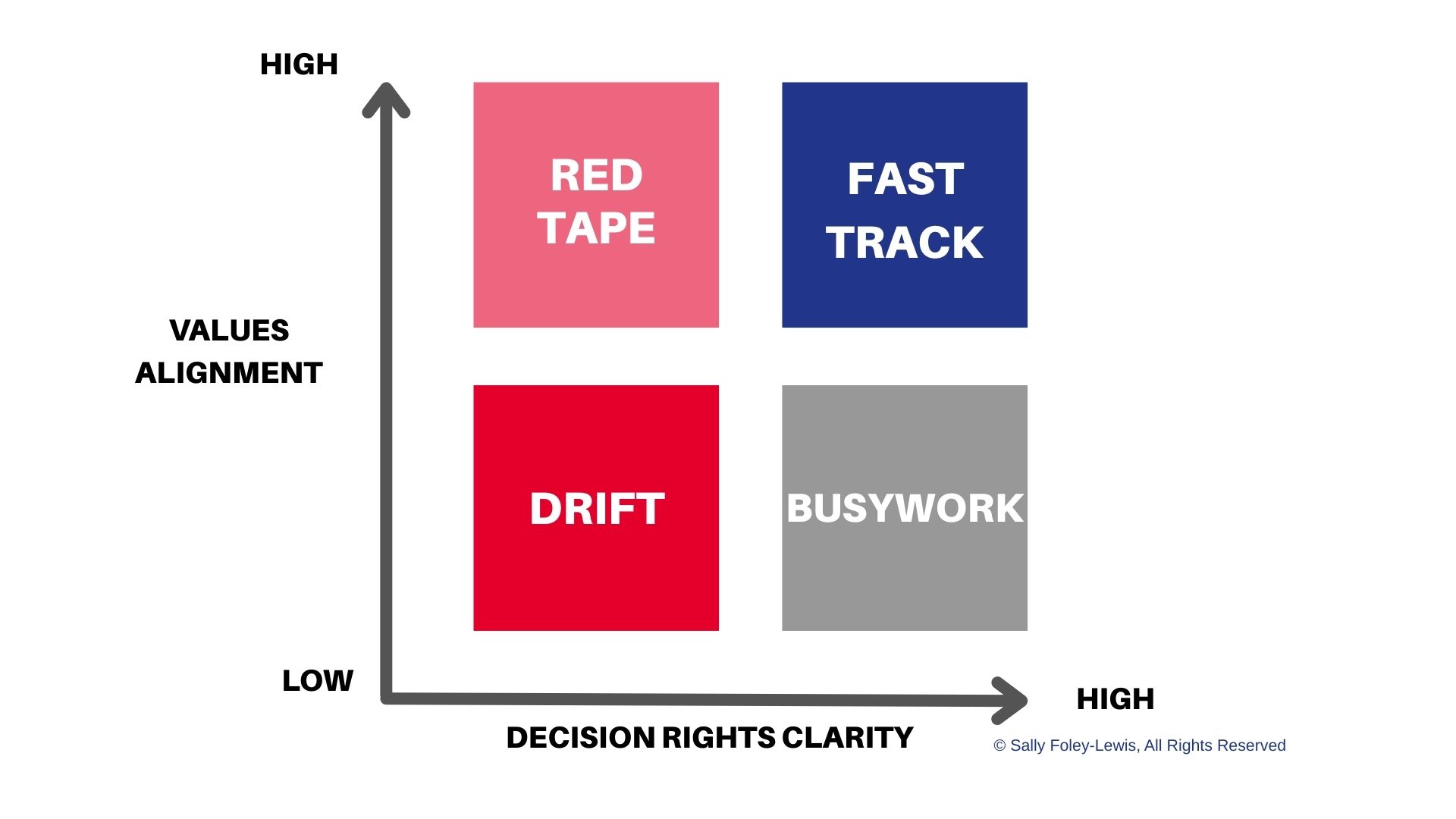
To understand this speed advantage, consider the Decision Velocity Matrix, a tool for mapping where your team’s decisions currently land. The two axes are:
Your primary goal is to migrate every recurring decision type toward Fast-Track by simultaneously tightening up your shared values and clarifying who decides what, where, and when. The Leadership Burger, Served Express!
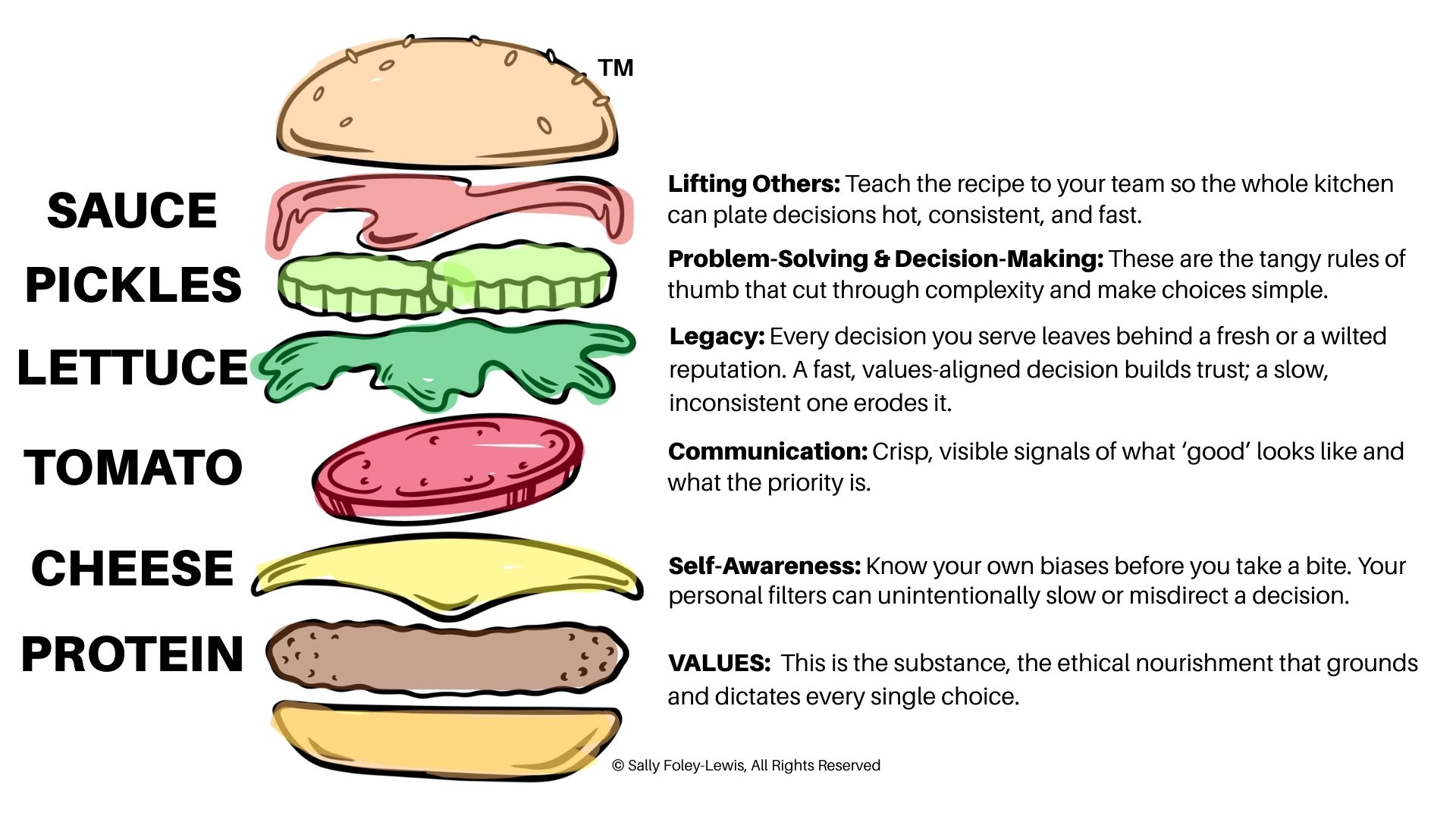
A helpful way to remember the ingredients for high-velocity decision-making is to think of it as The Leadership Burger, served “express”, a recipe for empowered choices:
Why Values Speed Things Up
Values alignment is not a soft, abstract concept; it is a demonstrable speed advantage. Research continually proves this link. Bain & Company’s “The Decision-Driven Organization” (2) shows that performance rises when leaders focus on who decides, how, and with what information, rather than on structural change alone.
Furthermore, McKinsey’s (3) research highlights that organisations designed for speed outperform their peers, especially when authority is pushed down, decision-making forums are simplified, and the number of people in the room is reduced. This is supported by decades of study, such as Kotter and Heskett’s (4) research linking strong, lived cultures and shared norms with superior long-term economic performance across hundreds of firms.
The Ritz-Carlton is a classic example. (5) Their famous ‘$2,000 Rule’ empowers any employee to resolve a guest issue immediately, up to that value, without escalating to a manager. This is a vivid example of values (unwavering commitment to service) plus discretion (trust in the employee) speeding up customer recovery cycle time at the edge of the organisation.
Five Moves for Middle Managers
For middle managers who live at the intersection of strategy and execution, here are five immediate moves to push your team’s decision-making into the Fast-Track quadrant:
If you fail to act, you will find the opposite occurs: slow escalations, shadow approvals, and a risk-off culture that breeds bureaucracy. Conflicting decisions will erode trust and brand value, and your best, most autonomous people will disengage as their ability to act stalls. Speed, empowerment, and values alignment are mutually reinforcing, they are the engine for a high-performing team.
When your team knows the protein, the cheese, the tomato, the lettuce, the pickles, and the secret sauce, they can serve decisions hot, consistent, and fast, just like the best experiences from Pret A Manger and The Ritz-Carlton.
I’d love to know your thoughts, even better, share which one of the five moves you will focus on first this coming week.
I appreciate you
Sally
Source:
Keywords: Leadership, Management
 Two Clocks, One Truck: The Army's Need for Speed Meets New Defense Sourcing Rules
 Sustainable Transformation: The Elephant and The Mouse In The Room
 The Price of Standing Alone: Strategic Autonomy in a World Where Nobody Can Do It Alone
 The Potter’s Hands: Why Great Leaders Shape Environments, Not People
 The Corix Partners Friday Reading List - October 16, 2026