Jul24
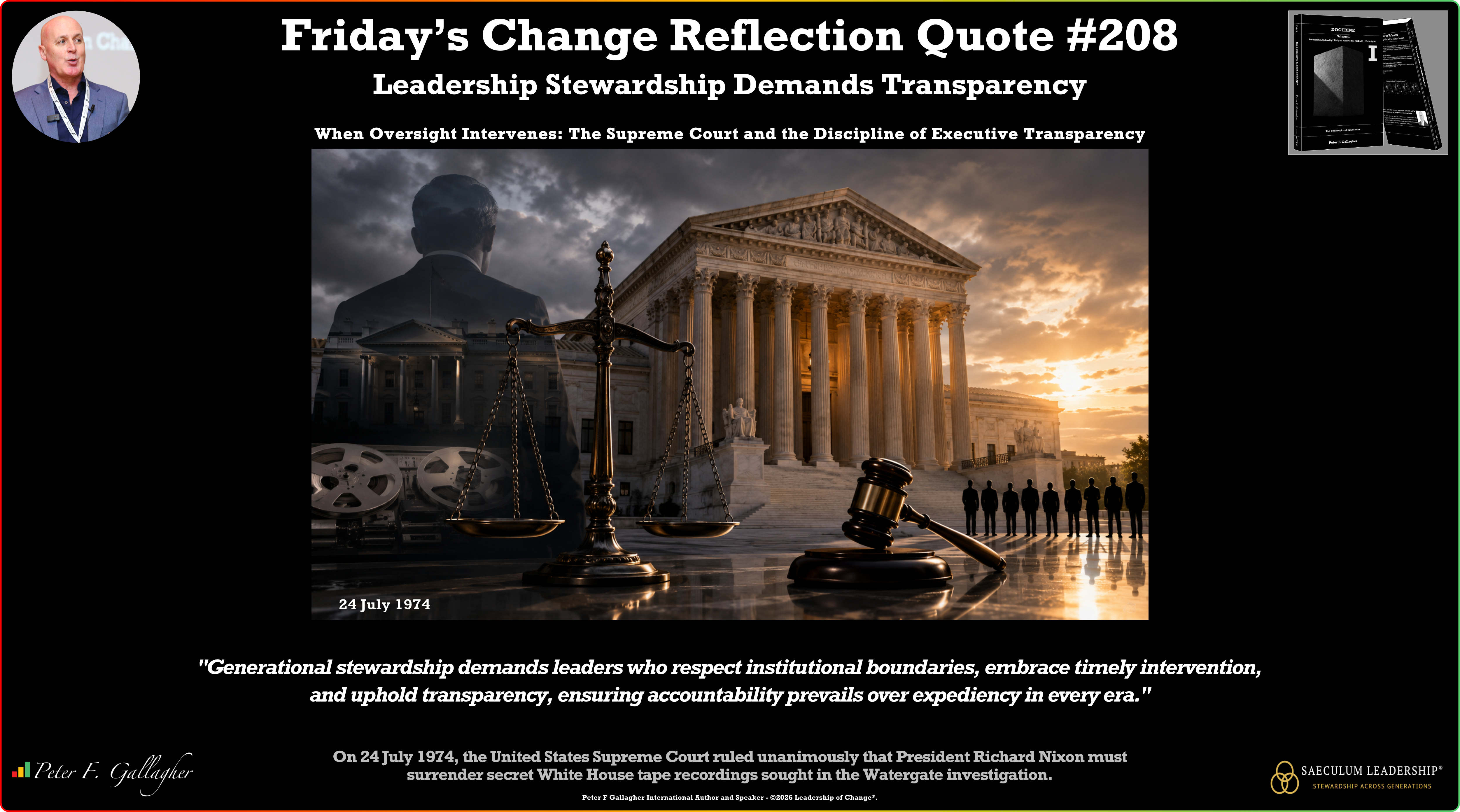
On 24 July 1974, the United States Supreme Court ruled unanimously that President Richard Nixon must surrender secret White House tape recordings sought in the Watergate investigation. The case arose after a grand jury indicted seven presidential aides for obstruction of justice and conspiracy, following the June 1972 break-in at the Democratic National Committee headquarters. Special Prosecutor Leon Jaworski subpoenaed sixty-four tapes believed to contain evidence relevant to the pending criminal trial. Nixon's legal team argued that executive privilege granted the president near-absolute authority to withhold internal communications, framing confidentiality as essential to effective governance. The case was argued before the Court on 8 July 1974 and decided just sixteen days later. Chief Justice Warren Burger, a Nixon appointee, delivered the opinion, joined by seven fellow justices, with William Rehnquist recused due to prior service in the administration. The Court held that no individual, including the president, stood above judicial process, and that privilege could not override a demonstrated need for evidence in a criminal proceeding. This established a lasting constitutional boundary between executive authority and external accountability.
The ruling carried immediate constitutional weight because it rejected an unqualified claim of executive privilege for the first time in American history. Legal scholars noted that the decision drew a clear distinction between privilege used to protect national security and privilege used to shield potential criminal conduct. The Court's insistence on timely compliance also signalled that judicial authority could not be delayed indefinitely by procedural manoeuvring at the highest level of government.
The ruling proved decisive. Within days, the released recordings confirmed Nixon's direct involvement in efforts to conceal the Watergate burglary, eliminating any remaining political support. Facing near-certain impeachment, Nixon resigned from office on 9 August 1974, the first US president to do so. The episode illustrates how institutional checks, when tested under extreme pressure, can compel transparency even from the most powerful office in a democracy. It also demonstrates that concealment strategies, however deliberately constructed, rarely withstand sustained institutional scrutiny once a credible external authority intervenes. The episode remains one of the most closely studied instances of institutional resilience under sustained political pressure, referenced widely in constitutional and governance literature. Its significance extended well beyond the presidency itself, shaping how democratic institutions worldwide approach the boundaries of executive power.
This moment signalled a turning point in governance: legitimacy no longer rested on positional power alone but on demonstrable accountability to external authority. Within Saeculum Leadership, this represents a defining Knowledge Architecture Signal because it marks the moment institutional legitimacy became increasingly dependent on transparent accountability rather than positional authority alone.
Saeculum Leadership® Lessons: This moment offers a defining lesson for Saeculum Leaders: when external governance intervenes, it reveals whether a leader’s architecture can withstand scrutiny or collapses under the weight of concealed decisions. The Watergate ruling demonstrates that institutional legitimacy is never self‑declared — it is earned through transparency, accountability, and disciplined respect for oversight. Saeculum Leaders change organisations by placing accountability above personal authority, however senior the position held. They recognise that concealment under pressure erodes trust and accelerates institutional and reputational damage over time. Saeculum Leaders strengthen governance by supporting independent checks that operate when personal judgement proves insufficient. They understand that timely transparency, rather than delayed compliance, protects credibility during moments of institutional pressure. Saeculum Leaders build lasting legitimacy by ensuring scrutiny strengthens rather than threatens the organisations they lead. Leadership Stewardship Demands Transparency.
“Generational stewardship demands leaders who respect institutional boundaries, embrace timely intervention, and uphold transparency, ensuring accountability prevails over expediency in every era.”
From the Canon — Practice 7: Practice of Governance Rhythm: Governance Rhythm describes the disciplined cadence through which oversight intervenes to protect institutional integrity. It is the tempo at which accountability must surface, ensuring that leaders remain aligned with the boundaries of their authority. Saeculum Leaders understand that governance is not only defined by rules but by the timing of their enforcement. When rhythm collapses—when scrutiny is delayed, avoided, or obstructed—institutions become vulnerable to distortion by personal ambition.
The Watergate ruling exemplifies Governance Rhythm at its most decisive. The Supreme Court intervened precisely when executive power attempted to exceed constitutional limits, demonstrating that oversight must act neither prematurely nor belatedly, but at the moment when institutional integrity is at risk. This rhythm ensures that transparency is not optional, and that leaders cannot defer accountability through procedural manoeuvring or claims of privilege.
Effective stewardship requires leaders to maintain this rhythm by supporting independent oversight, enabling timely review, and ensuring that governance mechanisms remain responsive under pressure. When leaders respect the cadence of accountability, they strengthen the institutions that outlive them, preserving legitimacy across generations.
Saeculum Leaders recognise that Governance Rhythm is not a constraint on leadership but a safeguard for it. By honouring the timing of oversight, they transmit a legacy of stability, transparency and resilience to future eras, ensuring that governance remains stronger than any single leader’s authority.
The Stewardship Reflection Lens:
What are we inheriting?
We inherit governance systems designed to ensure that no leader, however senior, operates beyond the reach of external accountability. These systems protect institutional integrity when personal judgement falters.
How should we steward it?
Leaders must uphold the independence, authority and transparency of oversight mechanisms — judicial, regulatory and constitutional — recognising that these frameworks safeguard legitimacy during moments of pressure.
What legacy are we creating?
By respecting governance boundaries and enabling timely intervention, leaders create institutions that remain resilient long after their tenure. The legacy is a culture where accountability is not feared but embraced as a foundation of enduring trust.
Peter F. Gallagher is the Founder–Architect of Saeculum Leadership®, a doctrine of generational stewardship that equips leaders to strengthen what they inherit and shape what future generations receive. A 20-book author, global keynote speaker, and trusted advisor to boards, CEOs, and executive leadership teams, he helps organisations strengthen leadership capability, institutional stewardship, and transformational change in an increasingly complex world.
Further Reading: Saeculum Leadership® Body of Knowledge (SLBoK). Saeculum Leadership®: Doctrine – Volume I.
For further insights please visit our websites: https://www.a2b.consulting https://www.peterfgallagher.com Amazon.com: Peter F Gallagher: Books, Biography, Blog, Audiobooks, Kindle
Saeculum Leadership® Body of Knowledge (SLBoK): Volumes 1-10.A-E & I-V
~ Leadership of Change® Volume 1 - Change Management Fables
~ Leadership of Change® Volume 2 - Change Management Pocket Guide
~ Leadership of Change® Volume 3 - Change Management Handbook
~ Leadership of Change® Volume 4 - Change Management Leadership
~ Leadership of Change® Volume 5 - Change Management Adoption
~ Leadership of Change® Volume 6 - Change Management Behaviour
~ Leadership of Change® Volume 7 - Change Management Sponsorship
~ Leadership of Change® Volume 8 - Change Management Charade
~ Leadership of Change® Volume 9 - Change Management Insanity
~ Leadership of Change® Volume 10 - Change Management Dilenttante
~ Leadership of Change® Volume A - Change Management Gamification - Leadership
~ Leadership of Change® Volume B - Change Management Gamification - Adoption
Keywords: Business Strategy, Change Management, Leadership
 The Corix Partners Friday Reading List - October 16, 2026Friday’s Leadership Reflection Quote – Saeculum Leadership Leaders Separate Known Facts from Fear
 You are not your diagnosis
 Is GenAI good for anything?
 “I didn’t write an award acceptance speech because I didn’t expect to win.”