



Americo Pinto is recognized as one of the most influential global voices in PMOs (Project Management Offices) and Project Management, with contributions that have helped shape the practice worldwide.
He founded the PMO Global Alliance, which grew into the world’s largest PMO community and was acquired by PMI (Project Management Institute) in 2023. Today, he continues to lead it as Managing Director of PMI’s PMO Global Alliance, the institute’s worldwide PMO community.
For more than 25 years, Americo has worked as a consultant, executive, researcher, and speaker across four continents, supporting organizations across industries and sizes in transforming their PMOs into strategic assets.
Blending hands-on leadership, practical experience, and academic and research expertise, he became a trusted reference in the global PMO community. He led the development of the PMI PMO Practice Guide, PMI’s first global standard for PMOs, and played a key role in creating the PMI PMOCP certification, now one of the most relevant credentials for PMO leaders worldwide.
He has also shared his knowledge with thousands of MBA students at prestigious universities and delivered more than 300 speeches in English, Spanish, and Portuguese at conferences and events in dozens of countries.
Americo has received international recognition, including the PMI Distinguished Contribution Award, highlighting his impact on the profession. In addition, he holds several respected certifications, including PMP, PMI-PMOCP, PMO-CC, and IPMA-A.
Always looking ahead, Americo Pinto inspires the PMO community to challenge traditional models and embrace more adaptive, strategic, and value-driven practices that enhance project management's impact in organizations.
Available For:
Travels From: Rio de Janeiro, Brazil
Speaking Topics: Several topics related to PMOs and value delivery, customer-centric design, strategic alignment, AI adoption, and organizational transformation.
| Americo Pinto | Points |
|---|---|
| Academic | 5 |
| Author | 48 |
| Influencer | 511 |
| Speaker | 10 |
| Entrepreneur | 50 |
| Total | 624 |
Points based upon Thinkers360 patent-pending algorithm.

Tags: Project Management
 PMI-PMOCP Certification Launch: A New Chapter for PMO Professionals on February 4
Tags: Leadership, Management, Project Management
 Cross-Cultural PMOs: Strategies for Thriving in a Multicultural World
Tags: Leadership, Management, Project Management
 A Holistic View of PMO Value: Efficiency, Outcomes, and Customer Perception
Tags: Leadership, Management, Project Management
 The Trust Factor: How PMOs Build Lasting Customer Relationships
Tags: Leadership, Management, Project Management
 How can you know if the PMO Global Alliance Certification Program is right for you?
Tags: Leadership, Management, Project Management
 How to Balance the PMO Value Generation
Tags: Leadership, Management, Project Management
 #30 - In the End, Your PMO Is What the Organization Does With Its Work.
Tags: Leadership, Management, Project Management
 #29 - Your PMO Builds Coherence It Never Holds.
Tags: Leadership, Management, Project Management
 #28 - Your PMO Was Built to Hold Talent. Now It Has to Grow It.
Tags: Leadership, Management, Project Management
 #26 - Your PMO Can See the Signal Early. Your Organization May Not Want To.
Tags: Leadership, Management, Project Management
 #24 - Who Is The PMO Actually Serving?
Tags: Leadership, Management, Project Management
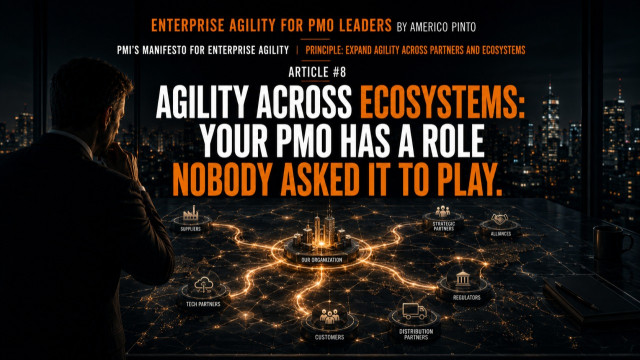 #23 - Agility Across Ecosystems: Your PMO Has a Role Nobody Asked It to Play.
Tags: Leadership, Management, Project Management
 #22 - The Problem Is Not Projects. It Is Project Myopia.
Tags: Leadership, Management, Project Management
 #20 - Your PMO Tracks the Portfolio. Can It Move the Money?
Tags: Leadership, Management, Project Management
 #19 - Decision Quality Is the New PMO Performance Indicator.
Tags: Leadership, Management, Project Management
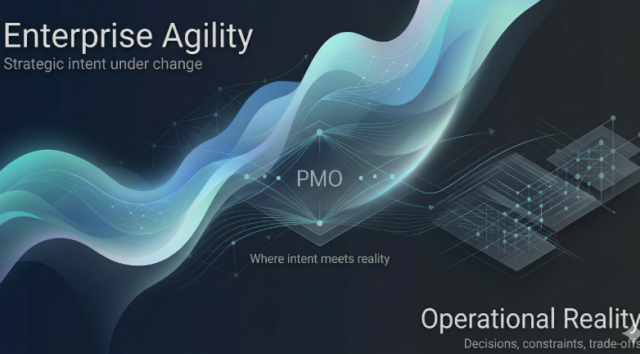 #16 - Enterprise Agility Raises the Question. The PMO Has to Answer It.
Tags: Leadership, Management, Project Management
 The PMO Relevance Gap: What PMI's New Report Reveals
Tags: Leadership, Management, Project Management
 Why "Belonging" Holds in Some Communities and Not in Others
Tags: Leadership, Management, Project Management
 #14 - AI for PMOs: What you need to understand now before it’s too late
Tags: Leadership, Management, Product Management
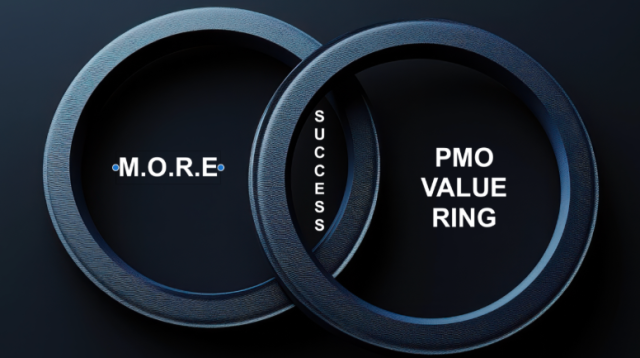 #13 - Embedding M.O.R.E. in PMOs through the PMO Value Ring Framework
Tags: Leadership, Management, Project Management
 #11 - How PMO Value Is Really Built: From Many Chains to One Perception
Tags: Leadership, Management, Project Management
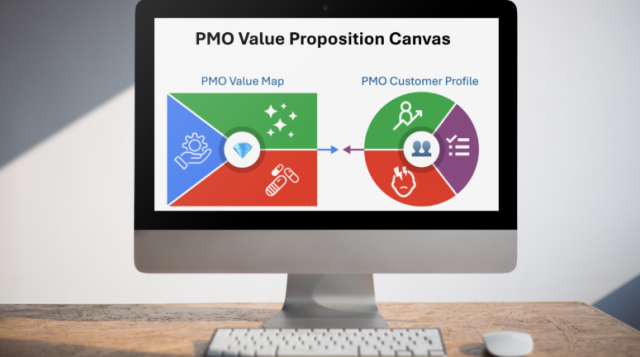 #10 - PMO Value Proposition Canvas: The Tool PMO Leaders Can’t Ignore.
Tags: Leadership, Management, Project Management
 #9 - The Truth Behind the “2-Year PMO Lifespan” Myth.
Tags: Leadership, Management, Project Management
 #8 - PMO Value Readiness: The Overlooked Driver of PMO Success.
Tags: Leadership, Management, Project Management
 # 7 - TMO, SMO, VMO, EPMO, xMO, or whatever you call it. Labels don’t deliver results. PMOs do.
Tags: Leadership, Management, Project Management
 #6 - The PMO Competency Gap No One Talks About.
Tags: Leadership, Management, Project Management
 #5 - When Executive Minds Work Against Your PMO: The Cognitive Biases You Can’t Ignore.
Tags: Leadership, Management, Project Management
 #4 - Great Delivery, Wrong Diagnosis: The PMO Mistake No One Talks About
Tags: Leadership, Management, Project Management
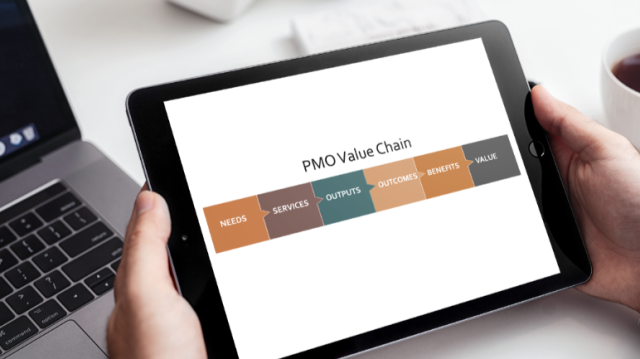 #3 – The PMO Value Chain: Why Delivering Isn’t Enough.
Tags: Leadership, Management, Project Management
 #2 - VMO: A Name, a Trend… or Just Common Sense?
Tags: Leadership, Management, Project Management
 Project Management Next Generation: The Pillars for Organizational Excellence
Tags: Project Management
 Project Management Institute
Tags: Management, Project Management
 PMO Global Alliance (PMOGA)
Tags: Entrepreneurship, Mergers and Acquisitions, Project Management
 PMO Global Alliance
Tags: Leadership, Management, Project Management
Tags: Project Management
Tags: Leadership, Management, Project Management
Tags: Project Management
 When Executive Minds Work Against Your PMO: The Cognitive Biases You Can’t Ignore.
After 20+ years working with PMOs, one pattern clearly stands out for me: no matter how well the PMO delivers, executives often struggle to truly see, remember, or fully appreciate its strategic value.
The PMO team is performing with discipline and consistency. Deliverables are being completed on time, governance processes are running smoothly, projects are advancing, and risks are being managed.
From a technical standpoint, the PMO seems to be doing everything right.
Yet… something feels off.
Despite the sustained effort and technical excellence, the PMO continues to struggle with one frustrating reality: the executive perception of its value remains low.
Executives continue to question the PMO’s relevance. Their confidence in the PMO’s strategic value stays low. And, perhaps most concerning of all, their perception of the PMO as a strategic asset remains stagnant or worse, continues to decline.
And in many cases, just when it seems things couldn’t get any worse, the PMO starts hearing the dreaded question:
"Do we really need a PMO?"
So the natural question that follows is: Why?
Why is it that even when a PMO consistently delivers, meets its KPIs, and checks every box on the technical side, it still fails to be recognized by executives as a strategic, indispensable asset?
The answer may not lie in performance reports or delivery metrics. It may lie inside the human mind.
Delivering value is not enough. You also need to actively manage how executives perceive that value.
This is not a failure of execution. It’s not about a lack of effort, technical expertise, competence, or dedication from the PMO team. The real problem runs deeper and is much more common than we would like to admit. It’s a failure to understand executive cognition.
Before assuming executives will automatically recognize strategic value, PMOs need to pause and ask themselves a hard but essential question: Do we truly understand how executive brains process and remember PMO contributions?
Ironically, even the most capable PMOs can be undermined not by their own actions but by the cognitive blind spots of the very people they’re trying to serve.
These biases shape how customers notice, remember, and interpret what the PMO does.
Even a highly effective PMO can become invisible, undervalued, or misunderstood simply because it falls into psychological blind spots that distort PMO customer perception.
And, anticipating results from one of our recent research studies, there are some classic, almost universal cognitive patterns that work against PMO recognition. Across industries, regions, and levels of executive experience, the same mental shortcuts appear time and again.
These five cognitive biases can sabotage PMO value perception. They are invisible traps that executives fall into, and it is often tricky for PMOs to navigate if they don’t understand how these biases work.
1) Selective Attention: Executives naturally filter out what’s familiar and consistent. The more smoothly your PMO delivers, the less executive attention you receive. What feels like success to the PMO becomes background noise to executives. Past consistency can actually work against future recognition.
2) Hedonic Adaptation: Executives quickly get used to improvements and elevated performance. What once impressed them becomes the new baseline expectation. Without realizing it, executives stop seeing ongoing PMO value because it has become their new normal. Yesterday’s wins become today’s invisible foundation.
3) Prevention Blindness: When PMOs prevent strategic disasters before they happen, executives never experience the crisis that didn’t occur. The PMO’s most valuable strategic work remains completely invisible to executive awareness. Success through prevention paradoxically reduces perceived value.
4) Effortless Illusion: The better the PMO executes strategic enablement, the easier everything appears to executives. They begin to believe that positive outcomes were inevitable, underestimating the strategic complexity and PMO coordination that made success possible. Excellence creates the perception of simplicity.
5) Hindsight Bias: After strategic initiatives succeed, executives unconsciously reconstruct the story as if the outcome was obvious and guaranteed from the beginning. The uncertainty, complexity, and critical PMO interventions get erased from executive memory. Success rewrites its own history, often without the PMO in it.
If you want executive recognition as strategic, make strategic value visible to executive cognition.
One of the most dangerous assumptions a PMO can make is believing that technical excellence will automatically lead to strategic recognition.
They won’t notice “portfolio governance improvements.” They’ll remember:
"The PMO helped us kill those three underperforming projects before they burned more cash.”
They won’t see “enhanced risk management frameworks.” They’ll recall that:
“The PMO flagged that regulatory issue six months before it hit the news.”
They won’t appreciate “resource capacity optimization.” They’ll value:
“The PMO reallocated our best people to the game-changing initiative just in time.”
As a strategic PMO leader, your job is to translate excellence into executive-relevant strategic impact, turning invisible PMO contributions into memorable business outcomes that executives can see, feel, and defend.
Because at the end of the day, this is the golden rule:
Executive attention determines strategic recognition. Executive memory determines strategic value perception. And the future of your PMO will always depend on how well you work with, not against, executive cognitive patterns.
When it comes to PMO value perception, facts alone are not enough; perception is reality, especially at the executive level.
How cognitive biases turned PMO success into invisibility.
Just a few years back, I had the opportunity to work with a PMO widely recognized across the organization for its operational excellence. For five years, they had consistently delivered outstanding outcomes.
Executives regularly praised their work, and department heads consistently rated their services as “business-critical.”
Yet when annual budget planning arrived, something bizarre happened:
The same executives who had been celebrating the PMO’s performance began questioning whether the PMO was still necessary:
“Things seem to be running smoothly now.”
“Maybe we’ve matured enough that we don’t need a PMO anymore.”
The PMO leadership was stunned!
How could five years of success suddenly become invisible?
That was one of the many times I witnessed all five cognitive biases working against a PMO simultaneously:
Selective Attention: Executives had become so accustomed to smooth delivery that they stopped noticing the PMO’s contribution.
Hedonic Adaptation: The outstanding project performance was now the new normal.
Prevention Blindness: Those major investment disasters the PMO helped avoid? Forgotten.
Effortless Illusion: Strategic decisions felt obvious because the PMO had made them feel that way.
Hindsight Bias: The executives genuinely believed those wins were "inevitable."
When we surveyed the leadership team, it became clear that they weren’t being dishonest or ungrateful. They genuinely couldn’t see the PMO’s ongoing strategic value.
The PMO had to completely rebuild executive perception from scratch, and most importantly, they began documenting “strategic counterfactuals,” showing executives what would have happened without PMO intervention.
Six months later, the narrative had flipped, but here’s the real takeaway: This wasn’t about manipulating perception. It was about understanding how executive brains filter information, and working with that reality, not against it.
Lastly, there’s an important warning here: While understanding cognitive biases is critical, PMO leaders must handle this topic carefully.
It’s easy to fall into the trap of blaming PMO customer perception for every challenge the PMO faces. This "victim mindset" can erode accountability and distract the PMO team from fixing real delivery or alignment issues.
There’s also a fine line between being psychology-aware and turning the PMO into a pop-psychology lab. The goal isn’t to lecture executives about their biases or manipulate perceptions. It’s to make genuine value visible in ways that resonate with how people naturally process information.
And of course, no amount of perception management can compensate for weak delivery. At the end of the day, the foundation remains the same:
Deliver real business impact first, then communicate it effectively.
Before your PMO sends its next portfolio report, launches that next governance process, or delivers another flawless project outcome, pause and ask yourself:
Are we making our strategic value visible to executive cognitive patterns?
Do we truly understand how executives notice, process, and remember PMO contributions?
Have we translated our operational excellence into executive-relevant strategic impact?
Are we actively countering the executive cognitive biases that make PMO work invisible?
Because no matter how excellent your PMO delivery may be, if executives can’t see your strategic value, the result will always be the same: No Recognition.
Until next time, stay bold, make it visible, deliver what matters, and make sure they know it.
Americo Pinto, PMI-PMOCP, PMP, PMOGA Managing Director at PMI
Tags: Project Management
 TMO, SMO, VMO, EPMO, xMO, or whatever you call it. Labels don’t deliver results. PMOs do.
People love labels. They make chaos seem orderly. They give us shortcuts that feel like strategies.
Call your PMO a “Strategic PMO,” and it sounds elevated. Call it “Agile,” and it feels fast and modern. Say “TMO” or “VMO,” and suddenly it signals transformation, or value.
But here’s the trap: when you define your PMO by a label, you’re not designing. You’re defaulting. And in far too many organizations, that default becomes a box that limits how the PMO sees itself and how others expect it to behave.
Let’s unpack why that happens and how high-performing PMOs break free.
Your PMO is not a type. It’s a solution. And every solution must be custom-built.
PMO types are not design strategies. They’re mental shortcuts; attempts to make the complex simple. Supportive. Controlling. Directive. Strategic. Agile. TMO. VMO. They sound neat. But reality is messy.
One of the most common and costly mistakes PMOs make is choosing a type before understanding real needs.
It feels strategic and looks decisive. But what you’ve really done is select a box full of assumptions before you've even discovered what your customers actually need.
You’ve already committed to:
All of this before listening. Before diagnosing. Before understanding PMO customer maturity or expected outcomes.
It’s like walking into a pharmacy, grabbing the most popular medication, and hoping it’ll fix your symptoms, without even describing what’s wrong.
The Myth of PMO Types
Do these sound familiar to you?
Sounds confident and bold. But in reality, it’s just branding wrapped in wishful thinking.
These labels offer the illusion of clarity. They suggest your PMO has found its identity when in reality, it’s surrendering to a prepackaged script.
Let’s take a closer look:
Supportive, Controlling, Directive? These are not PMO types. They are approaches to service delivery, and as the PMI PMO Practice Guide suggests, they should never apply to the PMO as a whole.
They should vary by service, and even by customer:
Rigidly applying one approach across all PMO services and customers? That’s not consistency. That’s inflexibility. And inflexibility is the enemy of PMO relevance.
Now consider the trendier acronyms:
The danger? Once you adopt a label, it starts dictating your decisions: who you serve, how you work, and even what you think you’re allowed to do.
PMO types don’t clarify your purpose. They confuse identity with impact.
Let me be clear: I’m not saying that everything written about PMO types is useless. Far from it.
If you pick up some of the best books on PMOs or listen to some of the most respected consultants in our field, you’ll undoubtedly find a variety of proposed PMO “types.” Different names, different structures, different focuses.
And here’s the tricky thing: they’re NOT wrong.
Each of these models represents a valid and honest perspective. They reflect the lived experience of individuals or groups who have worked hard to make sense of their context. And while those perspectives may not be statistically universal, they still offer valuable insights.
So no, we shouldn't discard them. However, we should also not follow them blindly. These models aren’t blueprints. They’re inspiration.
By the way, even the PMBOK® Guide – Seventh Edition proposed PMO types. However, the upcoming Eighth Edition, already aligned with the PMI PMO Practice Guide, adopts a more modern, adaptive, and customer-centered mindset. One that views PMO types as useful references, rather than predefined models to be followed.
So, how should we approach them? Think of each “type” as a different box. Instead of jumping into one and locking the lid, open them all. Look inside. Examine each item, each service, and each delivery approach. Ask yourself:
Because that’s the whole point: every PMO is different (and must be different!) to be truly successful.
So, yes, draw from the knowledge that is out there. Be curious. Be informed. But in the end, design a PMO that fits your reality, not someone else’s box.
What They Call Themselves vs. What They Actually Do
I recently worked with three PMOs, all from different industries and regions. Here’s what they called themselves: TMO, VMO, Strategic PMO.
Three labels. Three promises of elevation. But behind the scenes?
The TMO was managing a set of transformation initiatives; however, the service portfolio was almost identical to that of a "traditional PMO." The only real difference? A shift in focus, not in function. A TMO is just a PMO with a focused portfolio.
The VMO had a fresh new brand and an arsenal of benefit realization reports. But stakeholders weren’t engaged. Why? Because “value” had never been defined by them. They were receiving dashboards, not solutions. A VMO is a PMO with a value narrative.
The Strategic PMO had a strong presence in board-level meetings but was overwhelmed with operational demands. The team resisted helping at that level, fearing it would “dilute” their strategic image. That reluctance cost them credibility and trust. A Strategic PMO is a PMO focused on strategic services with high ambitions.
Different names. Same trap.
All three started with a label, and all three ended up constrained by it.
So next time someone says, “We’re building a [type] PMO,” ask them: Is the name helping you think clearly, or limiting what you believe is possible?
If your PMO vanished tomorrow, what would be missed?
A name? A structure? A few dashboards and templates?
Or would your customers feel the loss of a partner they depend on to deliver clarity, confidence, and results?
Of course, you can call your PMO whatever you like. But remember, the label won’t define its essence, and it certainly won’t determine its success.
No label has ever saved a PMO from irrelevance. Recognition comes from relevance. Earned through trust, not titles.
So stop trying to fit your PMO into someone else’s box. Design what your organization actually needs. Deliver it in a way that adapts to each PMO customer. And build a PMO that no one wants to work without.
Because when a PMO gets that right, the question isn’t: “What type is it?” It’s: “How did we ever work without them?”
Until next post, Break the box. Build what matters.
Americo Pinto, PMI-PMOCP, PMP | PMOGA Managing Director at PMI
Tags: Business Strategy, Project Management
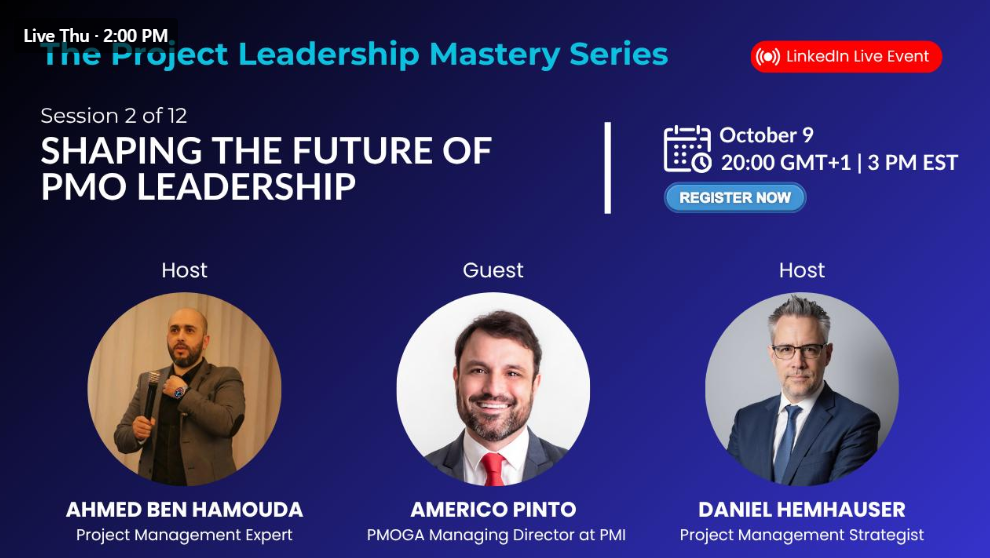 Shaping the Future of PMO Leadership
Location: VIRTUAL Date : October 09, 2025 - October 09, 2025 Organizer: Ahmed Ben Hamouda
#30 - In the End, Your PMO Is What the Organization Does With Its Work.#29 - Your PMO Builds Coherence It Never Holds.#28 - Your PMO Was Built to Hold Talent. Now It Has to Grow It.