

Thinkers360
Interested in getting your own thought leader profile? Get Started Today.

Kelly Brogdon Geyer

Chief Adaptability Officer at Kelly Brogdon Geyer

Zistersdorf, Austria

Kelly Brogdon Geyer is a Chief Adaptability Officer, keynote speaker, and author who works with CEOs and leadership teams at small to mid-size enterprises across Europe and internationally. Her work addresses a structural problem most organizations have not identified: the difference between building an organization that can be transformed and building one that does not need to be.

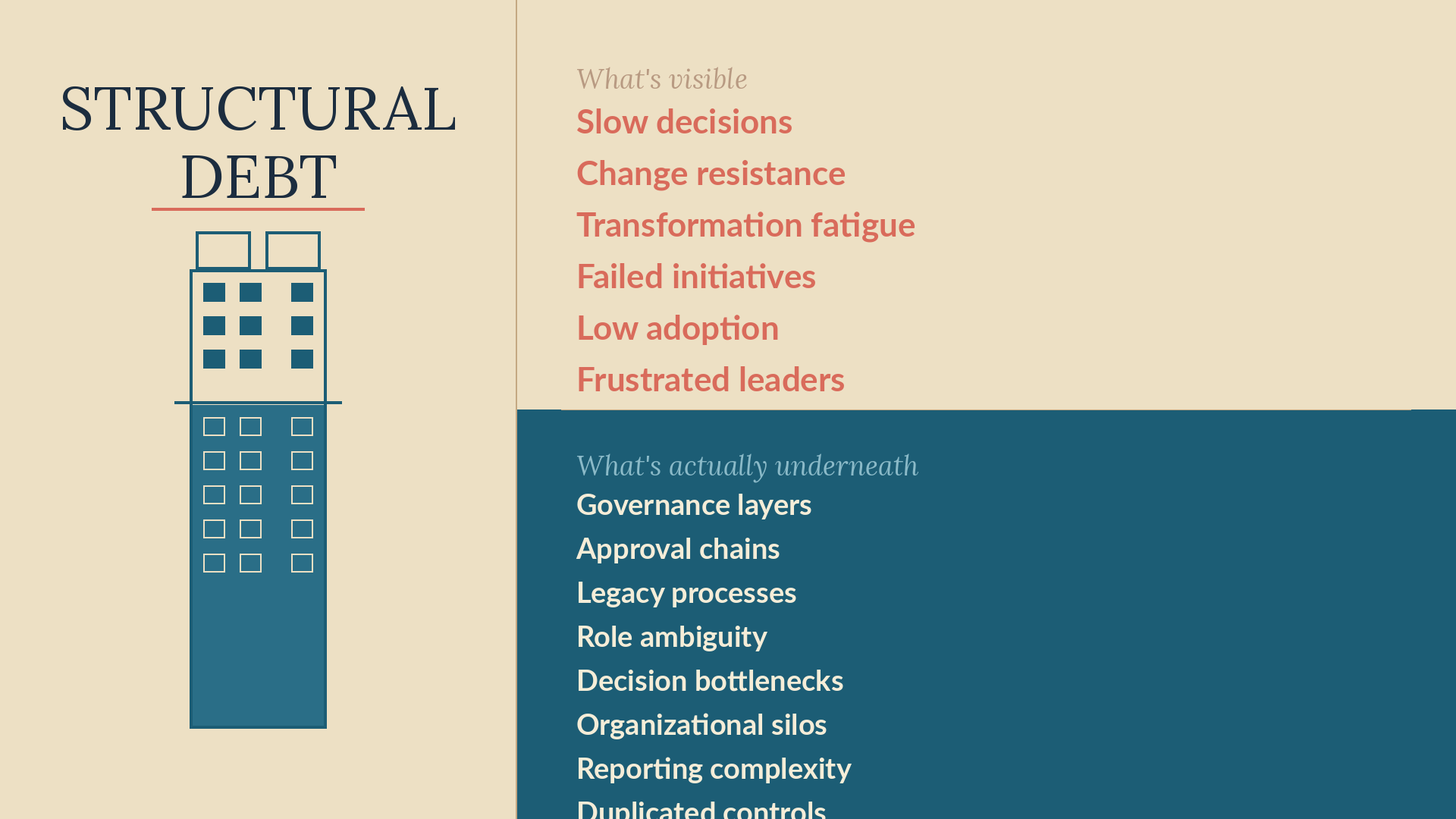
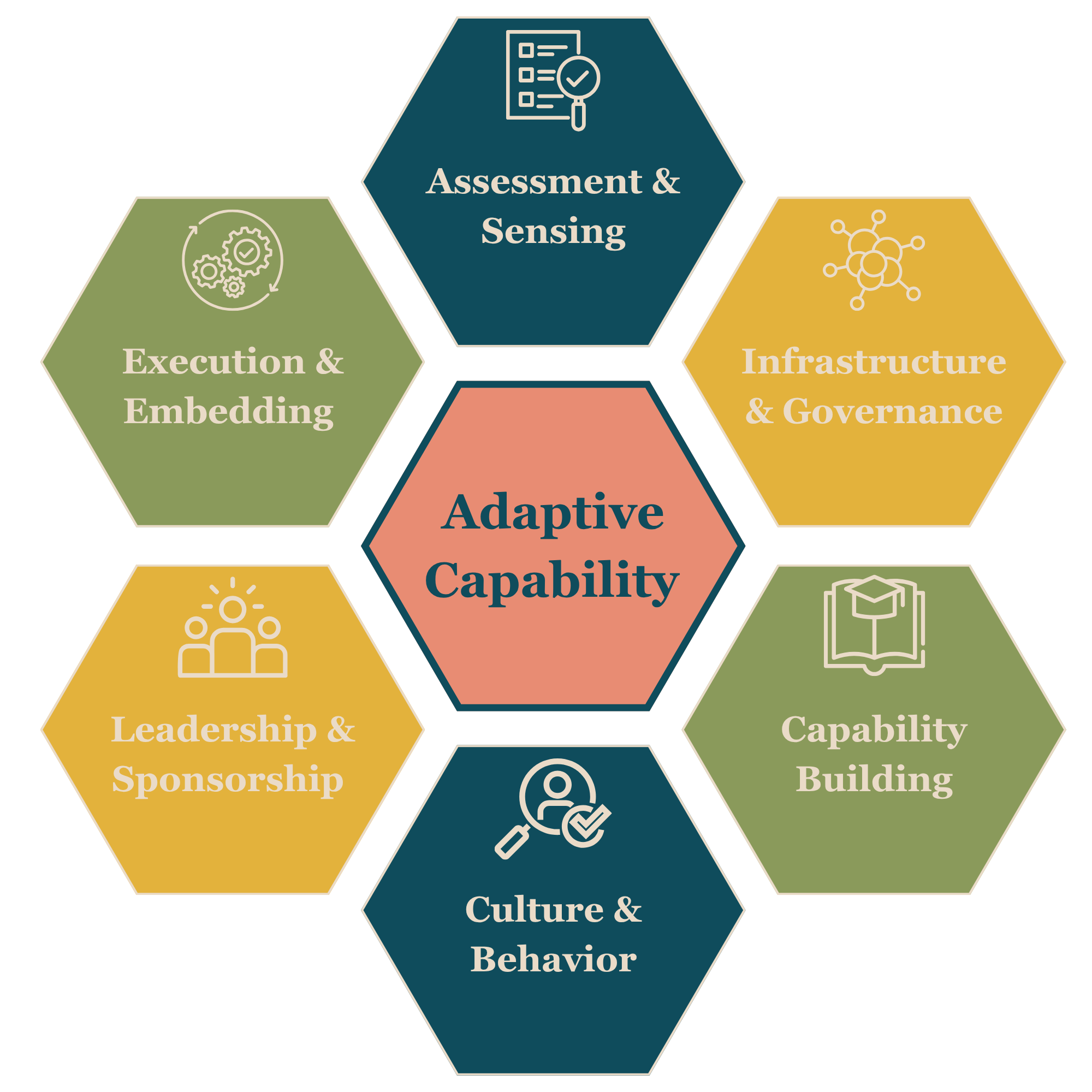
She created the Adaptive Capability Ecosystem (ACE) and the Momentum TransforMate Ecosystem (MTE) — frameworks that diagnose the six structural dimensions determining whether an organization can adapt continuously or must rely on episodic, externally-driven change. This structural rigidity — which she terms structural debt — compounds over time as organizations prioritize efficiency and stability over adaptability, making each subsequent transformation more expensive and less effective than the last.

Her Adaptive Capability Diagnostic has led to an 87% transformation success rate, 38% faster time-to-adapt, and a 47–62% reduction in consultant dependency across client organizations working across 22+ countries.

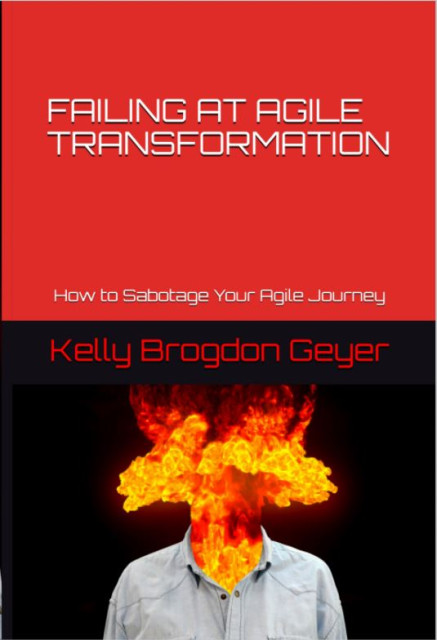
Kelly is the author of Failing at Agile Transformation: How to Sabotage Your Agile Journey and A Year of Agile Quotes, and a contributor to The Executive Magazine. She holds the CCMP credential through ACMP. She is represented by All American Entertainment (AAE) Speakers Bureau.

Her core argument: organizations do not fail at transformation because they lack the right program. They fail because they are structurally built to resist it.

Available For:
Travels From: Vienna, Austria
Speaking Topics: Organizational Adaptability, Transformation, Change Management, Chief Adaptability Officer, Structural Debt

Kelly Brogdon Geyer Points
Academic 0
Author 185
Influencer 18
Speaker 30
Entrepreneur 0
Total 233

Points based upon Thinkers360 patent-pending algorithm.

Thought Leader Profile

Portfolio Mix

Company Information

Company Type: Individual
Business Unit: Adaptive Capability
Theatre: Global
Minimum Project Size: $5,000+
Average Hourly Rate: $200-$300
Number of Employees: 1-10
Company Founded Date: 2025
Last Media Interview: 04/21/2026

Areas of Expertise

Agile 35.17
AI 30.09
Behavioral Science 30.14
Business Strategy 30.09
Change Management 34.14
Culture 30.17
Digital Transformation 30.06
Future of Work 30.29
Leadership 30.34
Management 30.21
Procurement 30.03
Project Management 30.04
Transformation 47.59

Industry Experience

Chemicals
Engineering & Construction
Financial Services & Banking
Insurance
Manufacturing
Professional Services
Telecommunications

Publications & Experience

49 Article/Blogs
Why Change Programs Break Down Between Activate and Transform
Kelly Brogdon Geyer
August 25, 2026
Most transformation programs do not fail at the beginning.

See publication

Tags: Change Management, Future of Work, Transformation

Why Change Programs Break Down Between Activate and Transform
Import from substack.com
August 25, 2026
Most transformation programs do not fail at the beginning.

See publication

Tags: Change Management, Digital Transformation, Transformation

Regulation (EU) 2026/1744 bought European organizations sixteen months.
Import from substack.com
August 24, 2026
Most will spend them the same way they spent the last eighteen.

See publication

Tags: Change Management, Digital Transformation, Transformation

Why Change Programs Break Down Between Activate and Transform
Kelly Brogdon Geyer
August 19, 2026
Most transformation programs do not fail at the beginning. They break down in the middle, right when the organization has the least patience left.

See publication

Tags: Change Management, Leadership, Transformation

The Blind Thrust Fault in Your Organization
Medium
August 14, 2026
At 7:42 in the morning on October 1, 1987, the ground under Rosemead, California moved without warning. I was nine years old, standing at the classroom water fountain filling my cup, when the shaking started.

See publication

Tags: Agile, Change Management, Transformation

Why I'm Here
Import from substack.com
August 13, 2026
I’ve spent the last several years telling CEOs their organizations are built like buildings.

See publication

Tags: Change Management, Digital Transformation, Transformation

The Blind Thrust Fault in Your Organization
Kelly Brogdon Geyer
August 13, 2026
At 7:42 in the morning on October 1, 1987, the ground under Rosemead, California moved without warning. I was nine years old, standing at the classroom water fountain filling my cup in Westminster, when the shaking started.

I dropped the cup and ran for my desk exactly as we were taught in drills at least a dozen times before. Under the desk, I froze. Around me, other kids reacted differently: some screaming, some crying, one or two trying to calm the rest down. I only cried once the shaking stopped. I hated earthquakes as a kid and I still do.

See publication

Tags: Business Strategy, Leadership, Transformation

From Organizational Capability Building to Cultivating Adaptive Intelligence
Medium
August 06, 2026
There is a significant difference between training people to manage change and developing an organization that learns differently.

Most organizations invest heavily in the first without ever building the second. A workshop runs. A methodology gets rolled out. Certifications get issued. Then the next transformation arrives, and the organization solves it from scratch again, as if the last one taught nothing at all.

See publication

Tags: Agile, Management, Transformation

From Organizational Capability Building to Cultivating Adaptive Intelligence: What the Shift Requires
Kelly Brogdon Geyer
August 06, 2026
There is a significant difference between training people to manage change and developing an organization that learns differently.

See publication

Tags: Change Management, Leadership, Transformation

Why Change Programs Break Down Between Activate and Transform
Linkedin
July 30, 2026
Most transformation programs do not fail at the beginning. They break down in the middle, right when the organization has the least patience left.

See publication

Tags: Business Strategy, Change Management, Transformation

The Real Cost of Renting Intelligence
Medium
July 30, 2026
Every organization I have worked with has, at some point, brought in outside expertise to solve a problem it could not solve on its own. That is not the issue. The issue is what happens twelve months later, when the same category of problem resurfaces and the organization reaches for the same solution: hire outside expertise again.

See publication

Tags: Agile, Change Management, Transformation

From Emerging to Systematic: What Six Months of Adaptive Capability Work Looks Like
Medium
July 23, 2026
Six months. Two dimensions. One organization that no longer needs to call in outside help to run its own change.

A mid-size European retailer came in with an Adaptive Capability Diagnostic score of 2.8 out of 5.0: Emerging. This is the full arc of what happened next, anonymized at the client’s request.

See publication

Tags: Agile, Change Management, Transformation

From Emerging to Systematic: What Six Months of ACE Work Looks Like
Kelly Brogdon Geyer
July 23, 2026
Six months. Two dimensions. One organization that no longer needs to call in outside help to run its own change.


A mid-size European retailer came in with an Adaptive Capability Diagnostic score of 2.8 out of 5.0: Emerging. This is the full arc of what happened next, anonymized at the client's request.

See publication

Tags: Change Management, Management, Transformation

What Adaptive Leaders Do Differently When the Plan Falls Apart
Medium
July 14, 2026
Every leader has a plan. Not every leader knows what to do when reality has a different plan. It reminds me of the birth plan I made to prepare for the arrival of my younger son. Nicely typed so the doctor and nurses could read it and understand exactly what I wanted: soft music, no medication, only my husband and hospital staff allowed in the room, c-section only if absolutely necessary, my own slippers instead of some hospital shoes, etc. Ha! My son had a different idea. Everything happened so quickly.

See publication

Tags: Agile, Change Management, Transformation

What a Chief Adaptability Officer Actually Does
Kelly Brogdon Geyer
July 07, 2026
This is not a rebranded change manager. This article describes what the role actually involves, and when an organization genuinely needs one.

The title is new enough that most people who hear it assume it is marketing. It is not marketing. It is a specific answer to a specific gap that shows up repeatedly in organizations that have invested heavily in transformation and are not getting the results they expected: nobody owns the organization's ability to adapt, as distinct from owning any particular change.

See publication

Tags: Change Management, Leadership, Transformation

What Is Adaptive Capacity? And Does Your Organization Have It?
Import from medium.com
July 06, 2026
Most executives I talk to have a vague sense that their organization is not good at change. They have been through enough transformations…Continue reading on Medium »

See publication

Tags: Change Management, Future of Work, Transformation

The Intercultural Blind Spots That Derail Global Transformations
Import from medium.com
July 06, 2026
22+ countries. 40+ organizations. The failure pattern in global transformations that sneaks up on leaders most isn’t the big cultural…Continue reading on Medium »

See publication

Tags: Change Management, Future of Work, Transformation

What Is Adaptive Capacity — and Does Your Organization Have It?
Kelly Brogdon Geyer
July 01, 2026
Most executives I talk to have a vague sense that their organization is not good at change. They have been through enough transformations to recognize the same pattern repeating itself: the initiative launches, the first few months go reasonably well, and then something happens. Momentum stalls. Behavior drifts back. The consultants leave. And two years later, the organization is largely where it started, with a heavier project portfolio and a more exhausted workforce.

See publication

Tags: Change Management, Leadership, Transformation

Why AI Transformations Really Fail (It’s Not the Technology)
Import from medium.com
June 25, 2026
Most organizations blame the tool when AI adoption stalls. The tool is rarely the problem.Continue reading on Medium »

See publication

Tags: Change Management, Future of Work, Transformation

Why AI Adoption Really Fails (It's Not the Technology)
Linkedin
June 25, 2026
According to McKinsey, the organizations successfully scaling AI are pulling ahead of peers at an accelerating rate. They are not using fundamentally different technology. In many cases, they are using the same models and vendors as the organizations whose implementations stalled after the pilot. What separates them is organizational, not technical.

See publication

Tags: Change Management, Digital Transformation, Leadership

Structural Debt: Why Your Organization Can't Adapt
Linkedin
June 18, 2026
Every organization I work with has structural debt. Most have never heard the term. All of them recognize it the moment I describe it.

See publication

Tags: Change Management, Culture, Transformation

Structural Debt: Why Your Organization Can't Adapt
Linkedin
June 18, 2026
Structural debt is the rigidity that accumulates when organizations make decisions about processes, hierarchies, governance structures, and approval chains, and roles that are optimized for today rather than for the conditions they will face next. Each decision seems reasonable in isolation. Collectively, over time, they compound into an organizational stiffness that makes change progressively harder and more expensive.

See publication

Tags: Change Management, Future of Work, Transformation

The restructuring worked: So why does it feel like nothing changed?
Import from medium.com
June 15, 2026
A new ownership group takes over a struggling hotel. They bring in a consulting firm. Six months later, the cost structure is leaner, the…Continue reading on ILLUMINATION »

See publication

Tags: Change Management, Future of Work, Transformation

Structural Debt: Why Transformation Keeps Failing
Import from medium.com
June 02, 2026
Every organization I work with has structural debt. Most have never heard the term because, as far as I know, I originated it. All of them…Continue reading on ILLUMINATION »

See publication

Tags: Change Management, Future of Work, Transformation

Why Your Change Management Is Solving Yesterday’s Problem?
Import from medium.com
May 27, 2026
Most change management frameworks were designed for a world where change was episodic. A merger. A system implementation. A restructuring…Continue reading on ILLUMINATION »

See publication

Tags: Change Management, Future of Work, Transformation

15 Author Newsletters
Structural Debt: What It Costs and Why It Has No Due Date
Linkedin
September 15, 2026
Structural debt in an organization has no due date. But you can certainly see it and feel it. An approval hierarchy built for what the company looked like three reorganizations ago; a reporting line that made sense under a leader who left years earlier; a system that changed hands twice after it was purchased and that nobody has clearly owned since: none of it comes with a date attached. It can compound for years, without anyone being required to address it. That’s how an organization ends up explaining the same dysfunction to its third consecutive change leader, each one diagnosing the problem fresh because nothing ever forced an earlier fix.

See publication

Tags: Change Management, Leadership, Transformation

Why I Do This Work
Kelly Brogdon Geyer
September 10, 2026
Ask someone in change work why they do it and the answer usually sounds like some version of “I want to help people.” Fair enough. I love helping people and organizations too. But that answer is unfalsifiable, which makes it a weak response to a fair question.

See publication

Tags: Behavioral Science, Change Management, Culture

Why I Do This Work: The Five Mechanisms
Linkedin
September 01, 2026
Ask someone in change work why they do it and the answer usually sounds like some version of "I want to help people." Fair enough. I love helping people and organizations too. But that answer is unfalsifiable, which makes it a weak response to a fair question.

See publication

Tags: Change Management, Procurement, Transformation

Who This Is For, and Who It Isn't For
Linkedin
August 18, 2026
A CEO wanted to talk. He genuinely wanted to address the issues his organization was facing. We spent almost two hours on a diagnostic conversation, working through where his last four transformations had gotten stuck and why the fifth one already looked like it might be in trouble. He asked sharp questions. He pushed back in useful ways. Then we reached the part of the conversation about what actually needed to change, and he told me the people were the problem. “Our people are just really resistant to change.”

See publication

Tags: Change Management, Leadership, Transformation

The Blind Thrust Fault in Your Organization
Linkedin
August 04, 2026
At 7:42 in the morning on October 1, 1987, the ground under Rosemead, California moved without warning. I was nine years old, standing at the classroom water fountain filling my cup, when the shaking started.

See publication

Tags: Change Management, Leadership, Risk Management

The Real Cost of Renting Intelligence
Linkedin
July 21, 2026
Every organization I have worked with has, at some point, brought in outside expertise to solve a problem it could not solve on its own. That is not the issue. The issue is what happens twelve months later, when the same category of problem resurfaces and the organization reaches for the same solution: hire outside expertise again.

See publication

Tags: Business Strategy, Change Management, Project Management

What Adaptive Leaders Do Differently When the Plan Falls Apart
Linkedin
July 07, 2026
Every leader has a plan. Not every leader knows what to do when reality has a different plan. It reminds me of the birth plan I made to prepare for the arrival of my younger son. Nicely typed so the doctor and nurses could read it and understand exactly what I wanted: soft music, no medication, only my husband and hospital staff allowed in the room, c-section only if absolutely necessary, my own slippers instead of some hospital shoes, etc. Ha! My son had a different idea. Everything happened so quickly. I ended up requiring an emergency c-section before the nurse even had the chance to enter my information into the system from the physical file. We all had a good laugh with the nurse as she typed and found my beautifully written plan.

See publication

Tags: Change Management, Leadership, Transformation

The restructuring worked. So why does it feel like nothing changed?
Linkedin
June 09, 2026
A new ownership group takes over a struggling hotel. They bring in a consulting firm. Six months later, the cost structure is leaner, the brand positioning is sharper, the RevPAR is trending in the right direction. The project is declared a success.

See publication

Tags: Change Management, Leadership, Transformation

Bonus Issue: The Chief Adaptability Officer
Linkedin
May 27, 2026
What the role is, why it exists, and why it is not the Chief Transformation Officer
Every five years or so, a major organization announces a large-scale transformation program. They hire consultants and they arrive. A steering committee is formed. A roadmap is built. Eighteen months later, roughly half of the intended changes have landed — and the organization is already planning the next transformation.

See publication

Tags: Change Management, Leadership, Transformation

Why Your Change Management Is Solving Yesterday's Problem
Linkedin
May 26, 2026
Most change management frameworks were designed for a world where change was episodic. A merger. A system implementation. A restructuring. You planned it, communicated it, managed the transition, and declared it done. Then everyone went back to normal.

See publication

Tags: Change Management, Leadership, Transformation

The Kinetic Leader
LinkedIn
May 26, 2026
Newsletter for executives who want their organizations to proactively and continuously evolve - not just react and recover. Bo-weekly. Substantive. No filler.

See publication

Tags: Change Management, Future of Work, Transformation

What Resilience Days Taught Me About Organizational Fragility
Linkedin
April 28, 2026
I presented at Resilience Days 2026 last week. It's a virtual event, organized by Comparative Agility, with practitioners and executives who spend their days trying to make organizations more resilient.

See publication

Tags: Change Management, Leadership, Transformation

Go-Live Isn't the Destination. It's Just a Door.
Linkedin
April 14, 2026
Your SAP implementation went live on time and under budget. Everyone clapped and drank the prosecco.

See publication

Tags: Change Management, Digital Transformation, Transformation

The Fractional Workforce Is Exploding. Is Anyone Ready for It?
Linkedin
March 31, 2026
Everyone's talking about the fractional workforce like it's the answer.

According to Fractionus, the global fractional executive market has topped $5.7 billion, growing at 14% annually. The number of fractional leaders doubled in just two years — from 60,000 in 2022 to 120,000 in 2024. LinkedIn profiles listing fractional roles jumped from 2,000 to 110,000 in that same period. Gartner forecasts that within three years, nearly one third of midsize companies will employ fractional executives.

Everyone is celebrating. But I am wondering about a few things.

See publication

Tags: Change Management, ERP, Transformation

Your AI Strategy Isn't the Problem. Your Organization Is.
Linkedin
March 17, 2026
Every boardroom conversation right now has the same theme. AI. How to adopt it, how to scale it, how to prove it's worth what's being spent on it.

See publication

Tags: AI, Change Management, Culture

2 Books
A Year of Agile Quotes: Weekly Mindset Messages
KDP
December 08, 2020
Staying motivated throughout the year is difficult in even the best of circumstances. It is especially challenging during a time of transition or change. Kelly Brogdon Geyer has gathered 52 motivational and inspirational quotes to keep you and your colleagues focused on what is important. Use this lightweight and interesting book to spice up your retrospectives, kick-off team building activities, or just as weekly reminders. This is not a collection of quotes by well-known agilists. These quotes are taken from authors, athletes, coaches, philosophers, and more. Allow their wise words to encourage you and inspire your mindset.

See publication

Tags: Agile, Transformation

Failing at Agile Transformation: How to Sabotage Your Agile Journey
KDP
January 08, 2019
Nobody likes to fail especially when it comes to an enterprise-wide change. The number of practices you can test out to assist you in your Agile journey are limitless. Unfortunately, the number of counterproductive assaults people perform during the journey are just as limitless.

There are countless books, websites and blogs that will describe dozens and even hundreds of different techniques that can help you become Agile. With so many available resources, making this transformation successful must be easy. Right?

Wrong! The sad fact is that an organization can employ every single tip and trick out there and still fail at Agile. Save yourself some headaches and spend a a little bit of time reading about the lessons learned by Kelly Geyer in her experience as a Scrum Master and Agile Coach.

See publication

Tags: Agile, Change Management, Transformation

1 Speaker Bureau Listing
All American Entertainment Speakers' Bureau
February 02, 2026

See publication

Tags: Agile, Culture, Transformation

4 Speaking Engagements
Organizations and Stable Structures
CMGPartners
May 19, 2026
Organizations aren’t built to stay still, but too many still treat change like a one-time event instead of an ongoing evolution. In this episode of The Fault Line, Gary Lancina and Kim Scribner are joined by transformation strategist Kelly Geyer for a conversation about resilient organizations, adaptive leadership, and why structure alone won’t save a company from disruption. From construction metaphors and agile transformations to leadership buy-in and organizational alignment, the discussion explores what it really takes to build companies that can bend without breaking.

See publication

Tags: Agile, Change Management, Transformation

Comparative Agility Executive Roundtable
Comparative Agility
February 24, 2026
Sharing my new Change Resilience Assessment for individuals and the upcoming Adaptive Capability Assessment on Comparative Agility's website. Highlighting the importance of tackling individual resilience and organizational adaptability to create an organization that continuoulsy evolves.

See publication

Tags: Agile, Change Management, Transformation

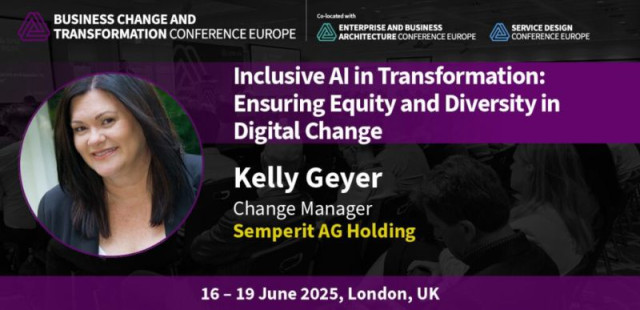
Inclusive AI and the Human Experience: Ensuring Equity & Diversity in Digital Transformation
IRM UK
June 16, 2025
As organisations increasingly adopt AI to drive business transformations, the risk of amplifying systemic biases grows. Without careful oversight, AI solutions can unintentionally exclude underrepresented groups, creating inequitable outcomes. This session explores how to embed diversity, equity, and inclusion (DEI) principles into AI-driven transformations, ensuring that digital change is both human-centered and future-proof. Through real-world case studies, practical tools, and an interactive discussion, participants will leave with actionable strategies to ensure that AI benefits everyone equally within their organisations. Key Takeaways:

Understand the risks of bias in AI-driven transformations and how they can impact organisational equity.
Learn practical tools to audit AI solutions for fairness and inclusivity.Explore strategies for creating a feedback culture that ensures underrepresented voices are heard.
Gain insights into how inclusive leadership can drive successful, equitable AI implementations.

See publication

Tags: AI, AI Ethics, Diversity and Inclusion

Agile for Non IT
Hutchison Drei
December 13, 2018
I made this talk when I worked at Hutchison Drei in December 2018. The company was relatively new with Agile. There were several departments that were curious about Agile but they were unsure of how to start. In this presentation, I discussed what Agile is and what it is not, Agile values and principles, and 4 easy steps to get started.

See publication

Tags: Agile, Change Management, Transformation

3 Videos
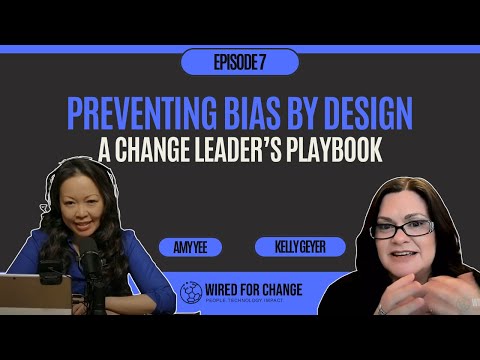
Preventing Bias By Design - The Change Leader's AI Playbook
Wired for Change podcast
April 10, 2025
As artificial intelligence reshapes industries from healthcare to HR, the risks of reinforcing discrimination through biased data and poorly designed systems are growing. But the good news? We can do something about it — if we start now.

In this episode, we cover:
The real-world risks of biased AI
How organizations can build inclusivity into AI from the ground up
Why DEI isn’t just a checkbox — it’s a foundation for sustainable transformation
The roles everyone (yes, *everyone*) plays in responsible AI adoption
Tools, frameworks, and international efforts that are shaping the future

“If diversity and inclusion aren’t part of your culture, they won’t show up in your AI.” – Kelly Geyer

Whether you're leading digital change, selecting AI tools, or just trying to understand how AI decisions are impacting you and your community — this episode is for you.

See publication

Tags: AI, AI Ethics, Diversity and Inclusion

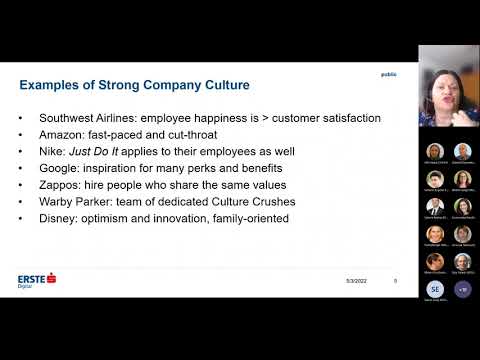
Doing versus Being – Ways to Create a High-Performing Agile Culture
Erste Digital
June 09, 2022
I presented the topic of Agile culture during an Agile Cafe at Erste Bank. I described organizational culture, why it is important, Agile culture and 8 ways to create a high-performing Agile culture.

See publication

Tags: Agile, Management, Transformation

Failing at Agile Transformation
Women in Agile
December 11, 2019
Since 2008, Kelly Geyer’s focus has been coaching organizations and teams by discovering new ways of working together and avoiding the common pitfalls that hinder their progress.

Geyer’s recently published book, Failing at Agile Transformation, discusses several areas where agile transformations get derailed. She talks with us about the origins of both the book and her own Agile journey, while also speaking on gender differences and her own professional growth.

The Women in Agile community champions inclusion and diversity of thought, regardless of gender, and this podcast is a platform to share new voices and stories with the Agile community and the business world, because we believe that everyone is better off when more, diverse ideas are shared.

See publication

Tags: Agile, Change Management, Transformation

3 Webinars
The Last Transformation You'll Ever Need
Comparative Agility
September 08, 2026
88% of large-scale transformations fail to achieve their original ambitions. Most organizations respond by launching another one. This session argues that the problem is not execution quality. It is the model itself. Organizations built like buildings require renovation to change. The renovation is expensive, exhausting, messy, and the people living through it eventually stop believing it will ever finish. This session makes the case for a fundamentally different approach: building organizations that evolve continuously, so transformation becomes unnecessary.

See publication

Tags: Agile, Change Management, Transformation

Why Agile Organizations Still Can't Transform
Comparative Agility
April 29, 2026
Your organization invests millions in transformation initiatives - agile transformation, AI implementations, enterprise systems, and cultural change. Yet the large majority of transformations fail to deliver lasting results. Why? The painful truth is that organizations still treat transformation as a series of projects instead of building the capability to evolve continuously. In this session, discover why traditional change management approaches create temporary compliance instead of lasting capability and learn the architectural principles that embed change resilience into your organization's DNA. Drawing from enterprise transformations spanning tens of thousands of employees across two dozen countries and every type of transformation you can imagine, you will leave with a framework for assessing your organization's adaptive capability and concrete strategies for creating resilience that outlasts any single initiative.

Kelly Brogdon Geyer helps organizations turn constant change into a strategic advantage. With over 20 years of leading enterprise transformations across the globe, Kelly has helped thousands of professionals navigate change successfully.

See publication

Tags: Agile, Change Management, Transformation

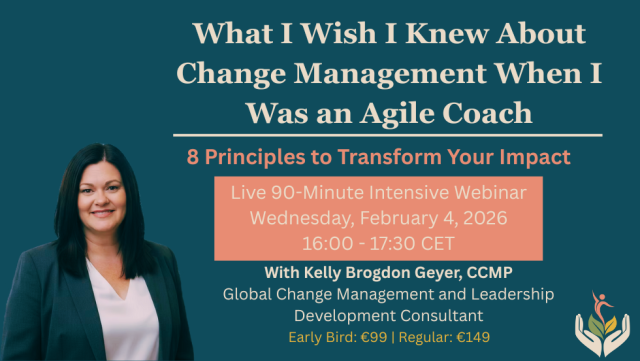
What I Wish I Knew About Change Management When I Was an Agile Coach
Kelly Brogdon Geyer
February 04, 2026
90-Minute webinar covering:

Executive sponsor activation
The role of culture in a transformation
The importance of strategic communication
The 5 types of resistance (and how to diagnose which you're facing)
Need for change management early and throughout a change and how to formulate the business case
Continuous improvement is the bridge between agile and change management
Just like agile planning, change management also embraces "plan then adapt"
Design for sustainability, not just adoption: sustainability equation and mechanisms
Your Action Plan for tomorrow
Building your 30-60-90 day roadmap

See publication

Tags: Agile, Change Management, Transformation

Thinkers360 Credentials

6 Badges

Blog

1 Article/Blog
Structural Debt Doesn't Show Up on a Balance Sheet. Here's How to Find It Anyway.
Thinkers360
September 21, 2026

Every organization keeps a balance sheet, a risk register, and an org chart. None of the three will show where the organization has taken on debt nobody is assigned to pay off.


Financial debt gets found because someone external demands to see it and there is usually a due date when it must be paid in full. A lender wants to see how much debt is on the books before extending additional credit. An auditor wants the reconciliation. A board wants the ratio explained before the next raise. Technical debt gets found for a similar reason: a security review, a platform migration, a new engineering leader who inherits a codebase and has to justify slowing down to fix it. Both kinds of debt survive for a while, but eventually something outside the system that created them forces a closer look.


Structural debt stays hidden because it has no equivalent. Nobody outside the organization has a reason to demand a review of its decision rights, its approval chains, or the reporting lines that made sense under a structure that no longer exists. There is no due date for someone to pay attention to. So it accumulates without a forcing resolution, and it is usually discovered the same way: a new leader arrives, tries to move something simple, and cannot work out who actually has the authority to say yes.


McKinsey's 2020 survey of fifty CIOs at large financial-services and technology firms found that ten to twenty percent of the budget earmarked for new technology work was instead absorbed by resolving existing technical debt, and that technical debt amounted to twenty to forty percent of the value of the entire technology estate. That figure is specific to technology spending, not to organizational structure as a whole, and it is six years old as of this writing. But the mechanism it measures, capacity that should be building the future instead being consumed by decisions made in the past, is the same mechanism at work when a CEO cannot explain why a routine approval takes four signatures instead of one. Nobody has measured that number for structural debt the way McKinsey measured it for technology. The absence of a number is not evidence the cost is small. It is evidence nobody has been forced to look.


That is the actual problem: not that structural debt is hard to see, but that nothing in a normal operating rhythm asks anyone to look for it. It has to be found on purpose. There are three places are worth checking first.


Decision rights inherited from a structure that no longer exists. Every approval step was created to solve a specific problem for a specific structure. When the structure changes, the approval step usually does not, because removing a control is a harder decision than adding one, and nobody wants to be the person who takes away a safeguard right before it turns out to have mattered. The test is simple: for any approval, ask what would go wrong if it were removed today. If the answer identifies a live risk, the approval belongs. If the answer takes longer than fifteen seconds, or reaches for who used to need it rather than who needs it now, the approval is inherited, not necessary.


Standing commitments that outlived their trigger. Recurring meetings, reports, and sign-off chains are almost always created for a reason: a project, a crisis, a specific person who needed visibility. The commitment is easy to create and, unlike a budget line, has no natural expiration built in. It survives the reason for its own existence by default, because ending a standing meeting requires someone to notice it, question it, and take the small social risk of saying it is no longer needed, while continuing it requires nothing from anyone. Ask any recurring commitment why it exists. If the honest answer names a project that ended or a person who has moved on, it has outlived its trigger.


Role definitions that changed on paper but not in practice. This is the least visible of the three, and the most expensive. A title changes, a job posting is rewritten, an org chart is redrawn, but the incentives, the reporting line, and the actual work someone is measured on stay exactly as they were. The organization now runs two systems at once: the one on paper and the one people are actually rewarded for. Compare what a role's job description says against what its last month of actual work and performance conversations rewarded. Where they diverge, the structure changed in name only, and the person in the role is left doing both jobs to protect themselves in both systems.


None of these three is hard to find once someone is looking for them. The harder problem is that nobody is assigned to look, because structural debt has no natural owner the way financial debt has a CFO and technical debt increasingly has a CTO with a mandate to manage it. Some organizations build that assessment in deliberately: an outside diagnostic that treats governance and decision rights as something to be reviewed on a cycle, the way a balance sheet or a codebase is reviewed, rather than something reviewed only after it has already become someone's crisis. That kind of review does not produce a single number the way a debt-to-equity ratio does. It produces something closer to a maturity profile: where authority, incentives, and structure still match, and where they have drifted apart without anyone deciding they should.


The organizations that treat that review as routine catch the drift while it is still cheap to fix. The ones that wait find out the same way they always do: a new leader tries to move something simple, and discovers that no one can say who actually has the authority to let them.

See blog

Tags: Agile, Change Management, Transformation

Opportunities

1 Business Advisory
Chief Adaptability Officer — Executive Advisory on Organizational Adaptive Capability

Location: Austria and virtual    Fees: $150,000 - $300,000

Service Type: Service Offered
Organizations keep running transformation programs, ERP, Agile, digital, AI, and the changes still don't stick. Kelly Brogdon Geyer works as a fractional Chief Adaptability Officer for CEOs and CHROs at organizations of 200 to 2,000 employees, addressing the root cause: structural debt, the accumulated governance, decision rights, and incentive design that make change expensive and dependent on outside intervention.

Engagement includes assessment across her proprietary Adaptive Capability Ecosystem's six dimensions, executive sponsorship coaching, and a working roadmap for building adaptive capacity, not another one-time transformation program. 20+ years of experience across 22 countries, CCMP certified, Thinkers360 Top 10 Global Thought Leader in Transformation.

Respond to this opportunity

1 Business Consulting
Adaptive Capability Diagnostic — Organizational Assessment Before Your Next Transformation

Location: Austria and virtual    Fees: $18,000 - $29,000

Service Type: Service Offered

Most transformation failures are not diagnosed before the program begins. The Adaptive Capability Diagnostic evaluates an organization across the Adaptive Capability Ecosystem's six dimensions, sensing and assessing, infrastructure and governance, capability building, culture and behavior, leadership and sponsorship, and execution and embedding, combining a maturity assessment with structured stakeholder interviews.

The result is not another audit. It is a maturity profile, an explanation of why the organization scores where it does, and a roadmap of quick wins and longer-term initiatives, often without requiring a large new investment of time or budget. Designed for CEOs and CHROs at organizations of 200+ employees ahead of ERP, Agile, digital, or AI transformations, or anywhere prior change hasn't stuck.

Respond to this opportunity

Events

Contact Kelly Brogdon Geyer

Book a Video Meeting

Media Kit

Share Profile

Contact Info

  Profile

Kelly Brogdon Geyer


Latest Activity

Latest Opportunities

Latest Member Blogs

Search
How do I climb the Thinkers360 thought leadership leaderboards?
What enterprise services are offered by Thinkers360?
How can I run a B2B Influencer Marketing campaign on Thinkers360?