
Unlock access to Thinkers360 AI to fast-track your search for analysts and influencers.
This feature is available for Enterprise Lite and Enterprise Members Only.
You have been temporarily restricted. Please be more thoughtful when adding content for your portfolio. Your portfolio and digital media kit and should be reflective of the professional image you wish to convey. Accounts may be temporarily restricted if we receive reports of spamming or if the system detects excessive entries.
Membership
Publish your original ideas on the Thinkers360 platform!
This feature is available for Pro and Pro-Plus Members Only.
Speaker Bureau functionality whereby individuals can be featured speakers within our Speaker Bureau service and enterprises can find and work with speakers.
This feature is available for Pro, Pro-Plus, Premium and Enterprise Members Only.
Highlight your featured products and services within our company directory for enhanced visibility to active B2B buyers worldwide. This feature is available for Pro, Pro Plus, Premium and Enterprise Members Only.
Contribute to the Thinkers360 Member Blog and have your thought leadership featured on our web site, newsletter and social channels. Reach our opt-in B2B thought leader community and influencer marketplace with over 100M followers on social media combined!
You’ve reached your daily limit for entering quotes. Please only add personally-authored content which is reflective of your digital media kit and thought leadership portfolio.
Thinkers360 Content Library
For full access to the Thinkers360 content library, please join our Content Plan or become a contributor by posting your own personally-authored content into the system via Add Publication or Import Publication.
Dashboard
Unlock your personalized dashboard including metrics for your member blogs and press releases as well as all the features and benefits of our member plans!
Interested in getting your own thought leader profile? Get Started Today.
Joel Carboni
Founder and President at GPM
Detroit, United States
Dr. Carboni stands as the preeminent global authority on sustainable project management. His pioneering tools and methodologies have become the benchmark for green practices, garnering global adoption by corporations, organizations, and governments to weave sustainability seamlessly into their project frameworks.
A distinguished alumnus of Ball State University, Dr. Carboni holds a Ph.D. in Sustainable Development and Environment. His portfolio encompasses over 25 years across multifaceted domains of project management—spanning government, finance, consulting, manufacturing, and the academic sphere.
An esteemed voice in the industry, Dr. Carboni regularly takes the stage at conferences and symposiums related to project management and sustainability. His expertise is not just bound by geography; he has left his mark in more than 55 nations.
His notable accolades include his tenure as President Emeritus of the International Project Management Association (IPMA) in the U.S. and his pivotal role on the Global advisory board.
As the visionary behind GPM® (Green Project Management), Dr. Carboni's influence extends into academia, serving as a visiting professor at Skema Business School.
His commitment to global causes is evident as the GPM representative to the United Nations Global Compact. Dr. Carboni was a foundational signatory for both the Business for Peace Initiative and the Anti-Corruption Call to Action. Furthermore, he was instrumental in crafting the UN 2030 Agenda for Sustainable Development (SDGs).
Beyond his vast professional contributions, Dr. Carboni is renowned for introducing the PRiSM™ project delivery methodology and the P5 Standard for Sustainability in Project Management. His educational modules on Green and Sustainable Project Management are taught in over 145 countries, thanks to collaborations with professional training entities, business consortiums, and esteemed universities. His writing prowess shines in his leading work, "Sustainable Project Management."
Available For: Advising, Authoring, Consulting, Speaking Travels From: Detroit
Speaking Topics: Project Management and Sustainability
Speaking Fee
$5,000 (In-Person), $1,000 (Virtual)
Joel Carboni
Points
Academic
43
Author
242
Influencer
145
Speaker
78
Entrepreneur
110
Total
618
Points based upon Thinkers360 patent-pending algorithm.
Applying the PRiSM Methodology to Raise Awareness of the Importance of Using Sustainable Project Management Practices in Organizations
MDPI
January 21, 2025
Sustainability has become crucial in today’s business landscape. Customers, suppliers, partners, and investors are increasingly demanding that companies be aware of their impacts on the environment and society. Achieving sustainability in business operations, including social, economic, and environmental aspects, is one of the major challenges for companies today. Integrating sustainability into project management fosters the development of more sustainable and responsible projects, considering environmental, social, and economic aspects. This integration allows for benefits such as risk and operational cost reduction, strengthening of the company’s reputation, and gaining stakeholders’ trust. This study takes an exploratory approach, focusing on a pilot test to investigate how the PRiSM (Projects Integrating Sustainable Methods) methodology can be applied in a business context to assess the level of maturity of sustainable project management practices and thus raise awareness of the importance of these issues. PRiSM was developed by GPM Global (Global Project Management, Lees Summit, MO, USA) in 2013 to help organizations integrate project processes with sustainable initiatives and it is based on the P5 Standard, which incorporates tangible tools and methods to manage the balance between finite resources, social responsibility, and delivery of sustainable project outcomes. Based on the PRiSM methodology and the P5 Standard (2nd Edition), a comprehensive questionnaire was developed under the Portuguese Project Management Observatory to assist companies in assessing their performance in terms of sustainable practices, resulting in a sustainable maturity level. The questionnaire aimed to evaluate companies in four impact categories: product/process impacts, social impacts, economic impacts, and environmental impacts. The results, obtained from 30 respondents, indicated that the majority of organizations achieved medium-level ratings, with an overall average of 65%. However, some still showed unsatisfactory performance, with a minimum score of 14%, indicating there is still a long way to go for the full integration of sustainability. Based on participants’ feedback, the study found that many recognized the importance of sustainability but were unaware of how to integrate sustainability practices into their project management activities, highlighting the importance of promoting education and raising awareness about sustainable project management practices. The findings, while based on a limited sample, provide valuable initial insights into the potential of PRiSM to foster sustainability in project management. This research underscores the need for further studies to expand and validate these preliminary conclusions.
Embedding Sustainability in Project Management: A Comprehensive Overview Embedding Sustainability in Project Management
In book: Multidisciplinary Approaches in AI, Creativity, Innovation, and Green Collaboration
May 01, 2023
The issue of sustainability is the most pressing issue facing the world today. Companies are incorporating sustainability concepts into their marketing, corporate communication, annual reports, and other aspects of their operations...
This course both educates and trains you on what you need to know to effectively address and manage sustainability in projects to ensure both the management of the project and the outcome are sustainable. It is virtual and interactive using adult learning techniques.
Professional Certificate in Regenerative Leadership
GPM
February 14, 2025
Regenerative business is the next frontier of leadership, moving beyond sustainability to create systems that restore, renew, and thrive; moving beyond minimizing harm to creating positive, lasting impact for people, the planet, and prosperity. This course equips professionals with the frameworks, strategies, and hands-on tools needed to lead regenerative transformation across industries.
Across this intensive, nine-module course, you’ll gain the critical leadership skills needed to drive transformation, develop regenerative strategies, and lead organizations in a world demanding more than just sustainability.
Unlike academic sustainability courses, this program is built on the GPM Competence Standard—the world’s first performance-based framework for sustainability leadership. This means you’ll leave with practical skills, real-world tools, and a leadership blueprint you can implement immediately.
Insights into Sustainable Project Management

GPM
February 14, 2025
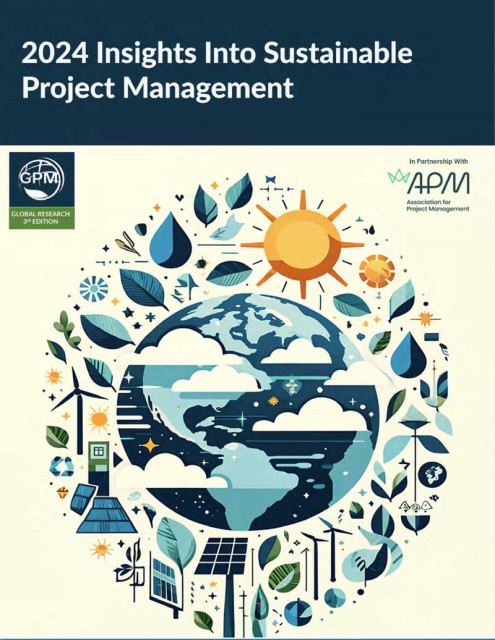
The 2024 Insights into Sustainable Project Management report, developed in partnership with the Association for Project Management (APM), offers the most comprehensive examination of the state of sustainable project management today. Drawing from over 10,000 responses across 113 countries, this report sheds light on how sustainability is shaping project management practices globally, highlighting both progress and critical areas for growth.
The Passing of a Titan — William Duncan
Linkedin
November 03, 2025
He asked me to write his obituary for those who knew him — and for those who only knew of him. A standard announcement wouldn’t do him justice. We wrote one, and you can look at his LinkedIn profile to find the dates, roles, and credentials. That’s not what this is.
From Leave No Trace to Leave It Better: A Scoutmaster’s Playbook for Regenerative Business
Import from wordpress feed 3
October 12, 2025
I spent this past weekend tent‑camping with our scouts—our last nights in tents before we switch to cabins for winter. Two new youth came out for their very first campout. They learned how to tie knots, light a fire, and cook outdoors. When I arrived at the site, in the afternoon, the fire pit w
Understanding the Differences Between CSDDD and CSRD: The Critical Role of Project Managers in Measuring Impact
Import from wordpress feed 3
October 04, 2025
The EU now has two powerful levers pushing companies toward responsible conduct and transparent reporting: CSDDD (Corporate Sustainability Due Diligence Directive): do the work—identify, prevent, mitigate, and remediate adverse human-rights and environmental impacts across your value chain. Entere
It’s Time to Count More Than Carbon: Growing the Business Handprint
Import from wordpress feed 3
September 29, 2025
This is a bit of a read, but I promise it is worth it. We need to keep shrinking our footprint. But we need, just as urgently, to grow our handprint—the measurable positive we leave behind. That is the sentence I keep coming back to when I look at business in 2025. Most companies have […]
Th
Beyond Sustainability: Why Regeneration Must Lead the Energy Transition
Linkedin
September 24, 2025
We love to reduce climate conversations to binaries: “shut it all down” vs. “business as usual.” But reality doesn’t play nice with absolutes. Rare earth minerals are critical for renewable energy, batteries, and the transition away from fossil fuels. Extraction, however, carries undeniable environmental and social costs.
Greenghosting: The worst form of hypocrisy
Import from wordpress feed 3
September 22, 2025
We’ve had greenwashing, greenlighting, greenlabelling, greenhushing, greenshifting, and greenrinsing. Each one its own tactic to dodge accountability while cashing in on the sustainability trend. But now, there’s a new kid on the block — and it’s worse than the rest. I call it Greenghosting.
Why “Green” Still Matters in Sustainable Project Management
Import from wordpress feed 3
September 11, 2025
When we launched GPM officially back in 2011, the “G” stood for Green. That choice wasn’t accidental, and it wasn’t branding fluff. It reflected a conviction: that the work of project management must fundamentally account for ecological realities. At that time, the field used “green” and
Why “Green” Still Matters.
Import from wordpress feed 3
September 11, 2025
When we launched GPM officially back in 2011, the “G” stood for Green. That choice wasn’t accidental, and it wasn’t branding fluff. It reflected a conviction: that the work of project management must fundamentally account for ecological realities. At that time, professionals used “green”
The 80/20 Rule Is the Missing Lever in Sustainable Project Management
GPM
September 05, 2025
This is a bit longer of an article but I find this to be fascinating… Sustainability has a prioritization problem. In too many projects we tack on a dozen green KPIs, scatter them across a dashboard, and hope the aggregate adds up to “responsible.” It rarely does. The uncomfortable truth is that—like schedule slippage and cost overrun—environmental and social impacts cluster. A small set of activities, suppliers, and decisions typically create a disproportionate share of the harm and the opportunity. That’s the Pareto principle. It’s time we applied it ruthlessly to how we run projects.
The 80/20 Rule Is the Missing Lever
Import from wordpress feed 3
September 05, 2025
Stop trying to boil the ocean. Focus where impact concentrates. This is a bit longer of an article but I find this to be fascinating… Sustainability has a prioritization problem. In too many projects we tack on a dozen green KPIs, scatter them across a dashboard, and hope the aggregate adds up
Your Project Plan Is a Lie. Here’s the Squiggle You Should Be Managing Instead
Import from wordpress feed 3
August 28, 2025
Let’s be blunt: your project plan is a lie. That glossy Gantt chart, the meticulously stacked dependencies, the neat milestones that march across a slide deck? It’s performance art. It gives executives a sense of order and your team the illusion of certainty. But anyone who has actually delivere
Why True Progress Demands Partnership. The GPM-b has raised the bar.
Import from wordpress feed 3
August 18, 2025
For those of us who have spent our careers advocating for sustainability in project management, the question has never been “why,” but rather “how.” How do we move from good intentions to measurable impact? How do we equip professionals not just to deliver projects, but to lead responsibly?
Regeneration or Resignation: Which Side of the Future Is Your Portfolio On?
Import from wordpress feed 3
August 10, 2025
When the stakes are survival, neutrality is complicity. We are not approaching change—we are waist-deep in it. Rising global temperatures. Record wildfires. Collapsing biodiversity. Widening inequality. And still, in boardrooms and PMOs worldwide, portfolios are run as though the planet exists in
When ‘Just Transition’ Meets Local Politics: The Unraveling of Climate Commitments
Import from wordpress feed 3
July 28, 2025
The term “just transition” has become a buzzword at international climate forums—a neatly packaged promise designed to reassure us that, as we move away from fossil fuels, no one will be left behind. But here’s the uncomfortable truth: while global leaders deliver lofty speeches
From Texas to Tasmania: Floods Are the Signal. Regeneration Is the Response.
Import from wordpress feed 3
July 21, 2025
From Texas to Tasmania: Floods Are the Signal. Regeneration Is the Response. I’m a Scoutmaster of a Boy Scout Troop in Michigan. Every week, I work with young people who are learning what it means to lead, to care, to pay attention. We teach them how to build fires and shelter, how to navigate wit
The PMO Is a Sleeping Giant in the Climate Fight
Import from wordpress feed 3
July 17, 2025
There’s a crisis unfolding in slow motion but we are all feeling it in real time. The planet is heating. Biodiversity is vanishing. Resource chains are breaking. And despite all this, the projects that shape our future are still being managed like it’s 1995. Now here’s the wild part: the one s
What does it mean to be a sustainability champion?
Import from wordpress feed 3
July 08, 2025
The PMI GPM joint venture will be launching a Sustainability Champions Program. It’s going to be exciting—yes, I am teasing something that is brewing and no, I can’t say more than this: we will be looking for advocates who want to drive change in a big way. So… stay tuned for that. I
Stop Blaming Carbon. The Real Threat Is Ecological Collapse.
Import from wordpress feed 3
June 29, 2025
It might sound strange coming from someone named Carboni, but let’s be clear: carbon isn’t the enemy. Not really. Carbon is essential. It’s the backbone of life. It powers photosynthesis, fuels ecosystems, and helps regulate the climate—when it’s in balance. The crisis we face today isn’
Whatever Happened to Real Leadership?
Import from wordpress feed 3
June 23, 2025
There was a time when leadership meant something different. When phrases like “the buck stops here” weren’t just punchlines but personal commitments. When mentorship wasn’t a luxury but a responsibility. When leading by example was a baseline, not an exception. Lately, I̵
Generation Restoration: The Project Profession’s Defining Moment Joel Carboni - June 5, 2025
Project Management Institute
June 05, 2025
A Call That Cannot Be Ignored
June 5 is World Environment Day. And this year’s theme—“Our Land. Our Future. We are #GenerationRestoration”—is not simply aspirational. The theme is personal, urgent and speaks to planetary truth we can no longer look away from. The earth is not just warming; it is warning us.
The Global Goals Are Everywhere—So Why Are We Silent on Biodiversity?
Import from wordpress feed 3
May 27, 2025
Everyone—and I mean everyone—loves to talk about the SDGs. You’ll find them on coffee mugs, corporate websites, and LinkedIn banners. They’ve become the go-to badge for “we’re doing our part.” And that’s not a bad thing. They’ve done wonders for global sustainability awareness. But
Killing Zombie Projects: A Sustainability Imperative
Import from wordpress feed 3
May 23, 2025
They’re the projects no one wants to talk about. They drag on quietly in the background—over budget, out of step with strategy, and somehow still alive in the system. No one’s championing them anymore, but no one’s pulled the plug either. They take up time, resources, and headspace, yet deli
Green Tariffs or Trade Barriers? How Supply Chain Shocks Are Threatening Sustainability
Import from wordpress feed 3
May 09, 2025
The global project environment is facing an unexpected but serious disruption—not from a natural disaster or technological collapse, but from policy. The return of Donald Trump to the U.S. presidency has brought with it a new wave of aggressive trade tariffs, with levies as high as 145% on a range
The End of Neutrality: Why Project Managers Must Lead with Ethical Clarity
Import from wordpress feed 3
April 28, 2025
Back in the late 1900’s (as my kids like to poke fun and say) when I started as a project manager, I was taught that the gold standard was neutrality. “Be objective,” they said. “Stay out of politics. Focus on deliverables.” The idea was simple: if you stayed neutral, y
The Hidden Costs Of Unsustainable Project Practices
Forbes
April 22, 2025
For years, businesses have viewed sustainability as a box to check—a marketing play, a feel-good initiative or something to address once all the “real” work is done. But companies that see sustainability as an added cost are missing the bigger picture. The true cost of unsustainable project management isn’t always obvious—it’s lurking in project delays, bloated budgets, supply chain disruptions, regulatory penalties and reputational damage. At its core, project management is about delivering value efficiently. And when sustainability is left out of the equation, projects can become more expensive, riskier and—quite frankly—less competitive.
PHILADELPHIA (April 7, 2025) — Project Management Institute (PMI), the world’s leading authority for project professionals, has signed an agreement toJoel Pierre 1 establish a new joint venture with Green Project Management (GPM), a pioneer in sustainable and regenerative project management. Under the terms of the agreement, the assets developed by GPM to support project professionals with sustainable project management will be transferred to the new joint venture, in which PMI now owns a majority stake. These assets include standards, guides, tools, frameworks, learning and certifications. GPM will retain its research and advisory activities, a minority stake in the joint venture for at least the next 5 years, and will actively contribute to the new venture’s thought leadership and content.
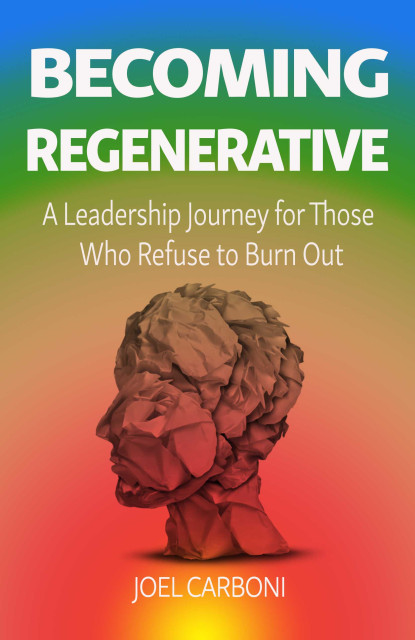
Becoming Regenerative: A leadership Journey for Those who refuse to Burn Out
Bowker
May 03, 2025
You weren’t meant to burn out. You were meant to lead differently.
In a world addicted to speed, performance, and profit-at-all-costs, Becoming Regenerative is a bold call to reclaim your power—not by pushing harder, but by leading from wholeness.
Joel Carboni, internationally recognized expert in sustainability leadership, delivers a groundbreaking guide for change-makers who are done sacrificing their well-being for broken systems. This isn’t a leadership manual—it’s a manifesto for a new era.
Inside, you’ll discover:
How to root your leadership in integrity, not exhaustion
Practices to build resilience, presence, and relational intelligence
A radical model of accountability that heals rather than harms
Tools for navigating uncertainty, restoring trust, and creating lasting impact
Each chapter is a portal—a principle, a practice, and a shift in perspective that invites you to lead from the inside out.
Whether you’re a visionary CEO, a burned-out team lead, or a mission-driven entrepreneur, this book meets you at the edge of what’s no longer working—and walks with you toward what’s possible.
The future needs leaders who regenerate.
Not just organizations, but ecosystems. Not just results, but relationships. Not just metrics, but meaning.
This is your invitation to lead like life depends on it—because it does.
Sustainable Project Management; The GPM Practice Guide
Amazon
October 01, 2024
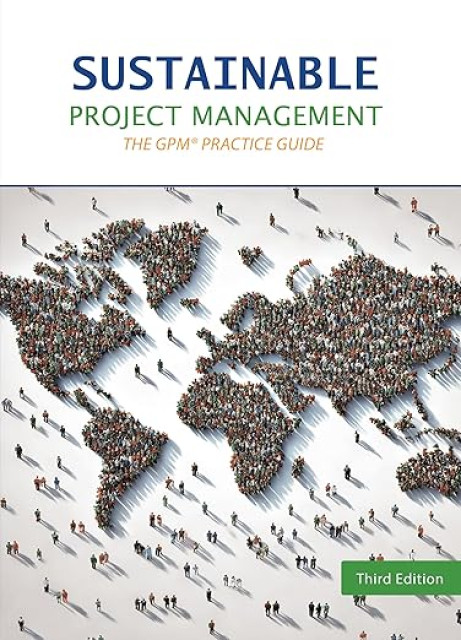
Welcome to the future of project management, where sustainability is just the beginning. In the Third Edition of Sustainable Project Management: The GPM Practice Guide, we introduce the groundbreaking concept of regeneration, taking sustainable project management to a new level. This edition empowers project managers to go beyond minimizing harm—toward actively restoring ecosystems, building resilient communities, and creating lasting positive change for both the planet and society.
This guide is more than just a book—it's a comprehensive roadmap for integrating regenerative practices into every stage of project management. If you're looking to align your projects with the global shift toward regeneration, this is your essential resource.
What's New in the 3rd Edition?
Regenerative Focus: Discover how projects can go beyond sustainability to rejuvenate natural systems, enrich communities, and build social equity.
Updated Case Studies: Explore real-world examples of successful regenerative projects that demonstrate the impact and value of this approach.
New Tools and Frameworks: Use updated templates, checklists, and tools to seamlessly incorporate regeneration into your project life cycle.
Why This Book is a Must-Have for Project Managers:
Transformative Concepts: Understand the evolution from "do no harm" sustainability to a regenerative mindset, where projects create net-positive impacts.
Comprehensive Approach: This guide offers step-by-step guidance on applying regeneration principles throughout the project management process—from planning to execution and beyond.
Applicable to Any Industry: Whether in construction, finance, or IT, the principles and practices in this guide will help you deliver projects that succeed while contributing positively to the world.
Future-Proof Your Skills: With global attention increasingly focused on environmental and social responsibility, project managers who embrace these practices will be at the forefront of the next era of leadership.
As we face unprecedented challenges like climate change and social inequity, the need for regenerative project management has never been greater. This edition provides the strategies and tools you need to make a real difference—whether managing a single project or overseeing a portfolio. Sustainability is no longer enough. Now is the time to lead with regeneration, actively creating a better, more resilient world.
What You’ll Learn:
How regenerative sustainability can transform your projects and organization, aligning with global goals like the UN’s Sustainable Development Goals (SDGs).
Practical steps to evaluate and improve the long-term impact of your projects using regenerative development principles.
How to create meaningful stakeholder engagement strategies that ensure buy-in and long-term support for regenerative initiatives.
Strategies to incorporate circular economy principles into your projects, ensuring efficient resource use and minimal waste.
Don’t just manage projects—lead them toward a regenerative future. The Third Edition of Sustainable Project Management: The GPM Practice Guide is your ultimate resource for integrating regeneration into your project management approach, offering a holistic view that aligns business success with the needs of people and the planet.
Join the movement for sustainable and regenerative project management. Order your copy today and become a catalyst for lasting change!
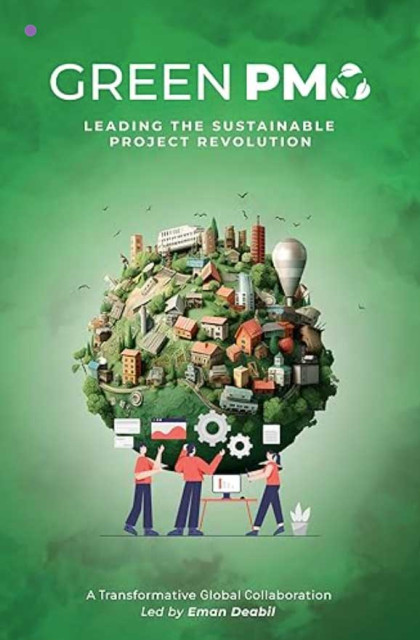
In an era where sustainability is no longer optional, "Green PMO – Leading the Sustainable Project Revolution" is an essential guide for project managers. This book isn't just timely; it's a call to arms, one I've been passionate about for years, as echoed in my Harvard Business Review articles. It emphasizes project managers' critical role in embedding sustainability into the very fabric of their organizations.
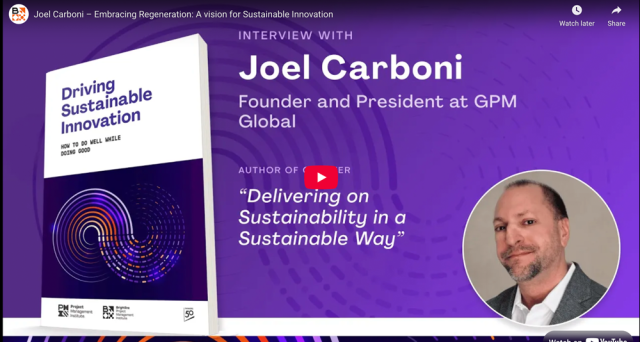
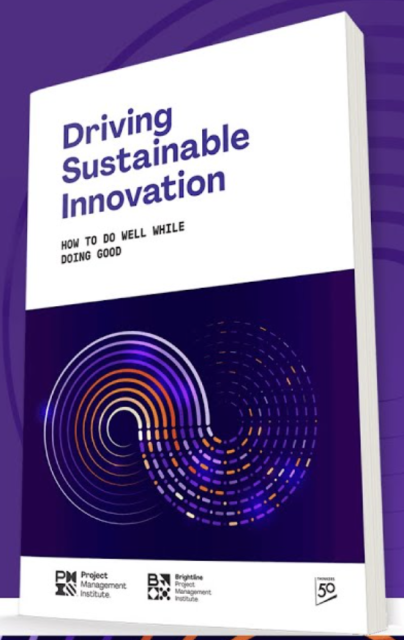
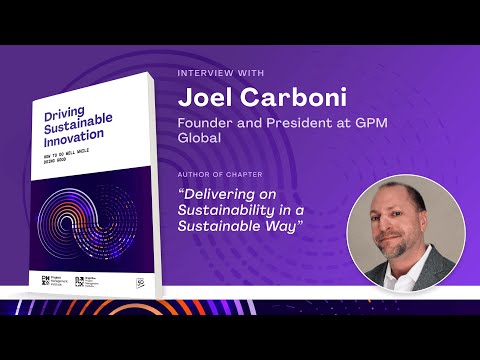
Driving Sustainable Innovation
Brightline Initiative
August 20, 2024
Carboni emphasizes the importance of sustainable innovation in a world increasingly affected by climate change, with 53% of global projects impacted by extreme weather events exacerbated by environmental issues. He advocates for integrating sustainability into core business strategies, adopting sustainable project management practices, investing in green technologies, and fostering a culture of sustainability across all organizational levels.
Barriers to implementing sustainable innovation include lack of awareness, resistance to change, and initial costs. Overcoming these challenges requires education, transparent communication, and a strong leadership commitment to sustainability. Carboni highlights the positive response from organizations, with many in the early stages of embedding sustainability into their project management practices.
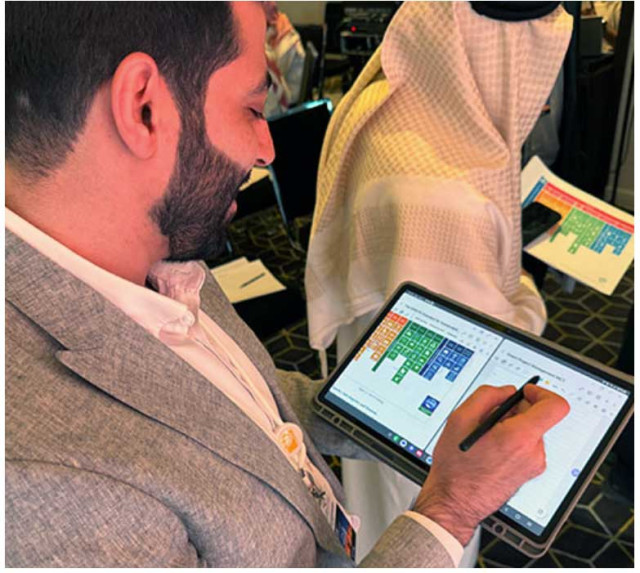
Sustainably delivering on Sustainability
Brightline Initative
June 18, 2024
Driving Sustainable Innovation: How to Do Well While Doing Good offers a thought-provoking yet highly applicable resource for you and your organization to make sense of the future. It brings together a powerful collection of executives, thought leaders, practitioners, and researchers from around the world to map out what achieving truly sustainable innovation means for both individuals and organizations. There is no doubt that the questions posed by Driving Sustainable Innovation are grand and challenging, but it offers an extensive reservoir of practical actions you can take now to be future-ready. Opening the book, Project Management Institute President and CEO Pierre Le Manh compellingly explains the challenge:The world has been facing sustainability challenges for decades. But for a long time, we' ve been surrounded by a narrative that sustainability is a zero-sum game and that business leaders need to choose between doing what' s right for the planet and doing what' s right for their stakeholders. This is a false choice. In fact, the quest for sustainability has proven to be a driving force behind innovation, brand relevance, and profitability across various sectors.Pierre Le Manh President and CEO, Project Management Institute
Sustainable Project Management for Individuals
GPM
February 10, 2025
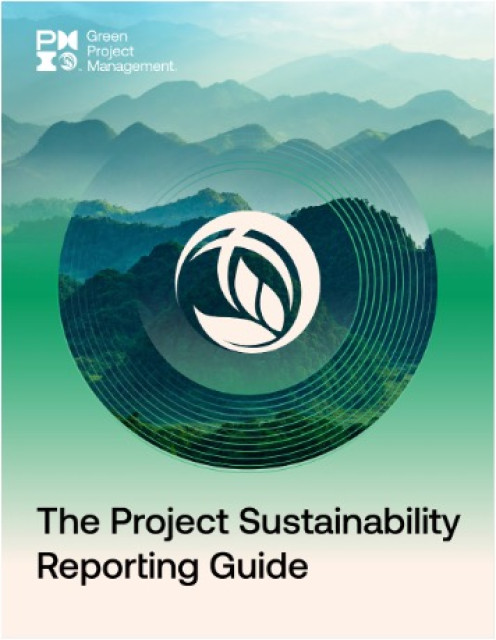
For over 16 years, GPM has defined what it means to manage projects sustainably. We didn’t follow the trend—we started it. From pioneering tools and methodologies to empowering thousands of professionals worldwide, we’ve been driving sustainable project management forward because it isn’t just popular—it’s necessary.
Our proven methodology is practical, effective, and globally trusted. It’s more than a course; it’s a movement that empowers leaders to deliver projects that don’t just succeed—they make a difference. If you’re ready to lead the change, learn from the pioneers who made sustainable project management what it is today.
Sustainable Project Management; The GPM Reference Guide
Amazon
September 04, 2024
As we face unprecedented challenges like climate change and social inequity, the need for regenerative project management has never been greater. This edition provides the strategies and tools you need to make a real difference—whether managing a single project or overseeing a portfolio. Sustainability is no longer enough. Now is the time to lead with regeneration, actively creating a better, more resilient world.
What You’ll Learn:
How regenerative sustainability can transform your projects and organization, aligning with global goals like the UN’s Sustainable Development Goals (SDGs).
Practical steps to evaluate and improve the long-term impact of your projects using regenerative development principles.
How to create meaningful stakeholder engagement strategies that ensure buy-in and long-term support for regenerative initiatives.
Strategies to incorporate circular economy principles into your projects, ensuring efficient resource use and minimal waste.
Don’t just manage projects—lead them toward a regenerative future. The Third Edition of Sustainable Project Management: The GPM Practice Guide is your ultimate resource for integrating regeneration into your project management approach, offering a holistic view that aligns business success with the needs of people and the planet.
The GPM P5 Standard for Sustainability In Business Practice

GPM
June 11, 2024
The P5 Standard for Business Practice goes beyond traditional management practices by incorporating the triple bottom line of People, Planet, and Prosperity, while also enhancing it with considerations for Product and Process. This comprehensive approach ensures that every aspectP54bp tbumb of business management is evaluated and optimized for sustainability.
apolpo—a name inspired by the Italian word for octopus—is a GPM Global initiative, symbolizing regeneration, adaptability, and the unique capacity to tackle multiple challenges at once. Our name playfully reflects our philosophy: to innovate, connect, and evolve in the pursuit of sustainable, regenerative solutions. Born from GPM Global’s legacy in sustainable project management, Apolpo was created to address the deep-rooted issues and systemic causes that the UN Sustainable Development Goals alone cannot resolve.
Founded in 2009, GPM is the world’s leading organization driving sustainability within the project management profession and advocating for the project profession within the sustainability domain. We believe that projects are the engines of change, and when managedSEUK Certified business for good badge responsibly, they can solve the world’s most urgent challenges—from climate change to social inequality.
GPM Global (Green Project Management)
GPM Global
May 01, 2009
Welcome to Green Project Management, or as we're commonly known, GPM. We are the global leader in sustainable project, program, and portfolio management. While many people know us for our GPM-b certification and PSM3 Sustainability assessments, that's just the tip of the iceberg!
The Sustainable Project Management Utilization in French Wineries While Adapting to Climate Change
European Journal of Sustainable Development
October 01, 2021
Nowadays, the issue of climate change has attracted attention in various fields. The rise of global temperature makes humanity must take note of environmental protection and the Sustainability of different domains. The planting of vineyards and the production of wine have also been greatly affected. Since the Sustainable Development Goals (SDGs) officially became the 17 development goals set by the United Nations in 2015, sustainable project management development is at the forefront globally. In recent years, the wine industry has developed rapidly worldwide. However, global climate change is a challenge for French wineries if they want to maintain their high-quality wine style. Therefore, in order to cope with the impact of climate change on wine, wineries have begun to implement sustainable development project management in all aspects. Especially French wineries that make much account of Sustainability in this respect. This paper proposes the one aspect – Wine Production of CWW Conceptual model that can be used in the French wineries, Four Drivers of Sustainable Project Management Implementation Model to interpret the main drivers that impact project management implementation in the wine industry. Using mixed-method research approach, qualitative research with interview-based analysis is the primary method, as well as surveys used to interpret the elements of sustainable project management necessarily utilizing in French wineries that would help them to achieve green growth.
Thoughts on project management and climate change
Project Management Research and Practice
March 11, 2017
Addressing the undeniable challenge of climate change within the pages of PMRP is a priority and, starting with the 2017 volume, will become an ongoing focus for submissions. In support of this, the views of Dr. Joel Carboni were recently captured on a variety of topics relevant to both project management researchers and practitioners.
Bridge 2022 PM & PMO Conference
Project Management United
August 29, 2023
In his presentation Joel will share the current state of the world through the lens projects that GPM has assessed and research that have been conducted with thousands of practitioners.
GPM is the global leader in sustainable project management practices. As a social enterprise, they advocate principled and value-based project approaches.
Founded in 2009, they have been instrumental in shaping sustainable practice as it relates to Portfolio, Program, and Project Management on a global scale and are advocates for the profession’s role in solving wide-scale challenges facing humanity.
The Era of Sustainable Project Management
Petronas
December 18, 2022
Dr. Joel Carboni, IPMC’s Keynote Speaker shares his take on “The Era of Sustainable Project Management”. Amongst the topics that will be covered are trends and how the profession can meet current needs of the industry in meeting the challenges of climate change and contributing towards sustainability.
How Project Management Can Deliver Sustainability
PMI New Zealand
September 14, 2022
In this presentation, Dr. Carboni will share some of the challenges humanity is facing and the impacts that project can have in solving global issues. He will present some tools and methods and what is needed to mainstream sustainable practice in the PM Profession.
Agility in the context of sustainability
Agile Business Consortium
October 14, 2021
Sustainability is at the forefront of business and has moved from a talking point to an action item for the project and change profession. Joel will share some insights on the current state of the profession and what the agile community can do to adopt sustainable practices.
Interview with Joel Carboni on Sustainability and AI
greyfly.ai
April 12, 2024
Dr. Carboni is a highly respected expert in sustainable project management. He is a graduate of Ball State University and holds a Ph.D. in Sustainable Development and Environment. He has over 25 years of experience in various areas of project management, including government, finance, consulting, manufacturing, and education.
CBS News Disruptors and Innovators
CBS News
December 20, 2023
GPM: Evolving Business for the Betterment of Everyone
The Global Leader in Sustainable Practices Is Changing Project Management. This 20 Minute documentary on the Work of GPM and Interview with founder Dr. Joel Carboni
Interview with Joel Carboni
PM World Journal
August 16, 2023
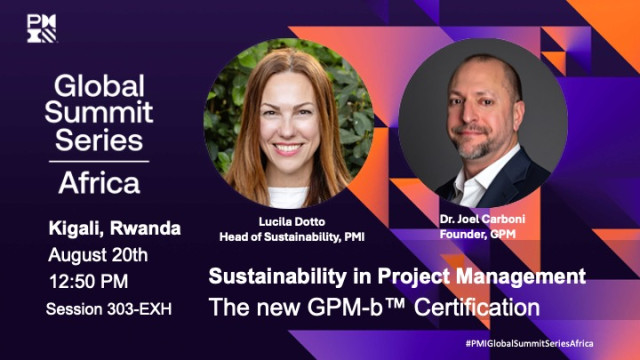
Dr. Carboni is a highly respected expert in sustainable project management. He is a graduate of Ball State University and holds a Ph.D. in Sustainable Development and Environment. He has over 25 years of experience in various areas of project management, including government, finance, consulting, manufacturing, and education.
Green Jobs & Regenerative Projects: Africa’s Opportunity to Lead the Sustainability Transformation
PMI
August 20, 2025
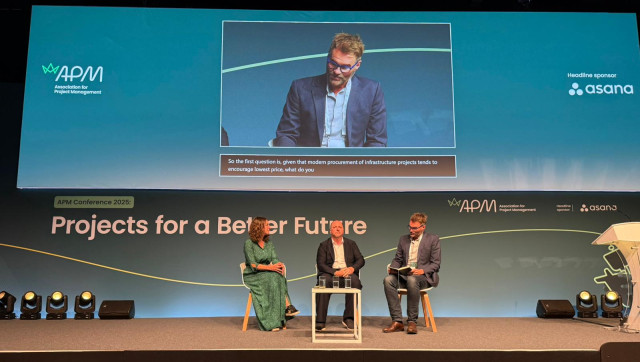
Africa stands on the brink of a green revolution, with projections of over 3 million new direct green jobs by 2030 and up to 100 million by 2050. However, realizing this vision requires more than policies and funding—it demands transformative projects led by skilled professionals. This panel will explore how project management serves as the engine driving sustainable growth, green job creation, biodiversity protection, and regenerative leadership.
Drawing from the latest insights into Africa’s green economy, the Kunming-Montreal Biodiversity Framework , and regenerative leadership practices, we will examine how PMOs, agile teams, and analytics-driven decision-making can turn climate ambition into tangible, measurable outcomes. Panelists will share practical tools, real-world stories, and actionable strategies to align project work with Africa’s unique opportunities and global sustainability commitments.
By the end of this session, attendees will be equipped to lead projects that not only avoid harm but actively restore and renew—whether managing energy transitions, scaling regenerative agriculture, or building equitable infrastructure. Together, we can transform Africa’s green potential into lasting impact.
At the conclusion of this session, attendees will be able to:
Apply project management frameworks and tools to align green economy initiatives with Africa’s sustainability goals, ensuring measurable outcomes in job creation, biodiversity protection, and regenerative practices.
Evaluate the role of PMOs, agile teams, and analytics-driven decision-making in transforming climate ambition into actionable projects that drive sustainable growth and equitable development.
Tags: Future of Work, Project Management, Sustainability
Sustainability in Project Management. The new GPM-b Certification
PMI
August 20, 2025
We’ve all heard the call for greater sustainability in how we live and work — but what does that mean for project managers? Join us for a session on Sustainable Project Management and discover the new PMI-GPM certification: GPM-b.
At the conclusion of this session, attendees will be able to:
Better understand why integrating sustainability into project management is essential today, and how it aligns with growing global expectations and stakeholder demands; and
Explore the value of the GPM-b certification and how it equips project professionals to drive change, create lasting impact, and future-proof their careers.
Whether you're just starting your sustainability journey or ready to take the next step, this session will inspire you to rethink success — beyond scope, time, and budget.
Fashion's Sustainability Challenge. How Project Professionals Drive Change
PMI
April 07, 2025
The fashion industry faces urgent pressure to transform—shifting toward circularity, biomaterials, and supply chain innovation. But how do these changes actually happen on the ground?
Join us for a candid and practical discussion on how project professionals can help operationalize sustainability. We’ll cover what’s working, where the challenges are, and how to lead change effectively.
I’m joined by an incredible panel:
Alec Leach, author of The World is on Fire but We’re Still Buying Shoes
Pratik Mishra, PMP, Senior Strategic Project Manager at Zalando
Andrea Orsag, Founder of MissionC
Project Leaders: Your hidden Superpower in the Sustainability Revolution
Brightline
February 12, 2025
In this era of AI transformation, sustainability leadership presents unprecedented growth opportunities for project professionals to drive meaningful change. Join us to discover how project professionals can lead sustainable transformation.
Change Leadership Insights & Trends for 2025
The Change Leadership
July 18, 2024
The pace of change shows no signs of slowing down, and change leaders are tasked with steering their organizations through an increasingly complex and uncertain landscape.
Our recent Virtual Change Leadership Networking Connect community event brought together change leaders to discuss the trends, challenges, and strategies shaping the future of how we lead change. The discussion kicked off with a poll asking participants to identify the most significant trends for 2025. Topping the list were AI, uncertainty, and the shift to remote and hybrid work models.
What's Your Sustainability Quotient
Project Management Institute
June 28, 2023
The speaker was Joel Carboni, president of Green Project Management (GPM), a social enterprise helping to drive sustainable and regenerative development practices. Green Project Management is also the organization that PMI is partnering with to bring GPM’s industry-leading sustainability models and expertise to the global project management community.
RegeneratioNext: The GPM Podcast
Apple Podcasts
April 20, 2025
RegeneratioNext is where sustainability and project management come together to create real impact. Hosted by the team at GPM Global, we dive into the practical side of regenerative business—how companies and leaders are moving beyond sustainability to actively restore and improve the world around them.
Each episode brings fresh insights, real-world strategies, and expert conversations on topics like ESG, circular economy, and sustainable project management. Whether you’re a project manager, business leader, or just someone passionate about making a difference, this podcast is for you.
StrategistsCorner Podcast
Strategists Corner
April 01, 2025
organizations with the Power of Project Management by managing a business with enhanced capabilities for moving the business strategically, using human-centric decision-making, skills-based talent management, business agility, and managing change.
Episode 185 – Redefining Project Success through Sustainable Project Management
Velociteach
September 20, 2023
rojects are instrumental in defining an organization’s vision for a more sustainable future. We are talking with Dr. Joel Carboni about Green Project Management and aligning project management practices with Sustainable Development Goals (SDGs). Green Project Management (GPM) or Sustainable Project Management is the application of methods, tools, and techniques to achieve a stated objective while considering the project outcome’s entire lifecycle to ensure a net positive environmental, social, and economic impact. While acknowledging the value of SDGs in highlighting global problems, Dr. Carboni underscores the need to also address root causes. He offers insight into how project managers can consider the impact of their work beyond project completion and how to adopt a total asset lifecycle project perspective.
Project Managers Empowered to Drive Impact through New Joint Venture
Project Management Institute
April 07, 2025
“The future of project management must move beyond delivering outputs,” said Joel Carboni, Founder of GPM and a pioneer in sustainable project management. “Projects must play a critical role in generating prosperity, restoring ecosystems and building more equitable communities. This joint venture brings us closer to making sustainability and regeneration core to the profession.”
IMA and GPM Sign Partnership Agreement
Access Newswire
July 24, 2024
"Creating a sustainable business that helps you grow is a challenge for every organization," said Joel Carboni, president at GPM. "It's essential for every organization to reach the end goal of sustainable growth, so working with IMA on this goal is a perfect fit for us as their members understand sustainability and the urgency behind implementing these initiatives."
"We’re not being taught to think outside the box of initiate to close. It’s what is the impact of our work, and what happens beyond handover? What happens at the end of the asset’s lifecycle? So when we look at green projects, it’s are you taking a total asset lifecycle focus? And that’s what we have to do."
Project Management for a Regenerative Future: Dialogue between UCI and GPM
UCI
June 17, 2025
Let’s rethink how we design and lead projects toward a future that serves both people and the planet.
Join us for a thought-provoking conversation between two global leaders in sustainability and education:
️ Eduard Müller, Rector of Universidad para la Cooperación Internacional
️ Joel Carboni, Founder of GPM (Green Project Management) Global
Boosting Your PMO's Role in Sustainable Project Management
Planisware
June 27, 2024
Dr. Carboni will discuss the strategic importance of integrating sustainability into the very DNA of your PMO, ensuring it supports and drives your organization’s long-term objectives.
Sustainability & Green Project Management
Dubai International Project Management Forum
January 15, 2024
Dr. Carboni stands as the preeminent global authority on sustainable project management. His pioneering tools and methodologies have become the benchmark for green practices, garnering global adoption by corporations, organizations, and governments to weave sustainability seamlessly into their project frameworks.
A distinguished alumnus of Ball State University, Dr. Carboni holds a Ph.D. in Sustainable Development and Environment. His portfolio encompasses over 25 years across multifaceted domains of project management—spanning government, finance, consulting, manufacturing, and the academic sphere.
An esteemed voice in the industry, Dr. Carboni regularly takes the stage at conferences and symposiums related to project management and sustainability. His expertise is not just bound by geography, he has left his mark in more than 55 nations.
His notable accolades include his tenure as President Emeritus of the International Project Management Association (IPMA) in the U.S. and his pivotal role on the Global advisory board.
As the visionary behind GPM (Green Project Management), Dr. Carboni's influence extends into academia, serving as a visiting professor at Skema Business School.
His commitment to global causes is evident as the GPM representative to the United Nations Global Compact. Dr. Carboni played a foundational role as a signatory for both the Business for Peace Initiative and the Anti-Corruption Call to Action. Furthermore, he was instrumental in crafting the UN 2030 Agenda for Sustainable Development (SDGs).
Beyond his vast professional contributions, Dr. Carboni is renowned for introducing the PRiSM project delivery methodology and the P5 Standard for Sustainability in Project Management. His educational modules on Green and Sustainable Project Management are taught in over 145 countries, thanks to collaborations with professional training entities, business consortiums, and esteemed universities. His prowess as a writer shines in his leading work, "Sustainable Project Management."
Skema Business School GAC and GPM
Amazon
April 16, 2024
SKEMA Business School’s MSc in Project Management for Business Development has secured its GAC accreditation renewal for another five years!
Join Paul Gardiner, Joel Carboni, and Duyen Le as they unveil how this top-tier programme prepares students for the future of sustainable project management. With cutting-edge courses, globally recognised certifications, and a strong focus on AI, climate change, and real-world business challenges, this MSc is designed to make you stand out in today’s job market.
Future Proofing Projects: The Role of Predictive Analytics in Sustainability
GPM
August 09, 2024
The white paper titled "Future-Proofing Projects: The Role of Predictive Analytics in Sustainability" explores the strategic partnership between Green Project Management (GPM) and greyfly.ai to integrate sustainability and AI in project management. This collaboration aims to revolutionize sustainable project management by leveraging predictive analytics to enhance decision-making, optimize resources, and manage risks. The document emphasizes the importance of sustainable project practices for long-term business success and resilience, highlighting how predictive analytics can drive informed decision-making and resource optimization.
The white paper outlines the benefits of integrating predictive analytics into project management, such as improved decision-making, resource optimization, and risk management. It provides examples of successful implementations of predictive analytics in various industries, including energy consumption optimization by Enel, environmental impact forecasting by General Electric, and social data analysis by Unilever. These case studies demonstrate how predictive analytics can drive sustainability efforts, enhance operational efficiency, and foster stakeholder confidence.
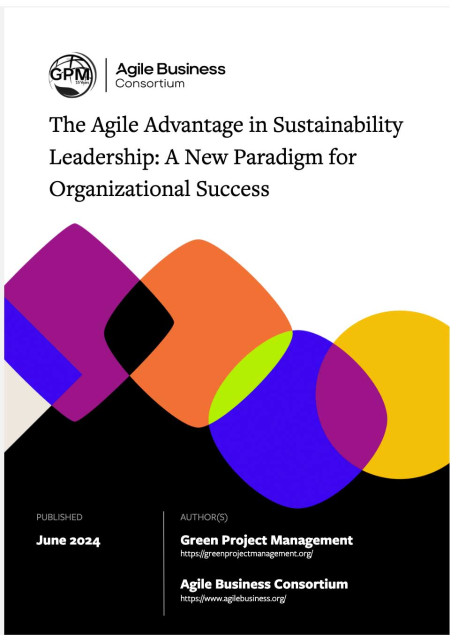
The Agile Advantage in Sustainability Leadership - A New Paradigm for Organizational Success
GPM and Agile Business Consortium
June 15, 2024
In the two decades since the Manifesto for Agile Development first sketched the contours of
swift, iterative software development, the principles of Agile have seeped far beyond their origins.
Today, they infuse the broader business consciousness, shaping how organizations of all kinds
pivot and proceed in a world that's perpetually in flux. This evolution from agile software
development to agile business reflects a fundamental shift towards embracing change as a
constant.
How to Bring Sustainability into Your PMO — Without Being an Expert.
PMOGA
October 03, 2025
Sustainability is a business priority, yet many PMOs see it as out of scope or too technical. The truth: you don’t need to be an ESG expert to add value — just the right mindset and practical steps. In this session, you’ll learn simple ways to embed a sustainability lens into your PMO’s work. Through real examples and tools, you’ll see how to link delivery with responsible outcomes, enable the right conversations, and show value beyond traditional metrics. You’ll leave confident to step into the ESG space and position your PMO as a driver of purpose-driven impact.
Key Takeaways:
A Sustainability-Ready PMO Checklist: behaviors, shifts, and conversations that matter.
A Portfolio Opportunity Map: where sustainability value already exists, where it’s missing, and where to embed it.
A Language Toolkit: how to speak sustainability in a way executives understand.
A Collaboration Blueprint: how to connect your PMO with sustainability and strategy teams.
A Personal Action Plan: first steps to start shaping a more responsible PMO today.
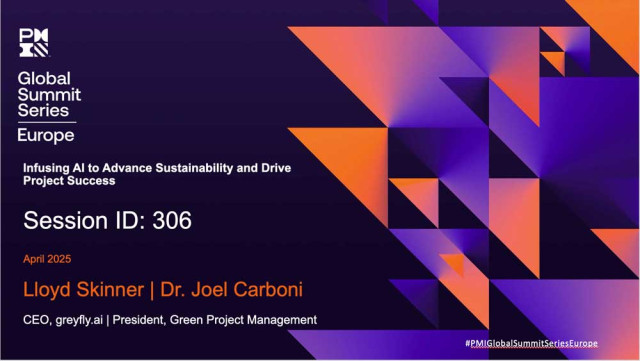
Infusing AI to Advance Sustainability and Drive Project Success
PMI
April 15, 2025
This talk will showcase how artificial intelligence (AI) can increase the success of sustainability projects by delivering actionable insights, predictive analytics, and process automation. While many talk theory, I will share real-world examples! I’ll share how AI-driven tools optimize project creation and resource allocation, reduce environmental impact, and enhance decision-making. Attendees will gain practical insights into leveraging AI to advance sustainability goals, improve project outcomes, and embed sustainable practices within project management strategies.
Masterclass | Green Project Management
Global Project Management Forum
May 14, 2024
Learn how to integrate sustainability into every phase of project management at the Project Management Forum 2024. This session will cover essential tools, strategies, and best practices for implementing green project management, enabling leaders to minimize environmental impact and align projects with global sustainability goals. Ideal for project managers and decision-makers aiming to drive eco-friendly change within their organizations.
Every Role Is a Sustainability Role
Thinkers360
December 28, 2025
Organizations love to assign sustainability to a team. Sometimes a single person. Then everyone else goes back to “real work.”
That separation is convenient. It is also false.
Impacts do not originate in sustainability offices. They originate in projects, processes, and daily choices. Budgets approved. Designs accepted. Suppliers selected. Deadlines compressed. Risks downgraded. Those decisions are made across the organization.
When sustainability is treated as someone else’s job, it becomes advisory. Optional. Easy to override when pressure arrives.
That is why most sustainability strategies look strong on paper and weak in reality.
Where Impact Actually Happens
Sustainability does not fail because of bad intentions. It fails because of decision architecture.
Consider where real impacts are locked in:
Scope decisions determine material use and waste.
Design choices define energy demand for decades.
Procurement decisions shape labor conditions and supply-chain emissions.
Schedule pressure creates shortcuts that become safety incidents.
Incentives decide whether long-term harm is invisible or unavoidable.
None of these sit with a sustainability title alone. They sit with engineers, project managers, product owners, finance leaders, HR, IT, procurement, operations, and executives.
Every role that can say “yes,” “no,” or “close enough” is a sustainability role.
Sustainability Is a Competence, Not a Function
Treating sustainability as a function creates a predictable failure pattern:
Sustainability teams identify risks.
Business teams weigh cost and speed.
Cost and speed win.
The report still looks good.
This is not a values problem. It is a competence gap.
Sustainability requires people in all roles to be able to:
Recognize downstream impacts.
Understand thresholds, not just trends.
Refuse options that externalize harm.
Integrate long-term value into short-term decisions.
If only one group is trained to do this, the system will overpower them every time.
What “Every Role” Looks Like in Practice
This is not about adding work. It is about changing how work is done.
Executives decide what trade-offs are allowed. Silence is a decision.
Finance defines what costs count and which ones get pushed outside the spreadsheet.
Project managers decide whether risk is managed or merely documented.
Engineers and designers determine whether efficiency or resilience is designed in.
Procurement chooses whether lowest price or lowest harm wins.
HR shapes incentives that reward speed over care or the reverse.
IT and data teams decide what gets measured and what stays invisible.
No role is neutral. Neutrality is just unowned impact.
From Sustainability Theater to System Integrity
Most organizations already say sustainability matters. The question is whether it constrains decisions.
If sustainability can always be overridden by urgency, it is theater.
When every role understands that:
Safety and dignity are non-negotiable.
Net impact matters, not displaced impact.
Economics must include real costs.
Then sustainability stops being a report and starts being a design requirement.
That is when systems begin to change.
The Uncomfortable Truth
If sustainability only lives with sustainability professionals, the organization is outsourcing responsibility.
If it lives with everyone, it becomes operational.
The future will not be decided by mission statements. It will be decided by ordinary people in ordinary roles making slightly different choices, consistently, under pressure.
Influence With Purpose: Why Thought Leaders Must Drive Sustainability

Thinkers360
August 09, 2025
The term thought leader gets used so often it risks losing meaning. It’s become shorthand for anyone with a platform, a following, or a polished profile. But real thought leadership isn’t a self-applied label — it’s a responsibility. It’s earned through the steady work of bringing new perspectives to light, challenging complacency, and moving people from awareness to action.
And right now, no area demands that kind of leadership more than sustainability.
We are living in a time of deep systemic strain. Environmental, social, and economic pressures are converging in ways that no single sector or profession can solve alone. Climate volatility is disrupting supply chains and livelihoods. Resource scarcity is forcing industries to rethink how they operate. Social divides are eroding trust and stability. The challenges are interconnected — which means the solutions must be as well.
Incremental change isn’t enough anymore. What’s needed are leaders in every field who will use their influence to drive transformation, not just conversation.
**The Power — and Obligation — of Influence
Influence, when paired with purpose, can create extraordinary change. I’ve seen it across my work, whether in boardrooms, classrooms, or global forums: people listen when an established voice speaks up. They notice when someone with credibility uses their platform to address the bigger picture.
The reality is that thought leaders already have what change efforts often struggle to build — reach, trust, and networks. But influence without intention is a wasted opportunity. If you’ve built an audience, earned a reputation, or established yourself as an expert in your domain, you’ve also inherited a responsibility: to ensure that what you share moves us toward a better future.
That’s true no matter your field. Project managers can integrate sustainability into planning and delivery. Financiers can reframe investment strategies around long-term resilience. Technologists can design with circularity and ethics in mind. Policymakers can bridge innovation and governance. Every profession touches sustainability in some way — whether it’s acknowledged or not.
Connecting the Dots Across Disciplines
In my role as Thinkers360’s Ambassador for Sustainability, I have a front-row seat to a fascinating reality: sustainability is often treated as a “category” in thought leadership, when in truth it’s a connective thread that runs through every discipline represented on the platform.
I’ve seen technologists ranking in AI, healthcare experts ranking in social innovation, and supply chain leaders ranking in logistics — all of them producing insights that have direct relevance to sustainability, even if they don’t frame it that way. The challenge, and the opportunity, is to make those connections explicit.
Because when we do, the solutions get stronger. The conversation broadens. People who might have dismissed sustainability as “outside their lane” start to see it as central to their work. And that’s when momentum builds.
Breaking the Niche Mindset
One of the biggest myths we need to dismantle is that sustainability is a niche concern. It’s not just about environmental protection — it’s about the long-term viability of the systems we rely on. That includes economic stability, social cohesion, and governance integrity.
If you make decisions that affect resources, people, or processes — and every leader does — then you are already shaping sustainability outcomes, whether intentionally or not. The question is: will you shape them for the better?
For thought leaders, this means expanding the lens. A project management influencer might share frameworks for embedding sustainable procurement. A leadership coach might address how to foster inclusive, adaptive cultures. A data scientist might showcase how predictive analytics can help communities prepare for extreme weather events.
This is not “extra” work — it’s work done with greater awareness of its ripple effects.
What Real Sustainability Thought Leadership Looks Like
Real sustainability thought leadership is:
Action-Oriented – Moving beyond awareness into frameworks, tools, and examples that others can apply.
Integrative – Showing how sustainability connects to core priorities like profitability, innovation, and risk management.
Collaborative – Leveraging your network to amplify solutions, share resources, and bring diverse perspectives together.
Persistent – Speaking consistently, not just when the topic is trending or convenient.
It’s about using your voice to help others connect the dots — and then helping them act on those connections.
The Call to All Influencers
If you are an influencer in your field — if you’ve built a following, earned respect, or have access to decision-makers — you have leverage. And leverage can change the trajectory of industries, communities, and even countries.
But only if it’s used.
This is my challenge to my peers across Thinkers360 and beyond: bring sustainability into your domain. Tag it in your content. Frame your insights through its lens. Collaborate with others outside your immediate circle to create richer, more holistic solutions.
The shift toward a regenerative, sustainable future will not come from a handful of specialists working in isolation. It will come from a chorus of leaders across sectors, disciplines, and geographies — each using their influence with intention.
Your Role Starts Now
The beauty of thought leadership is that it doesn’t require permission. You don’t need a mandate to start influencing your audience differently. You just need the commitment to use your platform in a way that moves people toward change.
So ask yourself: what’s one action you can take this week to put sustainability at the heart of your influence? Share it. Model it. Encourage others to do the same.
Because in the end, influence is a form of power — and power is only as valuable as the purpose it serves.
PSM3 Project Portfolio & Program Sustainability Model
Location: Globally Available Fees: Depends on Engagement
Service Type: Service Offered
Is your organization prepared to push the boundaries of sustainability? Evaluating your Environmental, Social, and Governance (ESG) performance and charting a clear path forward is vital in today’s pursuit of net-zero goals.
Since 2009, GPM has been at the forefront of aligning ESG priorities with project outcomes—making sustainability actionable, not abstract. The GPM PSM3™ (Portfolio, Program, and Project Sustainability Model) is a powerful assessment tool that empowers organizations and investors to measure genuine ESG performance, cutting through greenwashing to deliver a clear, data-driven view of sustainability progress.
With PSM3™, organizations gain a rigorous evaluation of their sustainability efforts, uncovering gaps and opportunities for improvement. Designed to align with the GRI 2021 Framework and over 60 key performance domains, PSM3™ integrates seamlessly with the GPM P5™ Standard for Sustainability in Project Management, offering a holistic, actionable roadmap for sustainability excellence. Beyond meeting regulatory requirements and driving operational improvements, PSM3™ provides the transparency today’s consumers demand and the insights investors need for informed decision-making.
Join Thinkers360 for free! Are you a Reader/Writer, Thought Leader/Influencer (looking to increase your earnings), or an Enterprise User (looking to work with experts)?