Sep25

Humans are in essence evolutionary products. Our bodies, brains, and social instincts formed in environments that changed slowly for thousands of years. For most of human history, life was predictable. People did the same job for decades. They lived with the same people, in the same place, following the same routines. Technology changed so rarely that one generation used the same tools as the previous. A lifetime could pass without a fundamental shift in how a community worked, produced, or traded. We programmed ourselves to cope with predictable. All because tomorrow resembles today. Planning meant extending the past forward. The future echoed the past. That time is over.
Today things go freakish fast. We live in a continuous new. Every person connects to every other person. Information crosses the planet in seconds. Knowledge exchanges at a flash, and people learn at equal speeds . New products, services, tools, and ideas arrive daily. The gap between a change and its adoption changed from years to weeks to days, this changes expectations. People expect constant improvement, rapid response, steady novelty. The horizon of this, the point where people look to judge what comes next, moved far from where it sat for millennia. This is permanent. Business built for predictability now face a world that rejects predictability. Transformation from optional to continuous necessity.
Consider how deeply we adapted to a stable world. Survival depended on reading local, repeatable patterns. Weather cycles, animal migrations, crop seasons, social hierarchies: these recurred, so recognition and prediction are vital skills. The mind evolved to detect regularities and rely on them. Elders possessed knowledge because knowledge endured. Tradition existed because tradition worked. Change arrived as exception, as disruption: famine, war, displacement. When change came, communities restored stability as fast as possible. Stability was safety. Predictability was competence. We built entire systems of coping around it and routines minimized decisions. Specialization rewarded repetition. Contracts assumed continuity. Careers assumed one skill served a lifetime. These adaptations served humans well for thousands of generations. Now they hinder us. The world stopped providing the stability that instincts still expect. Many organizations still run on the old logic. They optimize for continuity in a world of discontinuity. This mismatch is at the root of the transformation need.
Speed today has no historical precedent. A message sent in Tokyo reaches Nairobi in a heartbeat. Knowledge, once locked in books and libraries, now flows through open channels, forums, tools, and networks. A breakthrough in one field reaches practitioners in every other field within days. Techniques spread by imitation faster than ever. One company launches a new method; competitors study and adopt it within weeks. Customers discover new options overnight. Trends emerge, peak, and fade within months. A product announced today faces comparable rivals before the quarter ends.
This speed changes what counts as knowledge. Static knowledge rots. A skill learned at 20 fades by 25. A playbook refined over decades loses value in a season. The capacity to learn matters more than the facts. Organizations that understand this invest in learning speed. They shorten feedback loops. They test ideas in weeks, not years. They treat every day as day one. They accept that the new never stops arriving, so they never stop adapting.
This reality hits the economy. Markets reward transformation. Capital flows to companies that prove they can change. Investors price companies on expected future cash flows, and those expectations rest on adaptability, not past performance. A company that delivers continuous innovation attracts investment, talent, partners. A company that protects legacy products watches valuation erode. New sectors grow to scale in months. Old sectors shrink fast. Skills become obsolete as technology shifts. Entire job categories expire and others appear. The economy reallocates labor and capital continuously,with no pause for adjustment.
Productivity gains come mainly from adopting new tools and methods quickly. Slow adopters fall behind permanently. Demand shifts continuously too; customer priorities change with every new option. Products that satisfied yesterday don't satisfy today. Markets fragment into niches, each demanding adaptation. Growth comes from finding new needs, not defending the old. Competition arrives from unexpected directions. A company in one industry loses share to a platform born in another. The economic logic of the past, protect what you have, inverts. The logic now: create what comes next, continuously. Companies that wait for proof before adapting wait too long. The economy accepts only those who move with it
Supply chains were designed for stability. They assumed fixed suppliers, known routes, predictable demand, stable prices. Companies optimized them for cost and efficiency, confident the configuration that worked this year worked next year. Those assumptions are dead. Demand shifts fast, sometimes overnight. A product goes viral and sells out in days. Customers expect restock within the week. A component runs short. A shipping lane clogs. A policy changes. A climate event closes a factory. A platform changes its algorithm and order patterns flip. Any of these arrives without warning, and together they arrive constantly.
A rigid supply chain breaks under this pressure. Fixed single sources become single points of failure. Long term contracts lock companies into terms that no longer fit. Inventory built for predictable demand misprices what customers want now. The flexible supply chain bends instead. Companies maintain multiple sources for critical inputs. They monitor supplier health continuously. They share demand signals in real time. They redesign agreements so partners adapt together. They treat the supply chain as an information system as much as a physical one. Visibility becomes as valuable as inventory. Response speed becomes as important as production cost. The chain moves at the speed of its slowest link, so every partner must keep pace. Companies that build flexible networks absorb shocks. Companies that rely on fixed chains break.
Business models were once stable structures. A company decided what it sold, to whom, at what price, through which channels, and defended that model for years. That defense no longer works. Customer preferences shift continuously. Channels change. New competitors appear from nowhere, often from adjacent industries. A platform updates its rules and a company loses access to customers overnight. A new channel opens and old ones shrink. Pricing and products adapt continuously. The product itself changes meaning. Customers buy outcomes, experiences, subscriptions, service, not static goods.
Work changes. Teams form around urgent problems and dissolve when problems change. Skills outweigh tenure. The half life of expertise shortens, so continuous learning is the job. Organizations structure work around change, not stability. Decision cycles shrink. A choice that once took a quarter now takes a day. Hierarchies built for slow approval fail. Authority moves to where information sits, to the people who hear customers or suppliers first. Fast organizations beat slow organizations, regardless of size. Experimentation becomes standard running small tests continuously. They launch minimum viable products and refine them in public. They treat failure as data, not disgrace. The first version rarely wins but continuous improvement does. As expectations change constantly, transformation stops being a project undertaken every few years. It becomes the permanent mode of operations. The company that treats transformation as routine outruns the company that treats it as crisis.
This demands a specific kind of leadership. The old leader focused inward on the company: assets, employees, plans, budgets. The new leader focuses outward on the ecosystem: customers, suppliers, competitors, regulators, platforms, technologies, movements. That attention stays on continuously. The ecosystem changes every day, so awareness refreshes every day. A leader who watches only the company misses shifts until they arrive as crisis. Those watching the ecosystem spot them early, when response still costs little.
Ecosystem awareness means seeing connections. No company acts alone. Every company depends on networks. A supplier's new product changes the company's offering. A customer's new expectation changes the company's requirements. A competitor's move changes the company's options. A regulator's rule changes the company's constraints. A change anywhere ripples everywhere. The leader who sees the whole network anticipates ripples before they arrive the other leader reacts late and stays behind
Leadership here is active and daily, not quarterly reading signals constantly. Asking questions constantly. Testing assumptions constantly. Having direct connections to customers, direct visibility into suppliers, direct exposure to new ideas. Demanding evidence that today's methods still serve today's reality. Challenging legacy processes, legacy products, legacy assumptions. Refusing comfort in precedent. Past success proves nothing about future conditions. Leaders model adaptation themselves. Organizations copy what leaders actually do. A leader who experiments, learns, changes sets the standard. A leader who protects old ways teaches stagnation. Leadership stays on because the world stays on. The horizon moves continuously, and steering moves with it.
Business demands a flexible ecosystem of suppliers and clients. A fixed set of partners fits a stable world. In a fast world, fixed relationships become liabilities. Needs change, so sourcing must change. A company needs suppliers who scale up and down, shift specifications, adopt new technologies, deliver faster. It needs alternatives so it can reroute when one partner stalls. It needs partners who share data, share forecasts, co design new solutions, invest in the same speed. A supplier that cannot change with the company blocks it. A supplier that changes with it accelerates it
The customer relationship transforms the same way. Customers no longer stay from inertia. Expectations change, and they leave when a company falls behind. Companies need diverse customers: early adopters who accept iteration, steady customers who fund operations, emerging segments who open new markets. They need customers who co create, give feedback, test new offerings, pull innovation through the network. Active customers telegraph change early. Feedback shortens design cycles. Real usage data replaces guesses
Ecosystem replaces chain in the mental model. A chain means fixed links in a line. An ecosystem means many actors, many connections, constant interaction. No relationship stays static. Every relationship needs maintenance, communication, mutual adaptation. Companies design incentives that align partners with speed and flexibility. They share risk. They share learning. A flexible ecosystem absorbs shocks. One supplier fails, another steps in. One market closes, another opens. One technology dies, another grows. The company embedded in a rich, flexible ecosystem bends with change instead of snapping against it
Gone are the days when things that worked in the past will also work today and tomorrow. That belief rested on a stable world. The world now changes continuously, so the logic inverts. Past success offers no guarantee. It sometimes blinds. The methods, products, structures that built yesterday's company can block today's transformation. Companies hold models loosely, test them continuously, revise them without nostalgia
We live in the age of a continuous new. New technologies, new customer needs, new competitors, new ways of working arrive every day. The new does not pause for anyone to catch up. It does not announce itself politely. It arrives while people finish yesterday's work. The only rational posture is continuous adaptation
And in that new, we are never alone. Not as individuals. Not as organizations. Every person depends on networks. Every company depends on networks. Success and failure occur inside those networks. No individual learns alone. Knowledge flows through connection. No organization transforms alone. Transformation flows through ecosystems. The company that thrives builds dense connections, shares knowledge openly, moves with partners, treats every supplier and every customer as part of its capacity to change
The horizon of expectations has changed. It moved out of the past and keeps moving. Business transformation is no longer a response to disruption. It is the permanent way of operating. Companies that accept this build the reflexes, relationships, leadership to thrive in the continuous new. Companies that resist it wait for a stability that will never return. The choice is direct. Transform continuously, in a dance with the ecosystem, or watch the horizon move past you
Keywords: Digital Disruption, Ecosystems, Supply Chain
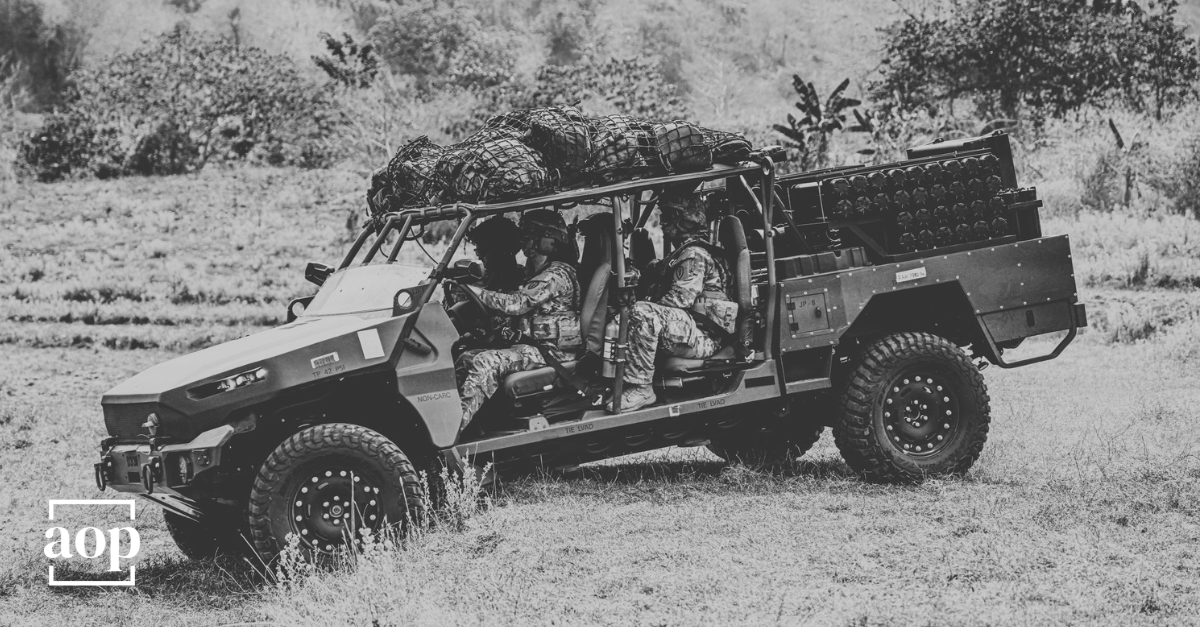 Two Clocks, One Truck: The Army's Need for Speed Meets New Defense Sourcing Rules
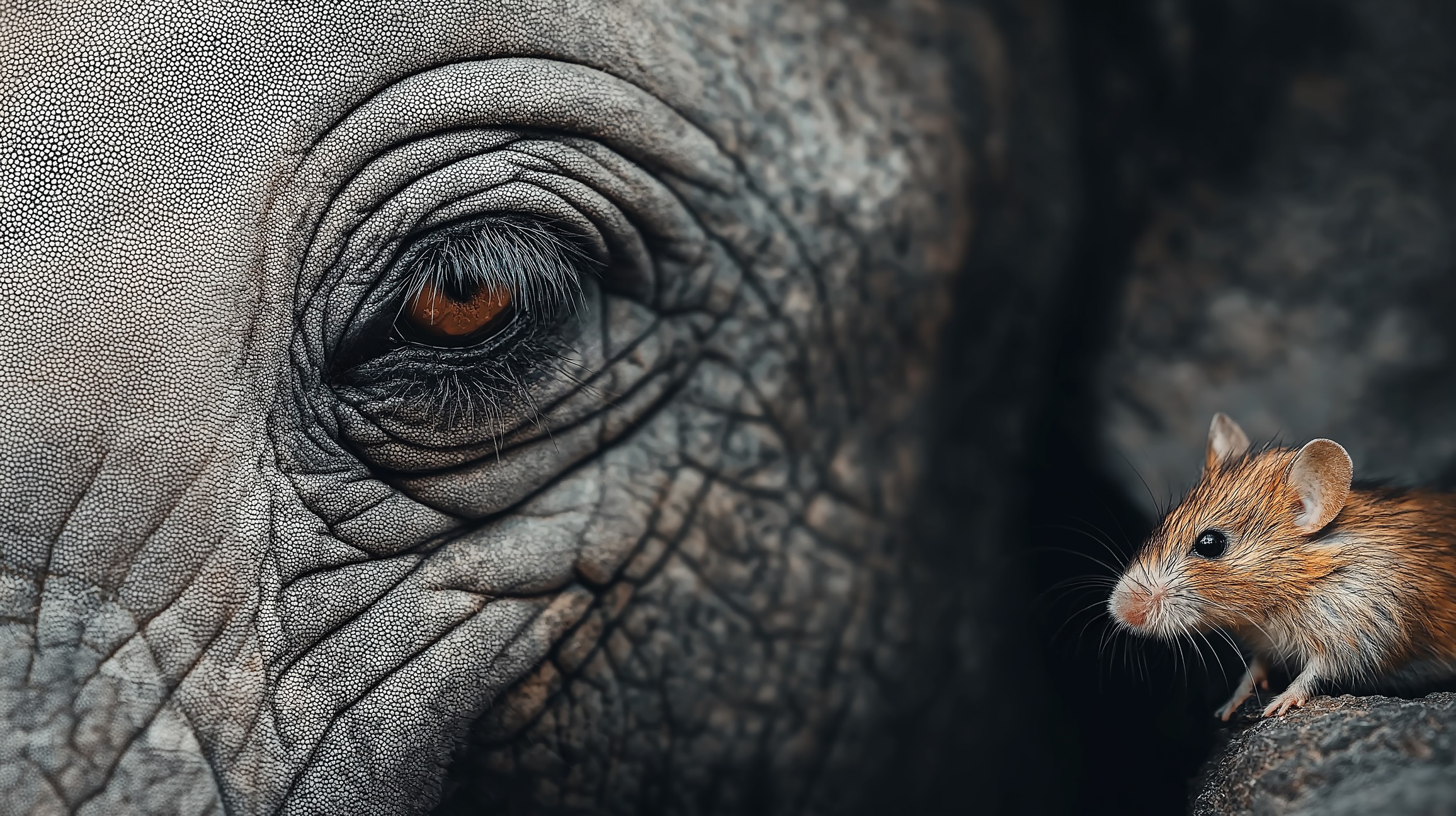 Sustainable Transformation: The Elephant and The Mouse In The Room
 The Price of Standing Alone: Strategic Autonomy in a World Where Nobody Can Do It Alone
 The Potter’s Hands: Why Great Leaders Shape Environments, Not People
 The Corix Partners Friday Reading List - October 16, 2026