The Certification Paradox: How India's Coach-Certification Economy Manufactures Oversupply, Erodes Price and Quality — and What Can Lawfully Be Done About It
Zenodo (CERN)
July 15, 2026
The certification-training economy has grown faster, and more profitably, than the market for coaching itself. Drawing on ICF statistics and tax filings, Competition Commission of India orders and FTC enforcement actions, the paper documents the sequence from income promises to price undercutting, shows why collectively fixed floor fees would constitute cartelisation under Section 3 of the Competition Act 2002, and proposes six lawful levers instead.
See publication
Tags: Careers, Coaching, Management
Paper VI, a synthesis, of the series - The Computability Frontier: The Irreducible Human in the Age of Intelligent Machines
Zenodo (CERN)
June 20, 2026
The five preceding papers named four acts the machine cannot absorb and found them to be one thing: the human's stake in the outcome. This synthesis asks why the human has a stake and answers that the stake is bodily. Drawing on the phenomenology of the lived body, somatic markers, enactive cognition and the Vedantic pañca-kośa, it traces all four irreducibilities to embodiment.
See publication
Tags: AI, Behavioral Science, Leadership
The Computability Frontier: Leadership at the Apara Ceiling in the Age of Artificial Intelligence
Zenodo (CERN)
June 18, 2026
Executives ask which of their skills the machine will take. The paper argues the question is wrong: skills are the wrong unit, computability is the right one. Leadership work divides into a computable layer a machine can run and a non-computable layer it cannot. The boundary ends at the Apara Ceiling, after the Mundaka Upaniṣad's distinction between encodable knowledge and higher knowing.
See publication
Tags: AI, Behavioral Science, Leadership
The Collapse Function: Commitment as the Irreducible Act in an Age of Infinite Options
Zenodo (CERN)
June 18, 2026
A leader's edge was historically informational. Artificial intelligence dissolves that edge by giving everyone the same superhuman analyst, so the edge migrates to the act knowing cannot perform: commitment. Drawing its structure from quantum measurement, the paper argues ranking is not choosing, that genuine decisions sit under Knightian uncertainty, and that a stakeless system cannot own an outcome.
See publication
Tags: AI, Leadership, Management
Judgment Decoherence: How a Leader's Judgment Loses Its Independent State Beside a Persuasive Machine
Zenodo (CERN)
June 18, 2026
To calibrate trust in a machine, a leader must hold a judgment independent of it. Continual, tightly coupled interaction with a fluent and confident system erodes exactly that independence until the leader's judgment takes the machine's shape. The remedy is not isolation but the Vedantic sākṣī: the witness fully present to experience yet uncaptured by it.
See publication
Tags: AI, Behavioral Science, Management
The Signal Premium: The Irreducible Value of the Costly Word in an Age of Synthetic Speech
ZENODO (CERN)
June 18, 2026
A leader's words once carried information beyond their content because producing them cost something. By making any message effectively free, artificial intelligence strips away that cost. Grounded in signalling theory, cheap talk and the market-for-lemons result, the paper argues three costs remain that the machine cannot pay: binding commitment, risked exposure, and genuine accountability.
See publication
Tags: AI, Behavioral Science, Leadership
THE CREDENTIAL INFLATION TRAP How India's Executive Coaching Market Is Failing Its Clients
Zenodo
February 27, 2026
India's executive coaching market presents a troubling paradox: credentialing institutions and training providers are expanding at pace while the majority of certified coaches struggle to attract paying coachees. This article argues that three reinforcing market failures are driving this inversion — the erosion of professional experience thresholds for high-level credentials, the structural absence of outcome accountability mechanisms, and organisational buyers' inability to distinguish coaching competence from credential volume. Drawing on signalling theory, human capital research, professional services market dynamics, and practitioner evidence from India's coaching landscape, we introduce the Credential Inflation Trap — a four-stage diagnostic framework that maps how credentialing systems degrade from reliable quality signals to market-distorting credential displays. Five empirical findings document the scale, mechanisms, and consequences of this inversion. A prescriptive playbook with sequenced actions and measurable KPIs is offered for three constituencies: CHROs and L&D leaders, ICF and credentialing bodies, and coaching training providers. The article closes with a research agenda for scholars and a first-week action list for practitioners.
See publication
Tags: Behavioral Science, Coaching, Leadership
The Strategic Future of Executive Coaching in Indian Corporations: From Remediation to Renaissance.
Zenodo
February 27, 2026
India's corporate leadership pipeline faces a structural crisis. As Global Capability Centres multiply, digital transformation accelerates, and a multi-generational workforce collides with legacy hierarchies, the demand for executive coaching has surged—yet the field remains fragmented, culturally misaligned, and poorly measured. Drawing on multi-case evidence across 180+ coached leaders in Indian corporations spanning IT/ITES, BFSI, pharmaceuticals, and GCCs, this paper identifies five structural forces reshaping coaching demand in India, proposes the Quantum-Vedantic Leadership Coaching (QVLC) Model as an India-specific diagnostic and intervention framework, and delivers a sequenced managerial playbook for CHROs and CEOs seeking to transform coaching from a remedial HR expense into a strategic capital investment. The central argument is that conventional Western coaching methodologies produce sub-optimal outcomes in Indian cultural contexts, and that a culturally calibrated alternative—grounded in quantum physics principles, Vedantic philosophy, and OKR-driven behavioural sprints—is not merely more appropriate but measurably more effective.
See publication
Tags: Behavioral Science, Careers, Coaching
THE HOLLOW CROWN Decoding the "Fragile Victor" Syndrome and Status- Based Displacement in Emerging Leadership
Zenodo
December 14, 2025
In the contemporary corporate ecosystem, a paradox has emerged: a generation of leaders who are statistically winning (titles, equity, salary) but psychologically disintegrating. We term this phenomenon "The Fragile Victor." Unlike traditional burnout, this syndrome is characterised by "Status-Based Displacement"—where high-potential executives, facing concealed professional shame or "Shadow Demotions," subconsciously weaponise their relationships to regain a sense of dominance. Drawing on the case study of "Aryan," this paper maps the "Metric Migration" mechanism, where leaders shift their definition of success from 'Strategic Impact' to 'Interpersonal Dominance' to mask their loss of genuine authority.
See publication
Tags: Behavioral Science, Leadership, Management
THE MIRROR EFFECT: Psychological Projection and Reactive Hostility in Leadership Evolution
Academia.edu
December 14, 2025
Leadership development is often viewed as a linear progression of skill acquisition. However, empirical observation reveals a counterintuitive phenomenon: as leaders evolve toward higher efficacy and clarity, they frequently encounter sudden, irrational hostility from long-standing allies. This paper defines this phenomenon as "The Mirror Effect." Drawing on Jungian psychology (The Shadow) and Bion’s Group Dynamics (Basic Assumption Groups) , we argue that an evolving leader acts as a psychological mirror, reflecting the stagnation of their peers. This paper presents the "Mirror Effect Matrix" to help executives distinguish between valid feedback and psychological projection, transforming leadership endurance from a test of will into a practice of Nirvedha (detached awareness).
See publication
Tags: Behavioral Science, Leadership, Management
LEADING FROM THE VOID Innovation through the Quantum Vacuum and Vedantic 'Akasha'
Academia.edu
December 14, 2025
In the modern corporate lexicon, "Innovation" is synonymous with activity: hackathons, sprints, and rapid prototyping. Yet, genuine breakthrough innovation remains rare. This article proposes that leaders are looking for novelty in the wrong place. Drawing on the physics of the Quantum Vacuum (Zero-Point Field) and the Vedantic concept of Akasha (Space), we argue that creation does not come from "clutter," but from "emptiness." We present a framework for "Zero-Point Leadership," demonstrating how executives must create psychological and operational "voids" to allow new possibilities to emerge.
See publication
Tags: Behavioral Science, Leadership, Management
THE QUANTUM SWITCH Navigating the Paradox of Structure and Flow through Wave-Particle Duality
Academia.edu
December 14, 2025
Contemporary management literature advocates for the "Ambidextrous Organization"-one that can efficiently exploit existing assets while exploring new opportunities. However, for the individual leader, this often manifests as cognitive dissonance. Leaders are asked to be simultaneously rigid (compliance/KPIs) and fluid (innovation/empathy). This paper argues that this simultaneous demand violates the physical Principle of Complementarity. Drawing on the physics of Wave-Particle Duality and the Vedantic Triguna framework, we propose that effective leadership is not a state of static balance, but of dynamic switching. We present "The Quantum Switch," a framework enabling executives to toggle between "Particle Mode" (Structure/Tamas) and "Wave Mode" (Flow/Rajas) without burnout.
See publication
Tags: Behavioral Science, Leadership, Management
THE PHYSICS OF TRUST Overcoming the Proximity Paradox in Hybrid Leadership via Quantum Entanglement
Academia.edu
December 14, 2025
The shift to hybrid and remote work models has exposed a fundamental flaw in traditional management theory: the reliance on "Locality" (physical proximity) as a proxy for trust. Leaders struggle to influence teams they cannot see, leading to the "Proximity Paradox" increased digital surveillance resulting in decreased psychological safety. This paper proposes that the solution lies not in better monitoring technology, but in a shift to a "Quantum" leadership model. Drawing on the physics of Quantum Entanglement (Bell's Theorem) and the Vedantic concept of Sutra-atman (The Cosmic Thread), we present a framework for "Non-Local Leadership." We demonstrate how leaders can establish a resonant "state of being" that maintains team coherence across distance, effectively replacing the "Newtonian Box" of the office with the "Quantum Bond" of shared identity.
See publication
Tags: Behavioral Science, Coaching, Management
 THE HOLLOW CROWN: Decoding the "Fragile Victor" Syndrome in Emerging Leadership
Zenodo
December 14, 2025
In the contemporary corporate ecosystem, a paradox has emerged: a generation of leaders who are statistically winning (titles, equity, salary) but psychologically disintegrating. We term this phenomenon "The Fragile Victor." Unlike traditional burnout, this syndrome is characterized by "Status-Based Displacement"—where high-potential executives, facing concealed professional shame or "Shadow Demotions," subconsciously weaponize their relationships to regain a sense of dominance
See publication
Tags: Behavioral Science, Leadership, Management
THE QUANTUM SWITCH: Navigating the Paradox of Structure and Flow through Wave-Particle Duality
Zenodo
December 13, 2025
Contemporary management literature advocates for the "Ambidextrous Organization"—one that can efficiently exploit existing assets while exploring new opportunities. However, for the individual leader, this often manifests as cognitive dissonance. Leaders are asked to be simultaneously rigid (compliance/KPIs) and fluid (innovation/empathy). This paper argues that this simultaneous demand violates the physical Principle of Complementarity. Drawing on the physics of Wave-Particle Duality and the Vedantic Triguna framework, we propose that effective leadership is not a state of static balance, but of dynamic switching. We present "The Quantum Switch," a framework enabling executives to toggle between "Particle Mode" (Structure/Tamas) and "Wave Mode" (Flow/Rajas) without burnout.
See publication
Tags: Behavioral Science, Leadership, Management
THE PHYSICS OF TRUST: Overcoming the Proximity Paradox in Hybrid Leadership via Quantum Entanglement Authors/Creators
Zenodo
December 13, 2025
The shift to hybrid and remote work models has exposed a fundamental flaw in traditional management theory: the reliance on "Locality" (physical proximity) as a proxy for trust. Leaders struggle to influence teams they cannot see, leading to the "Proximity Paradox"—increased digital surveillance resulting in decreased psychological safety. This paper proposes that the solution lies not in better monitoring technology, but in a shift to a "Quantum" leadership model. Drawing on the physics of Quantum Entanglement (Bell’s Theorem) and the Vedantic concept of Sutra-atman (The Cosmic Thread), we present a framework for "Non-Local Leadership." We demonstrate how leaders can establish a resonant "state of being" that maintains team coherence across distance, effectively replacing the "Newtonian Box" of the office with the "Quantum Bond" of shared identity.
See publication
Tags: Behavioral Science, Leadership, Management
LEADING FROM THE VOID: Innovation through the Quantum Vacuum and Vedantic 'Akasha'
Zenodo
December 13, 2025
See publication
Tags: Behavioral Science, Leadership, Management
 The Question No Board Is Asking About AI — And Why It Is Costing Indian Companies Crores
Linkedin
April 07, 2026
A CEO called me last month. His company had just received board approval for a ₹40-crore budget for an AI implementation. It had taken four months of preparation, three board presentations, and two rounds of revisions to get there.
See publication
Tags: Behavioral Science, Coaching, Management
 Why 67% of New CXOs Fail—And the Leadership Physics Behind the 33% Who Thrive
Linkedin
April 06, 2026
Let me share a number that should unsettle every ambitious senior leader reading this: according to research from the Centre for Creative Leadership and Harvard Business Review, roughly 67% of newly appointed CXOs underperform or outright fail within their first 18 months. Two out of three.
See publication
Tags: Behavioral Science, Careers, Leadership
 The New Dark Side of 45+ in Tech — And How to Flip It Into Your Biggest Advantage
Linkedin
October 17, 2025
If you're 45+ in tech, you already know the landscape is shifting. The path upward is changing—org charts flatten, mid-level roles shrink, and AI is rewriting what it means to add value. (Mullens et al., 2025) The question: how do experienced professionals thrive—not just survive—amid this disruption?
See publication
Tags: Behavioral Science, Coaching, Management
 1000+ Coaching Conversations Later: The 10 Leadership Lessons That Changed Everything
Linkedin
March 20, 2025
Over the last decade, I have had over 1000+ coaching (Hours) conversations with senior leaders, C-suite executives, and high-potential professionals across industries.
See publication
Tags: Behavioral Science, Coaching, Management
 Sweden’s Big Shift: A Warning for AI in Coaching?
Linkedin
March 18, 2025
A few days ago, I came across a fascinating decision by Sweden’s Education Ministry that every leader, educator, and coach should pay attention to.
See publication
Tags: Behavioral Science, Coaching, Management
 Do You Know What Executives in the 30-45 Age Group Search for the Most?
Linkedin
March 17, 2025
If you’re an executive in this age range, you might think you’re navigating your challenges alone. But here’s something fascinating
See publication
Tags: Behavioral Science, Coaching, Management
 Coach, Do You Have a Coach? – Why Every Leader Needs One
Linkedin
March 01, 2025
During one of my coaching sessions, the executive I was working with paused, looked me in the eye and asked, “Coach, do you have a coach?” The question hung in the air—unexpected and thought-provoking. I found myself smiling before answering
See publication
Tags: Behavioral Science, Coaching, Management
 Gratitude: The Leadership Superpower You’re Probably Ignoring
Linkedin
February 26, 2025
I recently began coaching senior leaders at a leading tech company. The organization struggled with an invisible but powerful leadership challenge: a lack of gratitude.
See publication
Tags: Behavioral Science, Coaching, Management
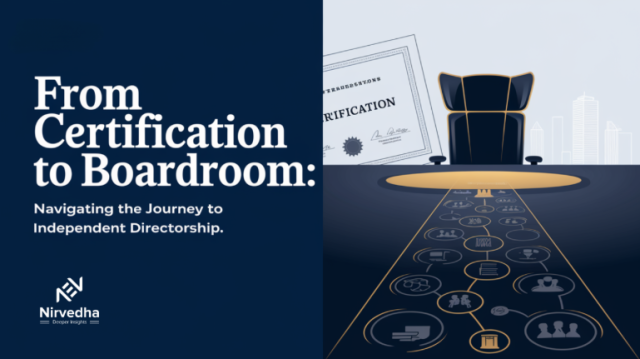 From Certification to Boardroom: Navigating the Journey to Independent Directorship
Linkedin
February 16, 2025
Embarking on the path to becoming an #IndependentDirector is both commendable and challenging. Having obtained my certification from the Institute of Directors (IOD) in 2017 and successfully passing the mandatory proficiency test by the Indian Institute of Corporate Affairs (IICA) in February 2022, I anticipated a seamless transition into board roles. However, the reality proved different.
See publication
Tags: Behavioral Science, Coaching, Management
 "Can I Be Honest With You?" – The Moment That Changes Everything
Linkedin
February 13, 2025
Imagine this: A respected but feared senior leader walks into a meeting. His team listens, nods, and avoids eye contact. He delivers direct feedback, but his words sting like daggers. There's no warmth or care—just cold, brutal honesty.
See publication
Tags: Behavioral Science, Coaching, Management
Too Many Projects: 14 Clear Signs of Overload and How to Dial Back
Forbes
October 26, 2020
See publication
Tags: Behavioral Science, Coaching, Management
12 Inventive Ways to Prepare Branding Strategies to Leverage LinkedIn Trends
Forbes
October 01, 2020
See publication
Tags: Behavioral Science, Coaching, Management
Revolutionizing Executive Coaching through Intelligent Chat Bot
Silicon India
October 01, 2020
Revolutionizing Executive Coaching through Intelligent Chat Bot
See publication
Tags: Behavioral Science, Coaching, Management
10 Signs of a Professional Midlife Crisis and How to Get Through One
Forbes
September 30, 2020
See publication
Tags: Behavioral Science, Coaching, Leadership
Reach the Next Executive Level With These 14 Career-Advancing Tips
Forbes
August 25, 2020
See publication
Tags: Behavioral Science, Coaching, Management
14 Ways Artificial Intelligence Will Disrupt Job Searches and Recruiting
Forbes
August 19, 2020
See publication
Tags: Coaching
14 Ways Leaders Can Prepare for Generation Z's Entry into the Job Market
Forbes
February 01, 2020
See publication
Tags: Behavioral Science, Coaching, Management
Nine Ways to Maintain Work-Life Balance During the Busy Holiday Season
Forbes
October 01, 2019
See publication
Tags: Coaching
Woman Leaders: They Have a Natural Flair to Be Coach Leaders
Business World Magazine
December 08, 2018
See publication
Tags: Coaching
 How chatbots can play a vital role in employee skill building
Nirvedha
November 07, 2018
Imagine the spike in productivity if each of your employees is empowered with a knowledgeable and personalized assistant at no further resource cost. With the proliferation and high adoption of chatbots, this is no longer fiction; it is a living reality. Learning and Development department part Human resources (HR) is one area ripe for intelligent automation within an enterprise.
See publication
Tags: Behavioral Science, Coaching, Management
How Chatbots Can Play a Vital Role in Employee Skill Building
YourStory.com
November 05, 2018
See publication
Tags: Coaching
Importance of Executive Coaches in the Startups
Entrepreneur India
November 02, 2018
See publication
Tags: Coaching
Changing Times: Future of Leadership and the Role of Coaching
Business World Magazine
October 27, 2018
See publication
Tags: Behavioral Science, Coaching, Management
GIGPreneurs — Changing the Definition of Future Work Force and Economy
Entrepreneur India
August 25, 2018
See publication
Tags: Behavioral Science, Coaching, Leadership
Decoding Disruption for Startups and Entrepreneurs
YourStory.com
August 01, 2018
See publication
Tags: Behavioral Science, Coaching, Management
 The Blood Pressure Reading Nobody Budgets For
Linkedin
September 06, 2026
July 2016. My hometown.
A few of us had gathered the way old friends do when everyone is turning fifty at roughly the same time. One of them is a doctor. Somewhere between the second cup of tea and the third round of who-has-put-on-weight, he said, almost as an afterthought, "Let me check everyone's BP."
See publication
Tags: Behavioral Science, Coaching, Leadership
 The Quantum Wave Coaching Method: A New Physics of Leadership Transformation
Linkedin
August 08, 2026
Why the world's most capable leaders freeze — and the five-stage protocol that melts them back into motion.
See publication
Tags: Behavioral Science, Coaching, Leadership
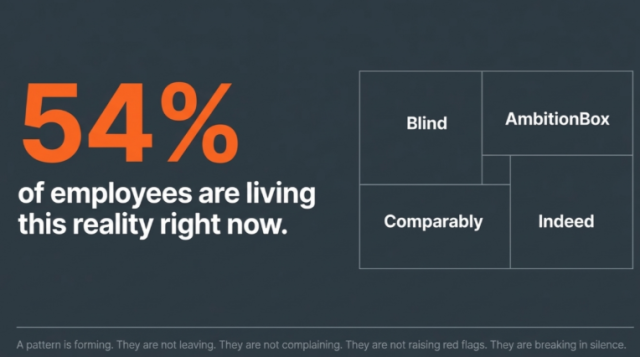 Employee Underground: What the Review Platforms Are Telling Us
Linkedin
March 20, 2026
He logged in on a Sunday afternoon.
See publication
Tags: Coaching, Leadership
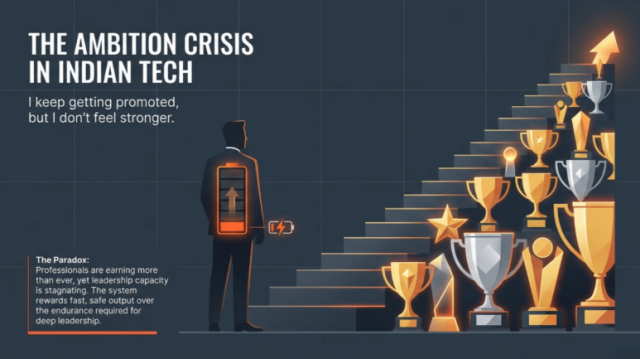 Indian Tech’s New Talent Risk: Are We Building High Earners, but Low-Aspiration Leaders?
Linkedin
February 24, 2026
But if I’m being honest, it names a concern many leaders are already feeling — even if they aren’t saying it this directly.
See publication
Tags: Behavioral Science, Coaching, Management
 The Great Rebuild: Seven Counter-Intuitive Truths Redefining Work in 2026
Linkedin
February 22, 2026
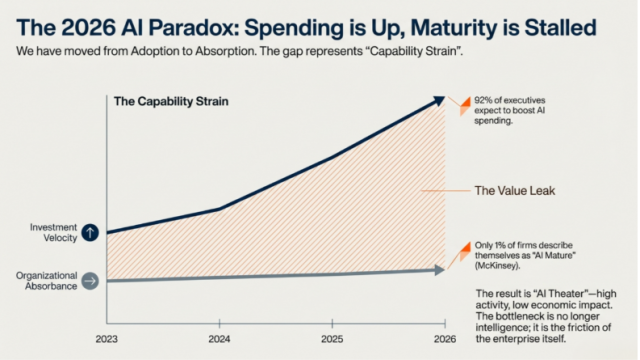
The 2026 AI paradox is no longer about access to powerful tools; it is about an enterprise’s capacity to absorb compounding capability into real workflows without breaking trust, quality, or the human system. Executives are sharply increasing AI investment, yet only a tiny minority describe their organisations as “mature” in AI deployment—meaning AI is embedded end-to-end in core work and generating sustained outcomes.
See publication
Tags: Behavioral Science, Coaching, Management
 The High-Velocity Bottleneck: Navigating and Neutralising Insecure Leadership in the AI Era
Linkedin
February 08, 2026
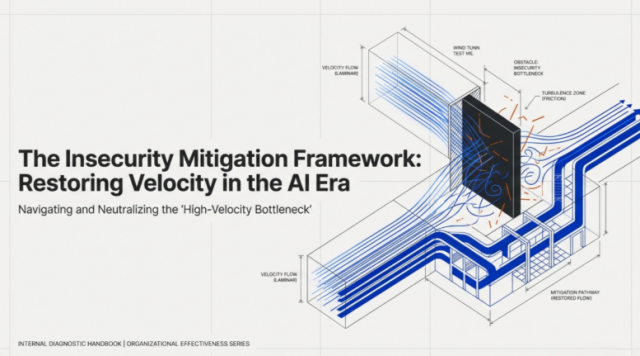
As generative AI lowers the cost of technical and analytical output, many organisations are discovering a new constraint on performance: managerial insecurity that turns into control, credit hoarding, and information bottlenecks
See publication
Tags: Behavioral Science, Coaching, Management
 Is Your Org Chart a $250 Million Physics Mistake?
Linkedin
February 02, 2026
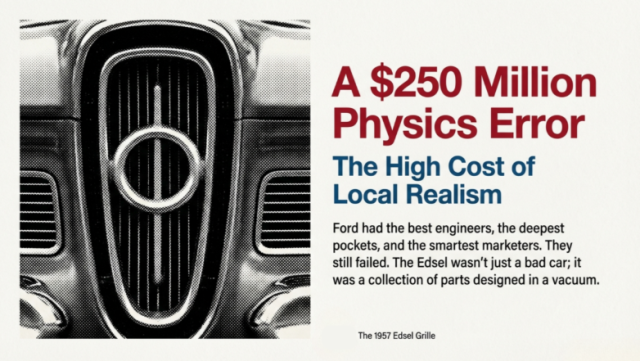
In physics, Local Realism is the belief that objects are influenced only by what directly touches them. In the Ford of 1957, departments behaved like Billiard Balls. Styling designed a "toilet seat" grille in a vacuum. Engineering realised late that it wouldn't cool the engine, but "that wasn't their lane." Finance only looked at the ledger at the end of the quarter.
See publication
Tags: Behavioral Science, Coaching, Management
 Empty Chairs, Old Networks: 4 Surprising Truths About India's Modern Boardrooms
Linkedin
January 29, 2026
Mention the term "corporate boardroom," and a specific image often comes to mind: an exclusive, wood-panelled room where a select group of seasoned executives makes decisions in quiet seclusion.
See publication
Tags: Behavioral Science, Coaching, Management
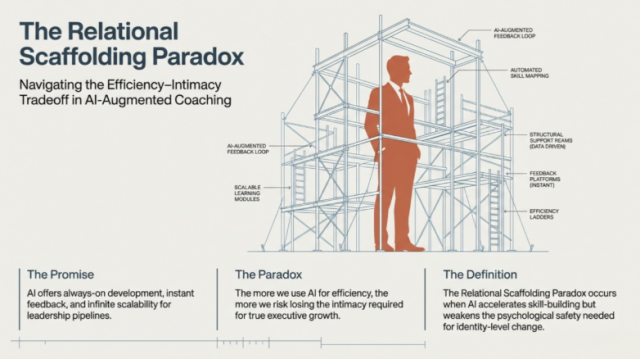 The Relational Scaffolding Paradox
Linkedin
January 25, 2026
Organisations are rapidly introducing AI into executive coaching to expand access and reduce cost. Yet hybrid coaching can trigger an unintended failure mode: the Relational Scaffolding Paradox—AI can accelerate skill-building through
See publication
Tags: Behavioral Science, Coaching, Management
 How AI Revolutionises Business and Confronts Us—A Recent Coaching Room Reflection
Linkedln
July 24, 2025
Yesterday, I saw firsthand the profound change AI is transforming today's organisations—a session that left me pondering long after it was over, on both its potential and paradox.
In a coaching session with a Senior VP of facilities in multiple locations for a top IT firm, our conversation was suddenly interrupted. The Managing Director summoned him for a pressing dialogue. When he returned, he mentioned a breakthrough that instantly changed the energy of the room.
See publication
Tags: Behavioral Science, Coaching, Management
 Survival as a Service: The New Reality of Work in the Age of AI
Linkedln
May 20, 2025
“What happens to my job when AI takes over?” This is no longer a hypothetical question. It’s the pulse of boardroom discussions, employee town halls, and dinner table anxieties.
See publication
Tags: Behavioral Science, Coaching, Management
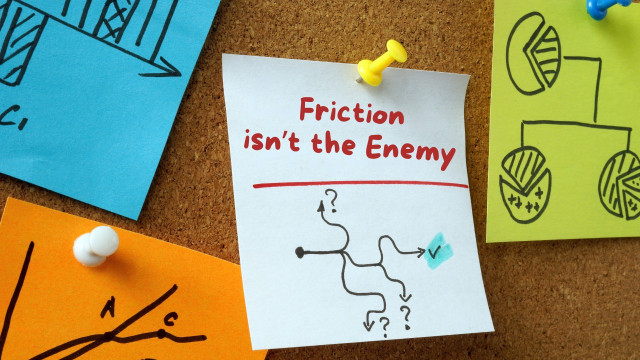 Friction Isn’t the Enemy. It Might Just Be the Catalyst You Need.
Linkedln
April 25, 2025
n a world obsessed with efficiency, speed, and “seamless” user experiences, friction has earned a bad reputation.
We’re told to eliminate it. Startups want to move fast and break things. Leaders want lean teams with no drama. Apps promise us “one-click solutions.”
See publication
Tags: Behavioral Science, Coaching, Management
 Rethinking Success and Leadership: Time to Break Free from the Myths
Linkedln
April 14, 2025
Every week, I speak to ambitious professionals — high-performing managers, CXOs, and rising leaders. They’ve followed the rules. They’ve worked hard. Many have even sacrificed personal milestones in pursuit of professional growth.
See publication
Tags: Behavioral Science, Coaching, Management
 Leadership at 35,000 Feet: What the Indigo Airlines Story Teaches Us About How Not to Lead
Linkedln
April 11, 2025
How can a company be crushing it on the stock market while its own people feel crushed under its culture?
This is the paradox of modern-day leadership when growth becomes a god and empathy becomes an afterthought.
See publication
Tags: Behavioral Science, Coaching, Management
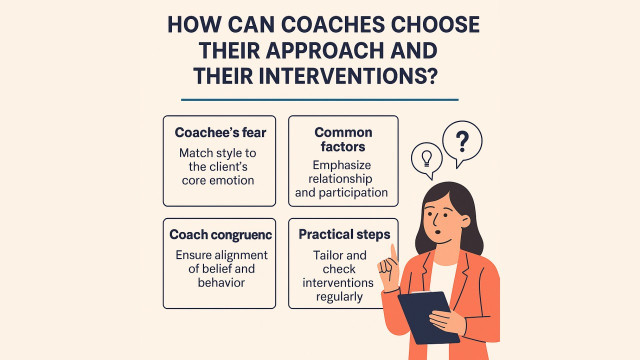 Beyond Models: How Great Coaches Choose the Right Intervention — Backed by Science
Linkedln
April 06, 2025
Every coach has asked themselves this. Erik de Haan’s new research-backed paper doesn’t just answer that — it rewrites how we think about coaching effectiveness altogether.
The paper, titled “How Can Coaches Choose Their Approach and Their Interventions Based on the Evidence We Now Have?” shines a powerful spotlight on what drives coaching success.
See publication
Tags: Behavioral Science, Coaching, Management
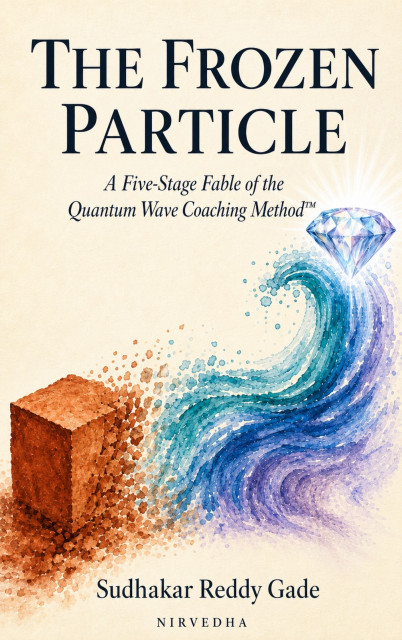 The Frozen Particle: A Five Stage Fable of the Quantum Wave Coaching Method
Amazon
August 09, 2026
He had everything, and he couldn't move. She had nothing yet, and she couldn't begin.
Six hundred kilometres apart, a frozen chief executive who cannot sign a single page and a girl told all her life that she is "not built for it" are each led by the same quiet coach through the same five doorways — from stuck, to fluid, to a new self chosen on purpose.
The Frozen Particle is a beautifully illustrated fable you can read in one evening and return to for years. No lecture, no checklist — you simply watch two strangers change, and feel exactly how it happens. At the back, a short Companion reveals the method beneath the story: the Quantum Wave Coaching Method, refined over nine years with more than 180 leaders.
Read it if you have ever known exactly what to do — and could not move.
See publication
Tags: Behavioral Science, Coaching, Management
 The Coaching Room: True Stories from the Hour That Changes Everything
Amazon
April 30, 2026
Forty-five leaders. One closed door. One hour that turned a career — and, more often than not, a person.
For eleven years, Sudhakar Reddy Gade has sat across from senior leaders in pharmaceuticals, technology, manufacturing, finance, healthcare. They arrived with a promotion they had been overlooked for. A communication gap. A skill they thought they were missing. A neat list of goals.
What they were actually carrying was a question they had never asked out loud.
This is the record of those questions.
You will meet the Regional Sales Director who closed the biggest deal of his life and felt nothing. The PMO Lead, nine years at the same firm, who said if I lose this job I don't know who I am — and heard it for the first time as she said it. The GM who spent eighteen minutes describing the job he had and two minutes describing the one he wanted, and did not notice the imbalance until someone counted.
Names have been changed. Industries blurred. The emotional truth is left intact.
This is not a textbook. There are no five-step frameworks. There are forty-five doors opened, one at a time, and what was waiting on the other side of each.
If you have performed well and felt stuck — if you have been managing a question for years instead of asking it — this book was written for the version of you who is finally ready to put it into words.
The room is always ready.
What are you still managing, that you have not yet allowed yourself to ask?
See publication
Tags: Behavioral Science, Coaching, Leadership
 The AI-Ready Leader
Amazon
April 02, 2026
You don't need to become a technologist. You need to become a leader who can think alongside one.
Every week, a new AI tool promises to change everything. And every week, thousands of senior leaders quietly wonder the same thing: Where do I fit in a world where machines can think?
This book is the honest answer — written not by a technologist, but by an Organisational Physicist who has spent three decades inside boardrooms, coaching 180+ leaders across Fortune 500 companies, watching exactly how human leadership either rises or crumbles under pressure.
The AI-Ready Leader is a non-technical playbook for the executive who refuses to become obsolete — and refuses to pretend.
Inside, you will discover the Fear Audit (why your anxiety about AI is actually diagnostic data), the seven AI capabilities every leader must understand without writing a single line of code, how to lead teams that are anxious and resistant, the Decision Velocity Matrix for thinking faster without losing judgment, how to coach and develop people when AI is already in the room, an ethical framework for when algorithms make mistakes, and a 90-Day AI Leadership Sprint — your personal transformation roadmap built for execution.
This is not a book about ChatGPT. It is not a book about prompts. It is a book about you — the irreplaceable human in the loop, whose judgment, empathy, and moral clarity no model can replicate.
Sudhakar Reddy Gade is a Forbes Coaches Council Member, Thinkers360 Top 10 Behavioural Science thinker, and author of The Physics of Leadership. His RE:CODE framework has helped leaders at TCS, Oracle, Citibank, Abbott, and Dr. Reddy's Laboratories reach CXO roles in a median time of 5.8 months.
The question is no longer whether AI will change how you lead. It already has. The question is whether you will lead that change — or be carried by it.
See publication
Tags: AI, Behavioral Science, Management
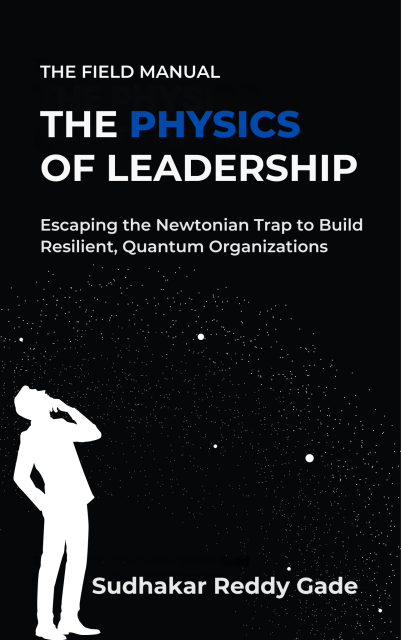 The Physics of Leadership
Amazon
January 02, 2026
STOP PILOTING YOUR STARSHIP WITH A STEAM ENGINE’S MANUAL.
The laws of business physics have shifted. We have moved from a Newtonian World of solid hierarchies, linear plans, and brute force into a Quantum World of fluid energy, invisible connections, and chaotic non-linearity.
Yet, most C-Suite leaders and managers are still operating with Industrial Age tools. They apply more Force (F = ma) to get results, but they only generate Heat (Burnout) and Resistance.
The result? Organisational entropy, paralysed decision-making, and "Zombie Projects" that refuse to die.
IT’S TIME TO UPGRADE YOUR OPERATING SYSTEM.
In this contrarian field manual, Organisational Physicist and Executive Coach Sudhakar Reddy Gade dismantles the myths of traditional management. Drawing on three decades of experience—ranging from carrying a medical bag for Raptakos Brett to the boardrooms of global tech firms—Sudhakar reveals that the problems in your company are not "People Problems." They are Physics Problems.
If you are a leader feeling the weight of the "Gravity Well" or struggling to generate "Escape Velocity" for your new strategy, this book is your blueprint.
IN THIS BOOK, YOU WILL DISCOVER:
The Gravity Well: Why your "Open Door Policy" is actually an Event Horizon that crushes your team’s speed and autonomy.
Quantum Entanglement: How to build unbreakable trust in remote/hybrid teams without resorting to "Bossware" surveillance.
The Second Law of Thermodynamics: Why burnout is not a mental health issue—it is an Entropy problem (and how to fix it using Negentropy).
The Power Factor: How to calculate the "Foam" (wasted effort) in your organisation and convert "Apparent Power" (Busyness) into "Real Power" (Results).
Quantum Tunnelling: The art of "Responsible Subversion"—how to bypass bureaucratic walls to innovate without breaking the system.
The Observer Effect: Why measuring performance (KPIs) often destroys the very performance you are trying to improve (The Cobra Effect).
THIS IS NOT A THEORY. IT IS PHYSICS.
This system has been battle-tested. Using the Nirvedha Quantum Coaching methodology detailed in these pages, Sudhakar has helped 180 leaders secure CXO roles and increase their combined annual compensation by ₹32 Crore ($3.8M+).
Whether you are a startup founder hitting the "Rule of 150" wall, or a corporate executive trying to steer a Trillion-Dollar ecosystem, the math is the same.
You cannot fight the laws of physics. But you can master them.
The future belongs to the resonant, not the rigid.
Stop managing the matter. Start working with the energy.
Scroll up and click "Buy Now" to initiate the Quantum Shift.
See publication
Tags: Behavioral Science, Leadership, Management
 U R Unique
Amazon
February 07, 2018
People often ask, "Can executives change their behavior?" The answer is definitely yes. Coaching is all about helping successful Leaders to get better by bringing change in their behavior.
Sudhakar is known as the "Change Coach" and is Marshall Goldsmith Stakeholder Centered Coaching Certified Coach as well as ICF RACC certified Coach. For over five years he has been working with executive teams to improve their leadership and organizational effectiveness measurably. In his Professional career spanning past two decades, he has held several positions in general management and business management at multinational companies in Global Roles. Furthermore, he is a Certified Corporate Director, an Author and authored books RU Coached; U R Unique also, writes regular Articles in EzineArticles.com.
A small positive change in behavior can have a significant impact at all levels of management. From an organizational perspective, the fact that the executive is trying to change anything (and is being a role model for personal development) may be even more important than what the executive is seeking to improve. One key message Sudhakar offers to every Leader that he coaches is "Before helping others develop - you be the Change!"
See publication
Tags: Behavioral Science, Careers, Coaching
 R U Coached
Amazon
March 29, 2017
At a more professional level, choice of a leader to run his organisation in a particular manner, choice of hiring some special kind of people to shape the company's future.
A leader's decision to seek guidance from an executive coach rather than doing it all by himself has an equally significant impact on the fortunes of many people working in the Organisation.
They consider Executive coaching as a one-time interactive session of a few hours where the coach would arrive and instil all his wisdom into the executive's mind.
Moreover, when the executive coach makes it clear not to expect miracles overnight, they take a stand against Executive coaching.
Constant interactions with his executive coach led to Mark transforming into a bold decision-maker who worked wonders for himself and his team.
These interactions were followed by hours of interaction between the coach and the leader; Eric went through the same process with his Executive coach.
See publication
Tags: Behavioral Science, Coaching, Management
Disruption The Way Of Life
Libsyn
August 21, 2018
Yes, the pace of disruption has increased exponentially, thanks to a confluence of disruptive technologies that change how we work, communicate, travel, learn, and age.
While technological developments create the opportunity for disruption, one doesn't have to be a master of the latest technology to reap the benefits.
I consider the following entrepreneurs as disruptors: the one who takes advantage of the opportunities created by disruption, the one who refuses to be intimidated by technological innovation, the one who finds ways to continually reinvent themselves so that their unique assets will never become obsolete.
See publication
Tags: Behavioral Science, Coaching, Management
Five Essential Constructs of a Leader
Spotify
August 01, 2018
What makes an organization stand out? What makes one better than the other? LEADERS…
It is paramount for the leaders to be on the right path towards achieving the organizational goal.
The leaders drive the staff and employees but who/what drives the leader?
No wonder organizations spend significant money on Leadership Development Programs. They understand how important it is to get the leaders trained for them to put the organization in the right direction
However, the problem is: is the Leadership Development Programs Effective?
Are they bringing forth positive result?
Are they a waste of money and time?
NIRVEDHA’s unique Coaching methodology addresses the above problems
Nirvedha brings a comprehensive program which not only Coaches your Leadership adequately but also will walk that extra mile to being next to your executives in achieving the set Goals for a better ROI…
With Nirvedha comprehensive program you will be able to track your ROI against your Leadership Development Program spending.
Now you have it all at your disposal Make that decision today, get the leaders trained and monitored your ROI against the money spent…
See publication
Tags: Change Management, Coaching
Executive Presence
Libsyn
July 24, 2018
Among the laundry list of qualities a leader should possess, I believe it is executive presence which is more important.
Without it, you merely won't be perceived as a leader, no matter what your title or level of authority, no matter how well you dress or speak.
According to 62 percent of the leaders surveyed from across the globe, feel that Gravitas is what one should possess of and signals to the world you're made of the right stuff and can be entrusted with grave responsibility.
What makes up gravitas this elusive but all-important piece of executive presence?
People will have formed an opinion of you before you're in a position to help them create it, which is why 56 percent of leaders concur that reputation matters a great deal in establishing EP for women and 57 percent agree it matters for men.
See publication
Tags: Behavioral Science, Coaching, Management
GRIT
Libsyn
July 20, 2018
However, far fewer people understand how to lead: how to mobilize energy in people, teams, and other groups; how to inspire and motivate through hope, vision, meaning, and purpose; how to increase productivity while also releasing peoples talent, creativity, and resilience; how to build a resonant culture that calls for everyone's best.
Amongst, many differentiating factors of a leader I feel GRIT is one of those factors which certainly make a leader stand out.
The question is about to develop grit to be a successful leader.
According to Angela Duckworth in her book GRIT The Power of Passion and Perseverance, shows anyone striving to succeed be it parents, students, educators, athletes, or business people that the secret to outstanding achievement is not talent but a unique blend of passion and persistence she calls grit.
I am so much moved by these two equations that offer a simple proof for why grit trumps talent: Talent effort = skill.
See publication
Tags: Behavioral Science, Coaching, Management
Becoming a Mindful Leader
Libsyn
July 17, 2018
Well, All of us have the innate ability to live and lead with excellence, we're going to help you with how to be a Mindful Leader on this weeks show, where you'll learn Five effective Strategies to become a Mindful Leader.
On the other hand, mindfulness can contribute towards your personal development as a leader as well.
Mindful leaders find time to engage with introspective practice Mindful leaders let their minds wander around Allowing your mind to wander can also be considered as one of the most effective methods available for you to become an aware leader.
See publication
Tags: Behavioral Science, Coaching, Management
How To Use FeedForward as a Constructive Tool
Libsyn
July 13, 2018
Very simply put: rather than providing positive or negative feedback, feedforward consists in providing future-oriented options or solutions.
This feed-forward type of comment can advantageously replace positive or negative feedback on the way a given person has managed past behavior, such as for the examples above, poorly handling curves while driving or coming late to meetings.
Feedforward is solution-oriented, providing clear indications on how to solve a problem without offering positive or negative criticism.
Formulating future-oriented feed forward comments, requests or advice in the place of positive or negative feedback will almost feel like a mind-bender.
When we change our communication process from offering feedback to offering feedforward, however, we still have remnants of this negative anticipation.
See publication
Tags: Behavioral Science, Coaching, Management
How to Convert your Conscious into your Best Buddy
Libsyn
July 12, 2018
Well, that's precisely what was going to help you with on this week's show, where you'll learn how to Convert your Inner Conscious into your Coach I am your host Sudhakar, a certified Executive Coach.
Every leader; be it at a junior level or CXO level can convert his/her Inner Voice or Conscious into decision making a guide and more importantly can transform that into an Inner Coach.
Let me quickly bring you to the speed as what Coaching is all about: In the last six years since I have started practicing Coaching, I have been closely following world leading coaches to figure out what is that they all have in common and according to them what is the best definition of Coaching.
Ourselves, so we have to turn our private voice into our inner coach so that when we go through those tough times, our inner coach can guide us through them.
In the above two examples, the first one is the untamed Inner Voice, and in the second example, it is the inner voice as my Coach.
See publication
Tags: Behavioral Science, Coaching, Management




 How to Articulate your personal Brand

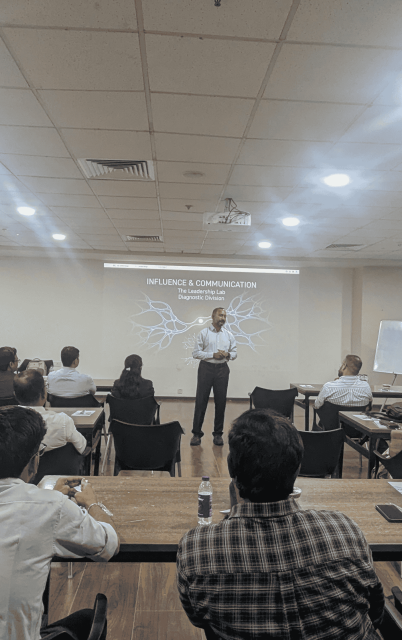 Influence and Communication
 Empathy
 Emotional Intelligence for Doctors