
Thinkers360
Interested in getting your own thought leader profile? Get Started Today.

Melanie Marshall

Brisbane, Australia

Organisations fail when their people, systems, and decision-making can’t adapt fast enough to deliver with excellence.

I help CEOs and executive teams remove the friction that slows execution, inflates people costs, and erodes value. My work strengthens the human and operational foundations that determine whether a business accelerates or stalls.

Over the past 20+ years, I’ve worked across 13 industries and supported transformations impacting more than 320,000 people. The result is measurable lifts in engagement, capability, and productivity by 33% or more through aligning people development with business engineering.

Melanie Marshall Points
Academic 15
Author 274
Influencer 64
Speaker 0
Entrepreneur 40
Total 393

Points based upon Thinkers360 patent-pending algorithm.

Thought Leader Profile

Portfolio Mix

Company Information

Areas of Expertise

Analytics 30.04
Behavioral Science 32.10
Business Continuity
Business Strategy 36.65
Careers 30.15
Change Management 32.54
Coaching 30.85
Culture 33.19
Customer Experience 30.13
Design
Design Thinking
Digital Transformation 30.03
Education 30.07
ERP
Health and Safety
Health and Wellness
Healthcare
HR
Innovation 30.03
Leadership 33.80
Management 32.90
Mental Health
Project Management 30.43
Risk Management 30.03
Security
Transformation 37.93

Industry Experience

Aerospace & Defense
Engineering & Construction
Federal & Public Sector
Healthcare
High Tech & Electronics
Insurance
Other
Professional Services
Retail

Publications & Experience

10 Article/Blogs
Why Most Organisations Don’t Learn
Melanie Marshall
June 03, 2026
Most organisations believe they’re learning because they reflect, review, and debrief.
In reality, many are reinforcing stories rather than building understanding.

The consequence is unstable performance: success that cannot be reliably repeated, risks that quietly re‑emerge, and improvement that depends more on confidence than evidence.

See publication

Tags: Business Strategy, Change Management, Leadership

What Leaders Need To Do Before Bringing In External Experts
Melanie Marshall
May 15, 2026
The first-time people suggested I write a book, I laughed stating "no one would read it because I'd be too honest about what it takes to transform."

I was a personal trainer at the time for people wanting to "get fit", but largely not trusting the process, or consistently taking action to achieve their goals. The stories unsuccessful clients told themselves about why they couldn’t change to get the results they wanted were the same - too tired, not enough time, or not enough money.

See publication

Tags: Business Strategy, Change Management, Leadership

The hard truth leaders need to hear about performance, trust, and change.
Melanie Marshall
May 08, 2026
This article outlines why many well intended transformation efforts fail, introduces the Adaptive Excellence lens, and shows what leaders can do now to lift performance, confidence, and profit without pushing people harder.

See publication

Tags: Change Management, Leadership, Transformation

Stop Being Busy - Create an Adaptive Team
Melanie Marshall
May 05, 2026
We’ve all been stuck in being “too busy” where optimising performance wasn’t a priority because we needed things to “settle down” first. This might be ok from time to time but if “busy” is the standard response to how you and the team are you’re in real trouble.

See publication

Tags: Business Strategy, Change Management, Leadership

Embracing Human Error: A Path to Team Excellence
Melanie Marshall
April 06, 2026
Many leaders and teams struggle to accept the inherent risk and potential for failure in strategy and operational delivery with human involvement.

An organisation’s ability to innovate and adapt is crucial for survival yet fear of making mistakes is a significant barrier to innovation and success.

See publication

Tags: Business Strategy, Change Management, Leadership

Why Saving the day Destroys Progress
Melanie Marshall
March 04, 2026
Most CEOs I speak with confirm that they would like more time to work on their business and lifestyle instead of being reactive to it. Many executives and teams get stuck because of a hard wiring in business culture that attributes being busy as a badge of value based on urgency or demand.

See publication

Tags: Business Strategy, Change Management, Leadership

The Power of Operations for Practical Planning
Melanie Marshall
March 04, 2026
The best strategies and plans involve change and deep operational experience, without that they are just ideas that probably won’t be implemented.

A great plan is practical and drives behaviour toward a vision. It’s a no-brainer concept that often fails when creating and executing them.

See publication

Tags: Business Strategy, Change Management, Leadership

How to climb the engagement ladder
Melanie Marshall
November 22, 2023
True leaders operate at every level in an organisation - they get the big picture, care deeply about the outcome, and are committed to doing the work to get there. You don't need to sell them on the vision and goals because they've already crafted them, and are clear on the part they play in achieving them.

See publication

Tags: Leadership, Culture

How to develop leadership maestros
Melanie Marshall
August 22, 2023
In my work, I start with a simple belief: our actions are shaped by what we feel, and believe. It's like a thread woven from our values, guiding us to respond helpfully. When I began learning about leadership, I took a course on being assertive. Two things stood out

See publication

Tags: Leadership, Culture

Why Team Feedback Is Hard and How to Make It Better
Melanie Marshall
May 29, 2019
Everyone wants to perform well. For better or worse, we use feedback from others to validate our sense of purpose and value. When feedback isn't great it can feel like we're struggling at school.


See publication

Tags: Business Strategy, Change Management, Leadership

14 Author Newsletters
Why most organisations don't learn.
Linkedln
July 31, 2026
The consequence is unstable performance: success that cannot be reliably repeated, risks that quietly re‑emerge, and improvement that depends more on confidence than evidence.

See publication

Tags: Business Strategy, Culture, Leadership

Why Organisational Age Doesn’t Equal Maturity
Linkedln
May 29, 2026
Organisational age is often mistaken for maturity. But time alone does not create capable systems.

As organisations grow, foundational disciplines are frequently deprioritised in favour of visible delivery and short‑term profit. Governance, learning, process renewal, and system health are labelled important but not urgent.

See publication

Tags: Culture, Leadership, Transformation

The Hard Truth Leaders Need to Hear About Performance, Trust, and Change
Linkedln
May 08, 2026
Most organisations believe that improving performance is about changing what people do. Over two decades of global research shows that the decisive factor is how people experience the system they work in.

As explored in the books, Trust and Adaptive Excellence, leaders who can’t build trust at scale, ignore behaviour, and neglect operating foundations constrain performance and burn out the best people.

See publication

Tags: Culture, Leadership, Transformation

Why automation is dangerous without understanding the journey
Linkedln
January 23, 2026
Automation is often sold as the cure for inefficiencies and the fast track to getting stuff done, but fear and danger can creep in when we start delegating activities to someone, or something else.

With unrelenting pressure to deliver with limited capacity, the time to stop and reflect on what should or shouldn't be done, let alone be automated, is considered a luxury.

See publication

Tags: Business Strategy, Change Management, Digital Transformation

Risky business or business innovation? How to innovate safely
Linkedin
August 30, 2024
No one ever starts a business thinking that it will fail or wanting it to go stale. It’s hard to predict events that are outside of a business’ direct line of sight and control. Success in business requires a healthy balance of risk and innovation to solve a problem, meet a need, or satisfy a want for a profit.

See publication

Tags: Business Strategy, Innovation, Risk Management

How to flex and sustain success in business
Linkedin
August 16, 2024
In business it’s not about if you flex your muscles but how.

Like a bodybuilder prepping for their next competition, growth is about change that often involves painful trade-offs (e.g. diet restrictions, exercises that result in muscle soreness, and extreme discipline to maintain consistency). Unfortunately, the body presented in ‘peak condition’ on stage isn’t sustainable.

See publication

Tags: Business Strategy, Leadership, Transformation

Why 'Change Management' doesn’t work
Linkedin
July 12, 2024
After over a decade of managing business change and mitigating risks for transformation initiatives, I quit being an organisational change manager.

See publication

Tags: Change Management, Digital Transformation, Transformation

How to identify and value your superpowers
Linkedin
July 07, 2024
Strengths Profiling and development are powerful for recognising what energises you and determining how to boost your energy and performance for long-term success. It’s also a great way to proactively seek personal and professional opportunities that are more aligned with who you are and how you want to live.

See publication

Tags: Careers, Coaching, Leadership

How to use empathy as powerful care for trust and accountability
Linkedin
June 23, 2024
The challenge
Feedback can be helpful, but it's not always delivered the way we need it. As a CEO or executive, giving and receiving feedback is crucial, yet it often gets filtered. This is fine for trust and autonomy but risky if you're too focused on vision and disconnected from operations.

See publication

Tags: Coaching, Culture, Leadership

How to reduce reactivity and create adaptive teams
Linkedin
June 04, 2024
Adaptability is the biggest superpower for dealing with reactivity and managing uncertainty.

See publication

Tags: Change Management, Coaching, Leadership

Ways to build strength with what you have and optimise services
Linkedin
May 03, 2024
Imagine a couple who move into a small two-bedroom house and grow to become a family with three children and a dog. The house is now too small, and renovations aren’t going to help so they move to a larger house.

See publication

Tags: Business Strategy, Change Management, Transformation

10 High-Impact Leadership Questions that Work
Linkedin
April 06, 2024
Hugh Mackay is an Australian psychologist, social researcher, the author of at least 14 books, and in 2015, he was appointed an Officer of the Order of Australia for distinguished service to the community in the areas of social research and psychology.

See publication

Tags: Change Management, Coaching, Leadership

How to measure for success
Linkedin
March 26, 2024
Wise words from Seth and although the message is simple, the execution of this can be tricky because it can be hard to change the status quo…but it doesn’t need to be.

See publication

Tags: Analytics, Business Strategy, Leadership

Lead like a boxer!
Linkedin
March 13, 2024
Late last year my teenage son Hayden was caught in an unexpected headlock at school that scared him.

See publication

Tags: Coaching, Education, Leadership

1 Bachelors Degree
Bachelor of Science (BSc), Psychology
University of Canberra
May 01, 2006

See publication

Tags: Behavioral Science, Leadership

4 Books
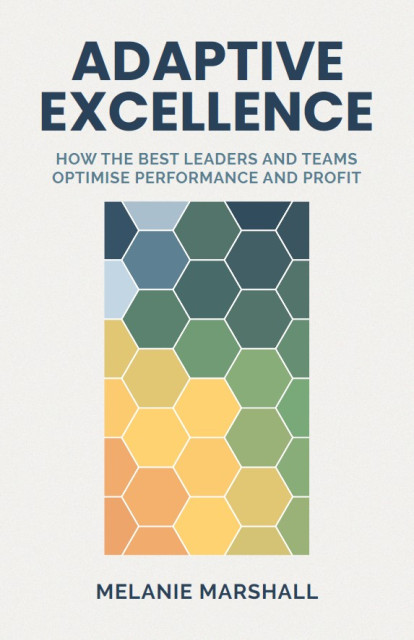
Adaptive Excellence - How the best leaders and teams optimise for performance and profit
Melanie Marshall
October 31, 2025
The ultimate playbook for high value change!

Every year companies across the globe spend billions of dollars on transformation and change projects but every year around 75% settle for mediocre results, and around 13% fail completely.

The approaches in this book are a blend of complex systems thinking made simple, constraints theory, behavioural economics, human centred design, and organisational change. Leveraging global research and over 20 years of experience in Australian organisations, this book shows how to:

· Develop leadership at every level
· Enable efficient and effective decisions
· Increase delivery quality and ease
· Facilitate change in a way that works
· Optimise return on investment.

This book is for leaders wanting realistic, easy-to-share, and proven methods for exceptional results and adaptive excellence at scale.

Using the approaches in this book, leaders and teams can measurably improve performance by at least 33% and feel good about it at the same time.

See publication

Tags: Business Strategy, Culture, Transformation
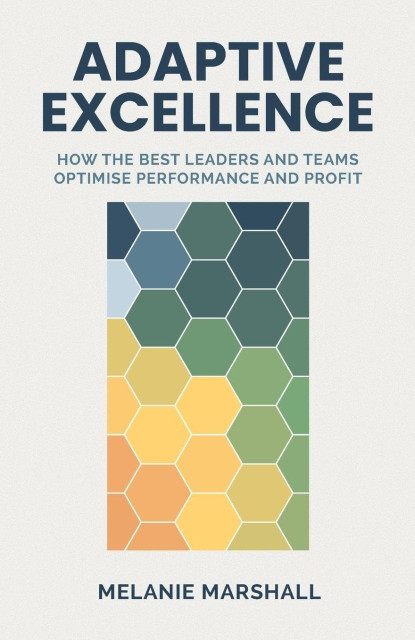
Adaptive Excellence: How the best leaders and teams optimise performance and profit
Amazon
September 30, 2025
Have you ever felt pressured to reduce costs and increase performance with limited resources?

Every year companies across the globe spend billions of dollars on transformation and change projects, but every year around 75% settle for mediocre results, and around 13% fail completely.

Complacency, poor leadership, increasing expectations, and ineffective work practises are the biggest threats to people and team performance.

See publication

Tags: Business Strategy, Culture, Leadership

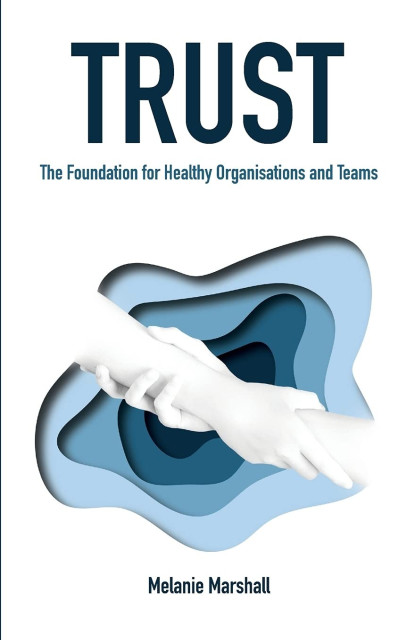
Trust - The foundation for healthy organisations and teams
Melanie Marshall
May 31, 2021
Trust isn’t a soft skill — it’s a strategic capability.

In this book, Melanie Marshall reframes trust as the core driver of organisational performance, psychological safety, and high‑functioning teams.

Drawing on global research and decades of transformation work across complex environments, Melanie shows leaders how to shift from control and cynicism to clarity, connection, and behaviour that builds confidence.

As Melanie writes, “Trust is the foundation for authentic and meaningful relationships that allow us to be the best versions of ourselves” .

Through practical insights, real‑world stories, and the HEART+SOUL framework, she demonstrates how leaders can reduce friction, strengthen culture, and create workplaces people believe in.

This book positions trust as a measurable, behavioural practice — not an abstract ideal.

It’s for executives, transformation leaders, and culture architects who want commitment, not compliance.
The book reminds us, “When it comes to change, it's the behaviour, not the person that is the problem” .

Trust is essential reading for anyone responsible for shaping culture, leading change, or building organisations where people are purposeful, productive, and deliver meaningful results.

See publication

Tags: Culture, Leadership, Management

TRUST: The Foundation for Healthy Organisations and Teams
Amazon
May 25, 2021
Trust is the foundation of organisations and teams. We talk about it, complain when we don't have it, and watch its effect on the bottom line. Its absence makes headlines when organisations and leaders fall from grace, breaking the covenant they hold with clients and staff.

See publication

Tags: Business Strategy, Change Management, Leadership

1 Executive
Service Delivery, Program Management, and Executive Leadership
Various Companies
January 01, 2004
Strategic and operational services in:
︎ Cultural change and adaptability
︎ Employee experience
︎ Service delivery and continuous improvement
︎ Business planning and management
︎ Creating and sustaining high-performance
︎ Human Resources
︎ Performance management and development
︎ Misconduct, informal and formal complaint management, and conflict resolution
︎ Employee relations and union consultation
︎ Risk mitigation.

The common thread was building trust and partnering with people to increase employee engagement and leadership capability, build organisational agility, and improve performance.

See publication

Tags: Business Strategy, Leadership, Project Management

3 Manager / Directors
Employee/Customer Experience/Business Improver and Coach
Various Companies
March 01, 2016
Employee and Customer Experience (EX/CX) strategy, governance and reporting, journey modelling, service design and research services, mentoring and training to client service delivery leads and multi-disciplinary teams involved in large-scale business and ICT transformation programs across federal government departments.

See publication

Tags: Coaching, Customer Experience, Transformation

Organisational Capability and Change Lead
Various Companies
September 01, 2015
Strategic and operational advisory and leadership services to senior executives on change impact and risk mitigation, organisational planning, business readiness, stakeholder engagement, communication, and evidence for executive decisions on optimal return on effort and investment.

Provided change leadership and facilitation for Payroll/HR transitions, corporate shared services, organisational restructures, public sector reform, and enterprise-wide ICT implementations impacting up to 150,000 employees.

See publication

Tags: Change Management, Leadership, Transformation
Various
Royal Australian Air Force
July 01, 1994

See publication

Tags: Leadership, Management

3 Podcasts
Navigating Change in Healthcare Systems
Youtube
April 01, 2026
In this conversation, Anas Abidrabbu and Melanie Marshall discuss the complexities of workplace culture in healthcare, emphasizing the importance of understanding human behavior, team dynamics, and systems thinking. They explore the challenges faced by healthcare professionals, the need for effective engagement and decision-making, and the significance of continuous improvement in delivering exceptional patient care. Melanie shares her experiences and insights on navigating change, the cost of inefficiency, and the role of leadership at all levels.

See publication

Tags: Business Strategy, Culture, Leadership

Hospital Dysfunction and How to Fix It
Melanie Marshall
August 30, 2025
Melanie reveals why even the best clinicians can’t outperform broken systems and how small, targeted fixes can unlock major gains, including saving 20–30 hours of medical time a week.

She shares a practical blueprint to co‑design change, fix painful processes, and build architecture that enables high performance. A must‑listen for leaders pursuing reliability and operational excellence.

See publication

Tags: Business Strategy, Culture, Leadership
Navigating Change in Healthcare Systems
Melanie Marshall
August 30, 2025
In this powerful conversation, Anas Abidrabbu and Melanie Marshall unpack the real drivers of workplace culture in healthcare — human behaviour, team dynamics, and the systems that shape daily performance.

See publication

Tags: Business Strategy, Culture, Leadership
Thinkers360 Certifications

3 Certifications

Thinkers360 Credentials

6 Badges

Radar

Blog

1 Article/Blog
People don’t resist change. It’s uncertainty that scares people.
Thinkers360
July 31, 2026

Most organisations don't struggle because people resist change. They struggle because people resist uncertainty, poorly designed systems, and transformation efforts that happen to them rather than with them.

After more than two decades working with leaders and organisations across multiple industries supporting transformation efforts impacting 320,000+ people, I've come to a confronting conclusion:

Change management doesn't work at the depth or scale people and modern organisations need.

The intent behind change management isn't flawed. It fails because it largely focuses on managing reactions rather than engineering conditions for success.

If organisations want meaningful transformation, they must move beyond readiness, communication plans, and training schedules and develop the capability to create trust at scale through Adaptive Excellence. This is the discipline of continuously improving how people lead, make decisions, and deliver outcomes.

The reality – People don't resist change

One of the most persistent myths in business is that people resist change.

The truth is that most people embrace change when they can see the benefit, understand the purpose, and trust the process.

What they resist is uncertainty.

They resist investing effort into something they can't influence and aren't convinced will improve their experience, performance, or outcomes.

I know that's true because I'm no different.

I don't like change unless I have some level of confidence that it will be beneficial, and some degree of influence over how it happens.

Most people feel the same way. That's why trust is repeatedly identified as essential during transformation efforts, yet it remains one of the hardest things to establish and sustain.

The challenge isn't change itself. The challenge is whether people believe the effort, disruption, and cost required to achieve it will be worth it.

Why change management struggles

Over the years I've led or managed change ranging from team and service improvement initiatives to complex enterprise-wide transformations.

I've worked with organisations that spent months refining communication plans, roadshows and training materials, only to find adoption stalled because the underlying process had not improved.

In other organisations, earlier involvement in design with people who would be most impacted uncovered flaws faster, made implementation safer, accelerated broader adoption, and reduced rework.

Across sectors, change approaches often focus on bringing people on the journey, yet overlook what I call the Change Participation Gap.

The gap emerges when people are informed about change but aren't meaningfully involved in designing it.

They're trained on new processes but have little influence over whether those processes are practical.

They're told why change is necessary but are given limited opportunity to shape how it will be implemented.

Traditional change management attempts to manage responses to change rather than address the systemic conditions that determine whether change will succeed in the first place.

Change activities happen, and project teams might tick the implementation box, but without full organisational commitment and adoption, the investment produces limited or no value.

Every transformation succeeds or fails through three interconnected systems:

  • Leadership
  • Decisions
  • Delivery.

When trust breaks down in any one of these areas, participation declines and uncertainty increases. Change is inevitable. Trust is engineered.

The Adaptive Excellence perspective

The breakthrough with my clients comes when they expand beyond traditional change disciplines and develop a deeper understanding of constraints, operational systems thinking, and how to engineer the way leaders and teams work for success.

Successful transformation requires more than people capability. People can only operate at the level of business system capability and maturity.

Adaptive Excellence is the discipline of continuously improving how people lead, make decisions, and deliver outcomes. It moves away from asking "How do we manage this change?" to the more powerful question:

"How can we create more trust across our entire delivery system?"

This shift changes where leaders focus their effort and where organisations create value.

Trust as an operational capability

In Trust, I argue that trust isn't a soft skill, but an operational capability.

It influences decisions, speed, collaboration, accountability, innovation, and ultimately performance.

What many organisations miss is that trust cannot be communicated into existence.

Trust is created through experience. Our ability to trust is often biased toward past failures. Organisationally, people trust when they consistently observe:

  • Competent leadership
  • Logical decision-making
  • Reliable delivery
  • Genuine involvement
  • Visible improvement

In more succinct terms trust forms through a triad of experience, participation, and performance.

Better experiences build trust, trust improves participation, and participation drives performance. Over time, this strengthens organisational capacity to adapt, evolve, and deliver results.

Leadership implications

Leaders create or break trust through the systems they tolerate, the decisions they make, and the experiences they provide teams.

This means that:

  1. communication will not achieve transformation.
  2. training is not capability, and
  3. participation is not the same as ownership through design.

Most importantly, trust is personal, contextual, and any weakness or absence of trust needs to be acknowledged.

The answer to the trust question must be worked through with the people ultimately responsible for implementing and sustaining the change.

The best leaders recognise that people development and business engineering are complementary disciplines that must operate together.

One develops human potential. The other removes systemic barriers to performance.

Together they create the conditions for trust at scale.

Three adaptive moves

1. Anchor - Stop managing change, design it with the people impacted

Before launching another transformation initiative, ask:

  • Who will be affected?
  • What are they being asked to give up?
  • What evidence exists that the change will create value for them?

People support what they help create.

Design participation before designing communication.

2. Strengthen - Build trust through delivery

Trust grows when organisations do what they say they'll do.

Focus less on messaging and more on reducing friction, improving experiences, and achieving early wins.

Visible progress creates confidence. Confidence creates momentum.

Small successes in the right direction provide compounding benefits.

3. Enable - Combine people development with business engineering

Develop leaders and teams who understand both human behaviour and system performance.

Success depends on people's ability to improve culture, decisions, processes, and delivery simultaneously.

This is the foundation for Adaptive Excellence and trust at scale.

The responsibility of modern leadership

Change is inevitable and uncertainty will always accompany transformation.

The responsibility of leadership is managing uncertainty by creating the conditions that allow people to move through it with confidence.

Performance is built through the quality of leadership, decisions, delivery and trust that organisations choose to engineer and sustain.

In partnership for your success,

Melanie

Bibliography:
  • Hagl, C., Kanitz, R., Gonzalez, K., & Hoegl, M. (2024). Change management interventions: Taking stock and moving forward. Human Resource Management Review, 34(1), 101000. https://doi.org/10.1016/j.hrmr.2023.101000
  • Antonelli, G. A., Di Prisco, D., & Leone, M. I. (2026). Trust in open innovation: An integrated model based on a systematic literature review. R&D Management, 56(1), 37-54. https://doi.org/10.1111/radm.70007
  • Marshall, M. (2021). Trust - The foundation for healthy organisations and teams
  • Marshall, M. (2025). Adaptive Excellence - How the best leaders and teams optimise performance and profit.

See blog

Tags: Change Management, Leadership, Transformation

Opportunities

Events

Contact Melanie Marshall

Book a Video Meeting

Media Kit

Share Profile

Contact Info

  Profile

Melanie Marshall


Latest Activity

Latest Member Blogs

Search
How do I climb the Thinkers360 thought leadership leaderboards?
What enterprise services are offered by Thinkers360?
How can I run a B2B Influencer Marketing campaign on Thinkers360?