Sep16
PRESS RELEASE
New Book The Future of Human Leadership Examines Leadership in a World Where Intelligence Is No Longer Uniquely Human
Futurist Kevin R. Benedict argues that the defining challenge of the AI era will not simply be creating more intelligent machines, but deciding what human beings should do with the extraordinary intelligence now becoming available to us.
BOISE, Idaho — Artificial intelligence is rapidly becoming more capable, more autonomous, more connected, and more deeply embedded in the systems through which organizations operate. Much of the business conversation has understandably focused on what these technologies can do. Futurist Kevin R. Benedict believes leaders now need to ask a more consequential question:
What happens to leadership when intelligence is everywhere?
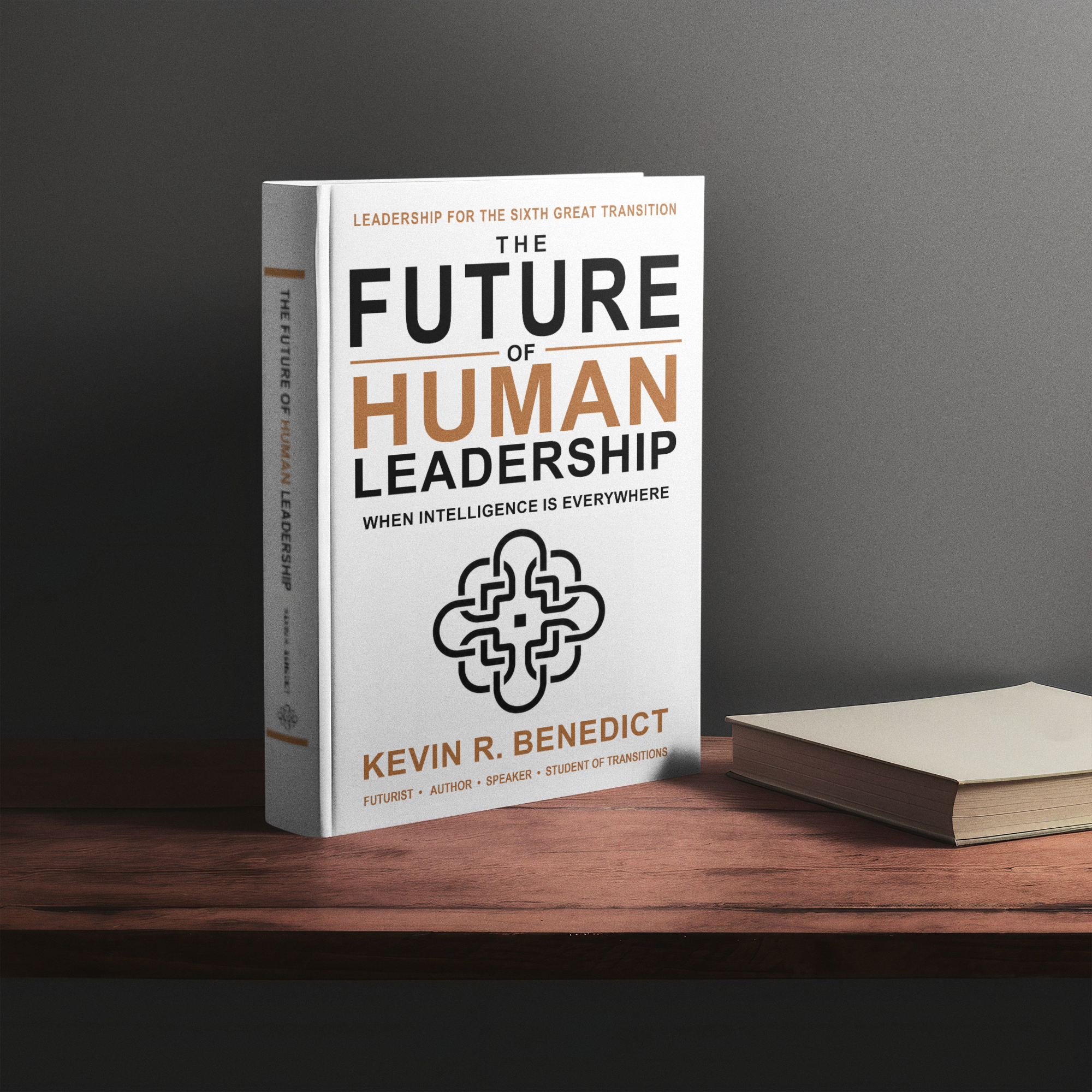
That question sits at the center of his new book, The Future of Human Leadership: When Intelligence Is Everywhere. Benedict argues that AI should not be understood merely as another productivity tool. Artificial intelligence, autonomous systems, digital workers, intelligent machines, global networks, and increasingly sophisticated software are changing where intelligence resides, how decisions are made, how quickly organizations can act, and where authority and responsibility belong. The implications reach far beyond technology departments.
For generations, organizations were designed around a basic assumption: important intelligence ultimately came from human beings. People observed conditions, interpreted information, exercised judgment, made decisions, and directed machines. That assumption is beginning to change. Machines can increasingly perceive, analyze, predict, recommend, communicate, coordinate, decide, and act. Intelligent agents can operate at digital speed and enormous scale, while networks allow intelligence to be distributed across organizations rather than concentrated within traditional hierarchies.
As these capabilities grow, Benedict argues, leadership itself must evolve. The defining leadership problem is gradually shifting from:
“What do we know?”
to:
“What should we do with what we know?”
And eventually to the deeper question:
“Whom do we serve?”
That progression matters because intelligence alone does not determine what constitutes a good outcome. A machine can optimize a goal, but it cannot independently determine what humanity ought to value. An algorithm can identify a highly efficient path toward an objective, but human beings must still decide whether the objective deserves to be pursued. That distinction places enormous responsibility on leaders.
In The Future of Human Leadership, Benedict describes the present period as part of a much larger historical transition in human capability. For thousands of years, people have progressively transferred burdens from human beings to other forms of capability. Human muscle was supplemented by animal muscle. Animal and human power were increasingly displaced by steam, electricity, and petroleum. Computers externalized portions of human memory, calculation, information processing, and coordination. Artificial intelligence is now beginning to externalize portions of perception, interpretation, communication, judgment, and action.
What makes the present transition unusual is the nature of what is being transferred. We are no longer simply building machines that are stronger or faster than we are. We are building systems that increasingly participate in activities once associated with human intelligence itself. That changes the role of the human being inside the organization and raises important questions about where human value will increasingly reside.
If answers become abundant, judgment becomes more important. If execution becomes increasingly autonomous, choosing the right objective becomes more important. If machines become extraordinarily capable, responsibility for what those capabilities are directed toward becomes more important. And if intelligence becomes distributed throughout organizations, leadership becomes less about being the smartest person in the room and more about orchestrating many different forms of intelligence toward worthwhile outcomes.
Benedict describes this emerging environment through the idea of polyintelligence: the combination of human, machine, and ecological intelligence. Rather than framing the future as a competition between humans and artificial intelligence, the book asks how these different forms of intelligence can be orchestrated effectively and responsibly.
Human intelligence brings capabilities such as judgment, ethics, empathy, creativity, narrative, relational trust, and the ability to wrestle with meaning and responsibility. Machine intelligence contributes speed, scale, computation, pattern recognition, memory, simulation, and increasingly autonomous action. Ecological intelligence reminds leaders that organizations do not exist outside the physical systems that sustain human civilization.
Leadership in this environment requires far more than deploying AI. It requires designing the conditions under which intelligence operates. Leaders must determine decision rights, decide where autonomy is appropriate and where human judgment must remain involved, and establish boundaries, accountability, escalation paths, and measures of success. They must also ensure that extraordinary technological capability does not unintentionally diminish the very human qualities organizations and societies ultimately depend upon.
Throughout the book, Benedict returns to a concept he calls Human Viability: the conditions people need in order to remain capable, engaged, responsible participants in the systems they inhabit. Those conditions include coherence, agency, belonging, fairness, meaning, and continuity of identity.
This leads to one of the book’s most important warnings. Organizations can become more technologically capable while simultaneously becoming worse environments for human beings. An organization could optimize efficiency while reducing human agency, increase automation while weakening human judgment, improve measurement while reducing meaning, or become extraordinarily intelligent while becoming increasingly difficult for the people inside it to understand, influence, or trust.
Technological progress and human progress are not automatically the same thing.
Leadership must connect them.
That is why the ultimate goal proposed in The Future of Human Leadership is not simply greater productivity, intelligence, growth, or technological capability. It is what Benedict calls “Flourishing Together.” The idea asks leaders to evaluate progress across a wider horizon: people, organizations, societies, and the ecosystems upon which they depend.
It also changes the central question surrounding artificial intelligence. Instead of asking only:
“How powerful can we make AI?”
leaders must also ask:
“What should all of this intelligence be for?”
For Benedict, that question may become one of the defining leadership questions of the twenty-first century. The future will contain more intelligence than any previous generation of leaders has possessed, but intelligence does not automatically produce wisdom. Capability does not determine purpose. Optimization does not determine what is worth optimizing. And autonomy does not eliminate responsibility.
It may increase it.
The leaders who succeed in the coming decades, Benedict argues, will therefore not simply be those who adopt AI fastest. They will be those who learn how to orchestrate intelligence while preserving human agency, judgment, responsibility, and meaning. They will understand that leadership is not becoming obsolete because machines are becoming intelligent.
Leadership is becoming more consequential.
Because when intelligence is everywhere, someone must still decide where it should lead.
And someone must still answer the question:
Whom do I serve?
About the Book
The Future of Human Leadership: When Intelligence Is Everywhere examines how artificial intelligence, autonomous systems, distributed intelligence, accelerating technological change, and growing interdependence are reshaping leadership and organizations.
Drawing upon history, economics, futurism, technology, systems thinking, and philosophy, Kevin R. Benedict places the AI revolution inside the much longer story of humanity's relationship with technology and capability.
The book is written for executives, decision-makers, strategists, planners, futurists, technologists, and leaders seeking to understand not only what artificial intelligence can do, but what its emergence means for leadership itself.
The Future of Human Leadership: When Intelligence Is Everywhere is available now in paperback, hardcover, and Kindle editions on Amazon.
About Kevin R. Benedict
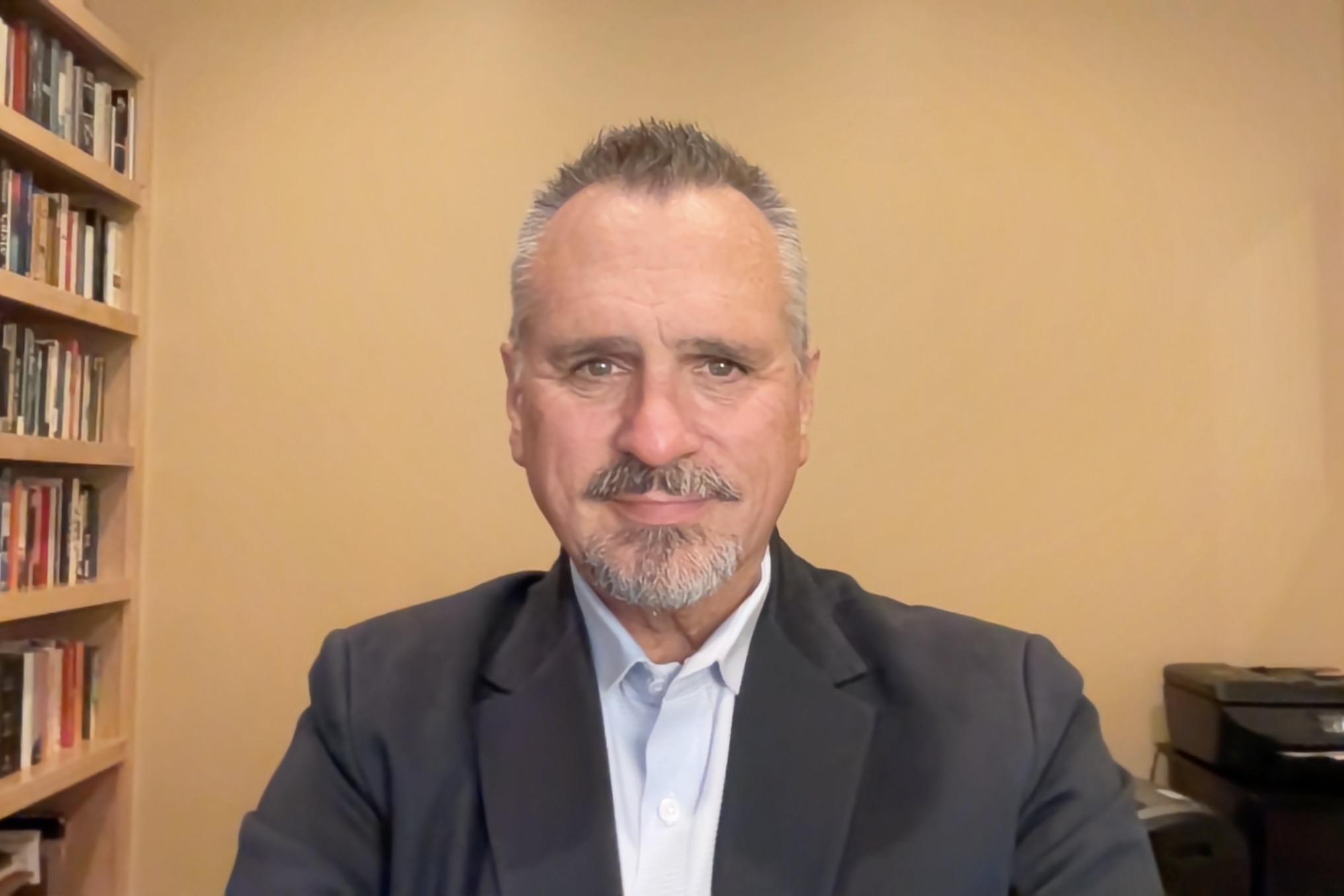
Kevin R. Benedict is a TCS futurist, author, speaker, researcher, and longtime analyst of emerging technologies and business transformation. His work explores the intersection of technology, economics, history, culture, philosophy, organizations, and human decision-making.
He is known for examining technological change through a wider historical and human lens, asking not simply what emerging technologies make possible, but what those possibilities mean for people, organizations, leadership, and society. His work focuses on helping leaders understand periods of technological transition, recognize the assumptions embedded in existing institutions, and make better decisions about the futures they are helping create.
For Interviews, Podcasts, Speaking, and Media Inquiries
Kevin R. Benedict is available for conversations and interviews concerning artificial intelligence, the future of leadership, autonomous systems, human-machine collaboration, organizational transformation, distributed intelligence, the future of business, and the broader implications of the AI era.
The Future of Human Leadership: When Intelligence Is Everywhere is available now on Amazon.