


Aravind Sakthivel is a global IT technology leader and the author of the book The Leadership Trap: Why Smart Leaders Fail and How to Break Free. He is a former Chief Information Officer (CIO) across Danaher Operating Companies, where he spent 18 years leading multi-million-pound technology portfolios. He previously worked at market-leading organizations including Oracle, KPMG, and General Electric (GE).
Aravind holds an MBA from Nyenrode Business Universiteit, completed leadership programmes at Harvard Business School, and is a Certified Enterprise Architect from Carnegie Mellon University. Alongside his book, he has published research on autonomous enterprise architectures in the Well Testing Journal. He is currently based in Cambridge, United Kingdom.
Available For: Advising, Authoring, Consulting, Influencing, Speaking
Travels From: London
Speaking Topics: Artificial Intelligence, Digital Transformation, CIO Services, Leadership
| Aravind Sakthivel | Points |
|---|---|
| Academic | 5 |
| Author | 91 |
| Influencer | 53 |
| Speaker | 0 |
| Entrepreneur | 10 |
| Total | 159 |
Points based upon Thinkers360 patent-pending algorithm.

Tags: Change Management, IT Leadership, Leadership
 Will AI Make Leaders Obsolete or Finally Make Them Matter More?
Tags: AI, Cloud, Digital Transformation
 Why AI Bubble Narratives Keep Winning, Even When the Technology Keeps Working
Tags: AI, Cloud, Digital Transformation
 AI-Enabled Cyber Threats: What CISOs Need to Know Now
Tags: AI, Cloud, Digital Transformation
 London AI Studio Launches AI Entrepreneur & Upskill Accelerator
Tags: Behavioral Science, Leadership, Management
 Press Release
Cambridge Leadership Expert Aravind Sakthivel Releases “The Leadership Trap”
Press Release
Cambridge Leadership Expert Aravind Sakthivel Releases “The Leadership Trap”
Tags: Agentic AI, AI, IT Leadership
 Press Release Cambridge Leadership Expert Aravind Sakthivel Releases “The Leadership Trap”
Tags: AI, Cloud, Digital Transformation
 When Robots Work, Who Pays? The Hidden Tax Crisis in the Age of AI
Tags: Behavioral Science, Leadership, Management
 AI Cloud and Chip Wars: Will Costs Rise for Hardware and Software Players?
Tags: AI, Cloud, Digital Transformation
 5 Ways Agentic AI Will Transform Business
Tags: Behavioral Science, Leadership, Management
 Do AI/Machines Pay Taxes? The Real Question Behind Job Loss in the Age of AI
Tags: AI, Cloud, Digital Transformation
 86% of Companies that use AI but only 25% can Control It.
Tags: AI, Cloud, Digital Transformation
 Why Digital Leadership Needs Agentic AI
Tags: AI, Cloud, Digital Transformation
 5 Ways Agentic AI Will Transform Business
Tags: AI, Cloud
 When the Interface Fades: The AI-First Operating System Revolution
Tags: AI, Cloud, Digital Transformation
 Agentic AI: Promise Meets Reality Gap
Tags: Agentic AI, AI, IT Leadership
 Human Intelligence + Artificial Intelligence: Collaborating for Humanity’s Success
Tags: AI, Cloud
 The 8 AI Leadership Principles That Separate Real Transformations
Tags: Behavioral Science, Leadership, Management
 Companies Cutting AI Pilots That Show No ROI After 12 Months
Tags: Behavioral Science, Leadership, Management
 The Silent Killer of Leadership: When AI Becomes Your Co-Pilot
Tags: Behavioral Science, Leadership, Management
 How We Build AI That Helps Humanity Without Hurting It
Tags: AI, Cloud, Digital Transformation
 The ROI Crisis: Moving from "AI Hype" to Measurable EBIT Impact
Tags: AI, Cloud, Digital Transformation
 AI Powered Cyberattack - The AI Ransomware and the 5 Defenses That Actually Work
Tags: AI, Cloud, Digital Transformation
 AI Cloud and Chip Wars: Will Costs Rise for Hardware and Software Players?
Tags: AI, Cloud, Digital Transformation
 Atlas vs Comet: The AI Browser Battle Reshaping Knowledge Work
Tags: AI, Cloud, Digital Transformation
 Why Domain-Tuned AI Will Redefine Competitive Advantage
Tags: AI, Cloud, Digital Transformation
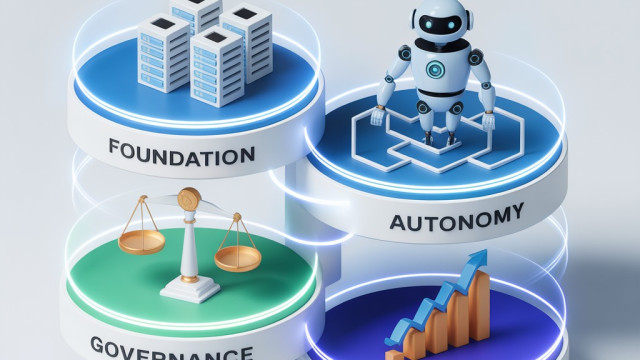 5 Ways Agentic AI Will Transform Your Business Strategy
Tags: AI, Cloud, Digital Transformation
 When the Interface Fades: The AI-First Operating System Revolution
Tags: AI, Cloud, Digital Transformation
 Shaping AI’s Character: Why Our Behaviour Today Will Train Tomorrow’s Machines
Tags: AI, Cloud
 From Innovation to Integrity: Why AI Needs Governance and Trust
Tags: AI, Cloud, Innovation
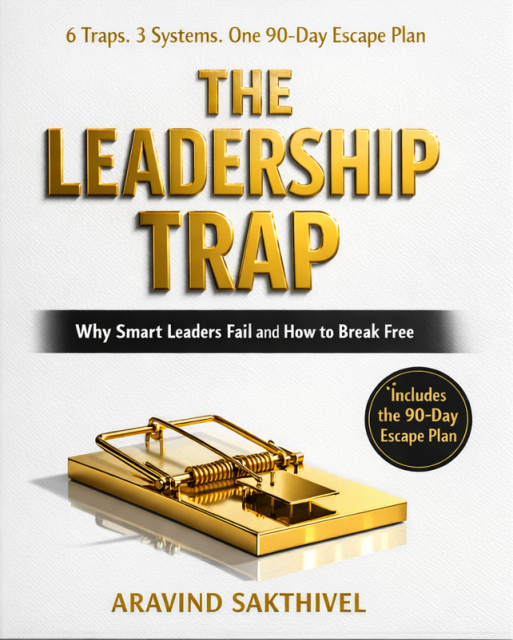 The Leadership Trap: Why Smart Leaders Fail and How to Break Free
Tags: Behavioral Science, Leadership, Management
 Johnson Controls
Tags: Behavioral Science, Leadership, Management
Tags: Agentic AI, AI, Entrepreneurship
 Why Smart Leaders Fail in Strong Organizations
Tags: Behavioral Science, Leadership, Management
 Why Smart Leaders Fail: Aravind Sakthivel Explores Leadership Traps
Tags: Behavioral Science, Leadership, Management
 Aravind Sakthivel’s New Book “The Leadership Trap” Uncovering Hidden Leadership Traps and Solutions
Tags: Behavioral Science, Leadership, Management
 How AI Will Reshape Careers in 2026 and What Professionals Must Learn to Stay Relevant?
Something has shifted in how careers progress, and most professionals have not named it yet. By 2026, AI will be assumed in most knowledge roles. Not as a separate skill on a CV, but as a baseline expectation. The way Excel fluency stopped being remarkable twenty years ago.
I have watched this happen in leadership teams and consulting engagements over the past two years. Two professionals with nearly identical backgrounds now produce noticeably different outcomes. The gap is not intelligence or work ethic. It is whether they have figured out how to work with AI or are still working around it.
The difficult part to accept: being aware of AI is not enough. Awareness is now table stakes. What matters is application, and most professionals are further behind on this than they realize.
AI has not eliminated jobs in the way early predictions suggested. What it has done is compress the time required for certain tasks. Drafting, analyzing, summarizing, and comparing options. These used to take hours. Now they take minutes, if you know what you are doing.
The work that remains is harder to automate: deciding what matters, making trade-offs, and taking responsibility for outcomes. In my experience, professionals who use AI primarily to move faster often miss the larger opportunity. The real advantage comes from using AI to think more clearly. To test assumptions before committing. To surface options you would not have considered.
This is where I have seen careers start to separate. Not dramatically, not overnight, but steadily. The effect compounds. Someone who makes slightly better decisions, slightly faster, ends up in a materially different position after two or three years.
I am cautious about frameworks. Most of them oversimplify. But after working with enough professionals navigating this shift, I have noticed four capabilities that tend to distinguish those who are adapting well.
The obvious use of generative AI is production: write this email, summarize this document, draft this report. That is useful, but it is not where the real leverage sits.
I have seen managers use AI to structure decision options before leadership meetings. Consultants who synthesize twenty research reports into clear hypotheses in an afternoon. Analysts who use AI to challenge their own assumptions before presenting. None of this replaces judgment. It sharpens it.
What professionals need here: practical prompt framing, the ability to evaluate AI outputs critically, and a sense of when AI is helpful versus when it is leading you astray. That last one takes time to develop.
Not everything should be automated. Some tasks are too variable. Some are too important to delegate to a system. But there is a layer of repetitive work in most roles that consumes time without creating value. Report preparation. Data formatting. Routine handoffs between systems.
The professionals pulling ahead have identified these pockets and removed them. Not by becoming programmers, but by understanding what automation can do and asking the right questions. The skill is knowing where to look, not necessarily knowing how to build.
AI systems make confident-sounding errors. Hallucinations, bias, missing context. If you use AI outputs without checking them, you will eventually be embarrassed. Or worse, you will make a decision based on something that was not true.
The professionals I trust most are the ones who know the limitations. They design human checkpoints into AI-supported processes. They catch the errors before anyone else sees them. This is not skepticism for its own sake. It is a professional responsibility.
For senior roles especially, showing awareness of AI governance and risk signals that you are ready for responsibility. Hiring managers notice this.
AI lowers the cost of creating value independently. Advisory work, teaching, consulting, content creation. These used to require significant infrastructure or reputation. Now a single professional with the right knowledge can build a meaningful side practice.
I am not suggesting everyone needs a side business. But having options changes how you think about risk. Careers are starting to look less like ladders and more like portfolios. The professionals who understand this are positioning themselves differently.
There is too much noise about AI skills. Courses promising mastery in weekends. Certifications that signal vendor lock-in more than competence. Most of it is not worth your time.
A more realistic stack: working fluency with generative AI, which means actually using it regularly, not just trying it once. Basic automation literacy, enough to know what is possible and have sensible conversations about it. And AI risk awareness, understanding where these systems fail and why.
Beyond that, it depends on your function. Workflow automation tools if you work in operations. AI-supported decision frameworks if you are in strategy or analysis. But do not start with advanced technical content. Most professionals never need it.
The goal is competence, not expertise. Confidence in using AI effectively, not comprehensive knowledge of how it works.
CVs that list AI tools without outcomes will not stand out much longer. I have reviewed hundreds this year, and the weak ones all sound similar. "Used AI tools to improve productivity." That tells me nothing.
What works better: "Used AI-supported analysis to reduce decision preparation time by 40% and improve alignment with senior leadership." Specific. Outcome-focused. Evidence that AI changed how you worked, not just that you experimented with it.
Early-career professionals can show this too. Faster research cycles. Better-structured deliverables. Clearer recommendations. The specifics matter more than the scale.
The most effective AI tools are the ones embedded into real workflows. AI copilots for writing, analysis, and planning. AI agents for supervised task execution. Automation platforms that connect systems and data.
Be wary of courses that promise mastery in days, focus only on tools without business context, or ignore risk and judgement entirely. Look for training that is short, applied, uses real scenarios, and emphasizes decision quality over feature coverage.
If this feels overwhelming, here is a manageable path.
In the first month, use AI daily for thinking support. Not just production, but analysis and preparation. Identify one repetitive task you could automate. Pay attention to where AI outputs are wrong, and start building a sense of when to trust them.
In the second month, apply AI to a real work decision. Something with stakes. Document what happened. Refine your approach based on what worked.
In the third month, teach someone else what you learned. This forces clarity. Embed AI into a process you can repeat. Update your CV or internal profile with specific results.
None of this requires technical expertise. It requires willingness to experiment and attention to outcomes.
AI makes it easier to create value outside traditional employment structures. Advising, teaching, writing, and consulting. The barriers are lower than they were five years ago.
This does not mean everyone should leave their jobs. It means having options matters more than it used to. Relevance in 2026 will be defined by usefulness, not by title or tenure.
Waiting for the technology to stabilize feels prudent. But the gap between those who are using AI effectively and those who are not is widening. Every month of delay makes catching up harder.
Experiment early. Use AI where mistakes are cheap. Build judgment through use. You will make errors. That is part of the process.
What I have observed: the professionals engaging now are shaping their careers. The ones waiting is increasingly reacting to changes they did not anticipate.
About the Author
Aravind Sakthivel is a CIO and author with over 20 years of experience in enterprise technology, digital transformation, and applied AI. He advises executives and professionals on using AI to improve decision quality and long-term career positioning. He is the strategic advisor of London AI Studio, an AI advisory firm focused on practical adoption for business leaders.
Website: https://aravindsakthivel.com/
Website: https://londonaistudio.com
Tags: AI, Careers, Generative AI
 IT CIO Leadership
Location: Cambridge United Kingdom Fees: 500
Service Type: Service Offered
Location: Cambridge United Kingdom Fees: 500
Service Type: Service Offered
The 8 AI Leadership Principles That Separate Real TransformationsCompanies Cutting AI Pilots That Show No ROI After 12 MonthsThe Leadership Trap: Why Smart Leaders Fail and How to Break Free