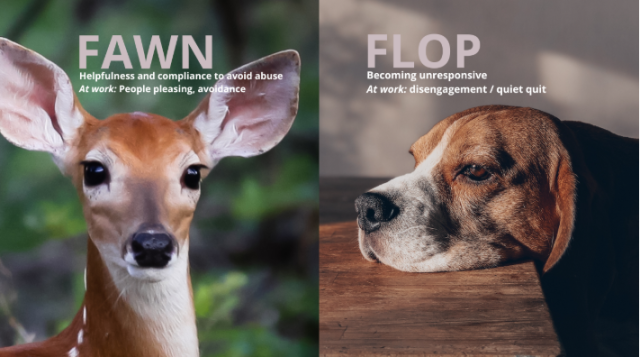
 Fawning & Flopping: Tips to Recognize and Address the Signs
Linkedin
December 06, 2022
We’ve all heard of fight/flight/freeze when in danger, but have you heard of fawn and flop? Better known in the psychology than leadership world, these are two more recently coined nervous system responses that capture less obvious ways we cope and stay safe in the face of danger.
See publication
Tags: Behavioral Science, Coaching, Mental Health
 6 Desire Skills for Leaders to Retain, Engage & Motivate During "The Big Shift"
Linkedin
June 22, 2021
We don’t typically use the word “desire” in the work place. It sounds vaguely naughty or sexual and carries implicit nuances of risk and danger. Meanwhile, desire is actually driving everything, including all behaviors at work. Most of us want to do well at work. Want to make the world a better place. Want to flourish post-COVID and be in alignment with our values. Want a job with meaning and purpose that can support ourselves and families. We also generally want food, shelter, pets, feel-good relationships, and compelling Netflix.
See publication
Tags: Change Management, Future of Work, Leadership
 9 Tips for Skillful Vulnerability
Linkedin
May 06, 2021
Vulnerability is a hot topic in conscious leadership, but how do we ensure that our deep shares bring us closer to our colleagues instead of inspiring them to put us on mute?
See publication
Tags: Culture, Leadership, Mental Health
 Use Peer Reviews to Increase “Adulting” Skills: Courage, Trust, Transparency & EQ - Part 2
Linkedin
September 10, 2020
Last week, I shared why the anonymity of peer reviews leads to missed opportunities for employee growth and development. Anonymity undermines transparency, inhibiting the radical candor and interpersonal courage that strengthen teams and build trust.
See publication
Tags: Coaching, HR, Leadership
 Use Peer Reviews to Increase “Adulting” Skills: Courage, Trust, Transparency, Communication & EQ
Linkedin
September 03, 2020
As a leadership coach who's passionate about helping organizations create trust and transparency, I hear a lot about the anonymous peer review process. At their best, people offer feedback with skill and grace, and receive it with curiosity. Less delectable scenarios include anxiety, agitation, and defensiveness. Given the potential of peer reviews to illuminate blindspots and inspire growth, I want to offer ideas for leveraging them to strengthen relationships and team dynamics.
See publication
Tags: Coaching, HR, Leadership