Unlock access to Thinkers360 AI to fast-track your search for analysts and influencers.
This feature is available for Enterprise Lite and Enterprise Members Only.
Upgrade to Enterprise Lite or Enterprise to see complete company ranking data for your organization and competitors. Plus, elevate your profile with always-on content amplification engineered to boost your SEO, AIO, and generative search footprint.
You have been temporarily restricted. Please be more thoughtful when adding content for your portfolio. Your portfolio and digital media kit and should be reflective of the professional image you wish to convey. Accounts may be temporarily restricted if we receive reports of spamming or if the system detects excessive entries.
Membership
Publish your original ideas on the Thinkers360 platform!
This feature is available for Pro and Pro-Plus Members Only.
Speaker Bureau functionality whereby individuals can be featured speakers within our Speaker Bureau service and enterprises can find and work with speakers.
This feature is available for Pro, Pro-Plus, Premium and Enterprise Members Only.
Highlight your featured products and services within our company directory for enhanced visibility to active B2B buyers worldwide as well as improved
SEO, AIO and generative search footprint.
This feature is available for Pro, Pro Plus, Premium and Enterprise Members Only.
Publish on the Web’s #1 Thought Leadership Blog.Join the elite. Ranked the top thought leadership blog by Feedspot (2021–2025), Thinkers360 offers you more than just a platform - it offers authority. Share your insights with our community and tap into a combined network of over 100M followers through our peer-to-peer marketplace.
You’ve reached your daily limit for entering quotes. Please only add personally-authored content which is reflective of your digital media kit and thought leadership portfolio.
Thinkers360 Content Library
For full access to the Thinkers360 content library, please join ourContent Planor become a contributor by posting your own personally-authored content into the system viaAdd PublicationorImport Publication.
Dashboard
Unlock your personalized dashboard including metrics for your member blogs and press releases as well as all the features and benefits of our member plans!
I'm the founder of BrainRazr. The work I do with CTOs, CPOs, and VPs of Engineering comes back to one observation from 35 years across technology waves: the transformation project model is obsolete. By the time you finish your AI transformation, the next wave is already reshaping the ground underneath you. Stop running programs with finish lines. Build an organization that never stops adapting.
That's what BrainRazr exists to do. We use the Catalyst Framework, refined across 75+ companies and every major shift from client-server to cloud to AI, to build continuous adaptability as a core organizational capability. The framework has two halves that have to work together. The front half is sensing and validation. Watch the ecosystem and the interfaces instead of the technology itself. Ideate, evaluate, and validate fast enough that you're placing small bets before competitors notice the shift. The back half is execution. Empowered teams, modular architectures, automation across the value chain, and leadership that treats evolution as the default mode instead of a periodic initiative.
Neither half works without the other. Most organizations invest in one and convince themselves that's enough. It isn't.
Automation First: Why Speed is Your New Competitive Advantage
BrainRazr
August 24, 2026
Amazon deployed to production every 11.6 seconds in 2011, while one of its competitors managed four releases a year. That gap wasn't about engineering talent so much as how fast a whole company could learn, correct course, and turn ideas into customer value. This piece pulls together research from DORA (DevOps Research and Assessment), Google's data on engineering toil, and case studies from HP and Capital One to make the case that automation's biggest payoff is learning speed, not cost cutting. HP cut its firmware program costs by 78% and freed up eight times the engineering time for real innovation work, while Capital One tripled release frequency and cut errors in half. It closes with the harder point on AI: it doesn't fix a broken process, it just amplifies whatever's already there, good or bad.
3 Common Leadership Mistakes That Slow Technology Adoption
BrainRazr
August 17, 2026
Leaders don't slow technology adoption on purpose. They do it by waiting for certainty that never arrives, celebrating the heroics that patch broken systems, and treating adoption as a project with a finish line. Companies ahead on AI adoption expect double the revenue growth of everyone else, yet 95% of enterprise AI pilots show no measurable impact because organizations never build on what they learn. The fix isn't more caution or more effort. It's asking how cheaply you can find out, running two-week experiments instead of waiting years, and treating adoption as a permanent capability instead of a one-time launch.
Architecture as Strategy: How Your Technology Stack Influences Your Adaptability
BrainRazr
August 10, 2026
78% of companies use AI. Over 80% of them report no measurable impact on earnings. That gap isn't about the models, it's about the architecture underneath them: the parts of a system Martin Fowler calls hard to change. AI behaves like steam power or electricity did, a general-purpose technology that reshapes entire economies, and Erik Brynjolfsson's research shows what that actually costs: for every dollar spent on the AI itself, organizations spend nine more on the people, processes, and systems around it. This piece traces how Amazon, Netflix, and Capital One built the loose coupling into their systems that lets a company actually absorb a technology like AI, and lays out how to start doing the same: map your one-way doors, isolate the most replaceable piece, and measure how fast you can actually change.
Tags: Business Strategy, Emerging Technology, IT Strategy
5 Ways to Build a Team That Adapts Faster Than the Market
BrainRazr
August 03, 2026
S&P 500 company tenure is on track to hit 12 years by 2027, down from 33 in 1964. Most leaders treat adaptability like a hiring problem: find scrappy people and hope. It's a design problem, and it comes down to five conditions that only work as a set. Google studied 180 teams and landed on psychological safety as the biggest factor in effectiveness; Amazon was shipping code every 11.6 seconds back in 2011. This piece walks through all five conditions and why pulling one out quietly breaks the other four.
Beyond the Hackathon: Building a Continuous Innovation Engine
BrainRazr
July 27, 2026
The hackathon ended with a wall of ideas and real energy in the room. Six months later, almost nothing shipped. A study of roughly 12,000 hackathon projects found only 7% showed any activity six months out, and the problem isn't a shortage of creativity. It's that nothing exists to carry an idea from whiteboard to market. This piece lays out what replaces the event: metered funding tied to evidence instead of annual budgets, growth boards that review live bets the way a VC reviews a portfolio, and kill criteria set before the money goes in. ING traded annual planning for quarterly squad reviews and went from 5 or 6 launches a year to shipping every 2 to 3 weeks.
Tags: Business Strategy, Emerging Technology, Innovation
The AI Adaptability Accelerator: Using AI to Compress Learning Cycles
BrainRazr
June 29, 2026
Seventy-eight percent of organizations now use AI. Only about five percent see real bottom-line impact from it. The gap isn't access, since your competitors run the same models you do. Most teams point AI at execution and just get faster at the same work, while the ones pulling ahead point it at their learning loop, so the organization gets smarter every cycle instead of just busier. Speed of doing is not speed of learning, and that difference is what turns AI from a tool into a moat.
5 Ways to Use Product Vision to Focus Ideation Without Killing Creativity
BrainRazr
June 23, 2026
Most product brainstorms break one of two ways. The team generates 200 ideas and maybe four connect to anything. Or someone tapes the vision statement to the wall, and 45 minutes later you've got a safe list that just echoes the roadmap. Both get product vision wrong. They treat it as either irrelevant to ideation or a fence that screens ideas out. A review of 145 studies in the Journal of Management found creativity and constraints trace an inverted U. Too few and output stays flat. Too many and people self-censor before the good ideas surface. This piece lays out five ways to use vision as an anchor instead of a filter, including why you protect a 20% stretch zone and never run idea generation and evaluation in the same room.
From AI Theater to AI Engine: Making Your Generative AI Experiments Add Up
BrainRazr
June 14, 2026
Eighty-eight percent of companies now use AI somewhere. Only about 6% see it add more than 5% to EBIT, and MIT found 95% of generative AI pilots never return a dime. The gap isn't the technology or the experimenting. It's that most companies run their experiments as a scattered pile of one-offs instead of wiring them into an engine that learns. This piece lays out the five moves that separate the two: start from problems worth solving, run experiments through a system that actually learns, spend like an investor, build only where building buys a real edge, and close the loop so every dollar teaches the next one something.
Tags: Business Strategy, Emerging Technology, Generative AI
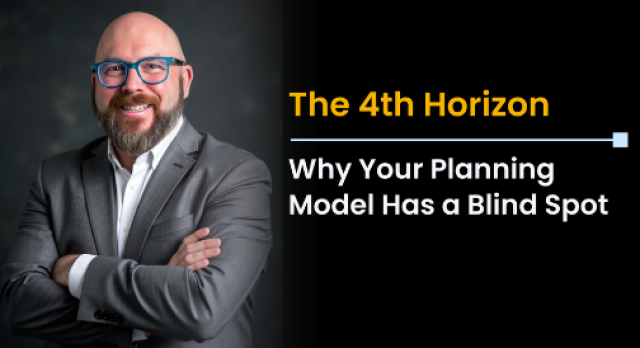
The 4th Horizon: Why Your Planning Model Has a Blind Spot
BrainRazr
May 25, 2026
The Three Horizons framework shaped a generation of strategy. It still works. But when Anthropic's Mythos can rewrite your cybersecurity assumptions overnight, and Google's Willow chip does in five minutes what would take a supercomputer 10 septillion years, planning by time horizon isn't enough. The most dangerous gap in your strategy isn't a bad bet on Horizon 3. It's the disruption that hasn't entered your field of vision yet. This piece makes the case for a 4th Horizon: a permanent sensing capability that catches signals while they're still on the fringe, before they show up on someone else's roadmap as your competitive surprise.
Tags: Business Strategy, Ecosystems, Emerging Technology
5 Brainstorming Lenses That Surface Opportunities Others Miss
BrainRazr
April 26, 2026
The teams that consistently find opportunities others miss aren't smarter or better funded. They ask different questions. Most brainstorming starts with 'how do we use this technology?' and stops there. This piece introduces five lenses that surface different types of opportunities: competitive advantage, moat-building, structural cost reduction, new customer capabilities, and market whitespace. Each one reveals something the others don't, and running a technology bet through all five tells you not just whether to invest, but what kind of opportunity you're actually looking at.
Tags: Business Strategy, Emerging Technology, Innovation
The Leadership Tax: How Executives Accidentally Block Organizational Adaptability
BrainRazr
January 28, 2026
Most executives say they want adaptability. Their behavior tells a different story. Every 'keep me informed' request, every devil's advocate challenge, every 'just one question' in a review creates an invisible tax on the organization's ability to move. This piece breaks down five specific mindset shifts leaders need to make, starting with the gap between what they declare and what their teams actually experience.
The Exponential Gap: Why Your Three-Year Roadmap is Already Obsolete
BrainRazr
January 13, 2026
Technology moves exponentially. Organizations plan linearly. That gap is why your three-year roadmap is already out of date before you finish building it. S&P 500 company lifespans have dropped from 33 years to under 20, and adoption curves that used to take decades now collapse into months. This piece lays out why static planning fails and what to replace it with: portfolio-based roadmaps, continuous sensing, and treating every strategic assumption as a hypothesis with a kill criteria.
Tags: Business Strategy, Emerging Technology, Innovation
The Ecosystem Effect: How Growth, Maturity, and Momentum Around a Technology Shape Its Fate
BrainRazr
December 07, 2025
The deciding factor in whether a technology succeeds or dies isn't the technology itself. It's the ecosystem around it: the developers, the infrastructure, the standards, the complementary tools that turn a breakthrough into something organizations can actually use. This piece traces the pattern across the internet, mobile, cloud, and generative AI to show what ecosystem signals actually matter and how leaders can read them before committing resources.
Tags: Business Strategy, Ecosystems, Emerging Technology
Looking Beyond the Tech: How to Spot the Whitespace in Emerging Technology Waves
BrainRazr
November 28, 2025
When a major technology wave hits, the biggest winners are rarely the ones building the technology. They're the ones who spot the structural shifts happening around it. Research shows up to 75% of economic value during previous technology waves went to companies outside the tech sector. Uber didn't build mobile networks. Stripe didn't invent cloud computing. They saw what those technologies made newly possible and moved on the whitespace. This piece breaks down how to train your organization to ask the right question: not 'how do we use this technology?' but 'what's different now because it exists?
Tags: Business Strategy, Ecosystems, Emerging Technology
Architecture Over Throughput: Why System Design Now Outweighs Raw Coding Speed
BrainRazr
September 07, 2025
AI tools can generate code faster than ever. That makes architecture more important, not less. When you can ship features at high speed, the thing that breaks first is the system underneath them. 84% of organizations still struggle to manage cloud spend, and that's not a coding problem. It's a structural design problem. This piece makes the case that architectural thinking, the ability to design systems that absorb change without collapsing, is now the capability that separates organizations that scale from ones that stall.
Ship Fast or Get Left Behind: Why Your Product Development Speed Matters
BrainRazr
August 15, 2025
The window for tech opportunities keeps shrinking. Organizations that can't move from idea to deployed product quickly aren't just slower than competitors. They're learning slower, accumulating more technical debt, and losing the feedback loops that tell them whether they're building the right thing. This piece breaks down the three structural capabilities that actually drive development speed: empowered teams with real decision authority, architecture that lets teams work in parallel, and automated deployment that takes friction out of releasing. None of it is about working harder. All of it is about removing the things that make teams slow.
Finding the Signal: How to Spot Tech-Driven Opportunities Worth Pursuing
BrainRazr
August 07, 2025
Every organization knows they need to pay attention to emerging technology. The problem isn't awareness. It's knowing which signals actually matter and which ones are noise. This piece walks through three capabilities that separate organizations who chase trends from ones who find real opportunities: structured ideation to surface the right problems, investor-grade evaluation to kill the weak ideas early, and lightweight experimentation to test assumptions before committing real resources.
New Tech Is Everywhere. The Hard Part Is Shipping the Right Product.
BrainRazr
July 31, 2025
Most tech adoption doesn't fail because organizations pick the wrong technology. It fails because they don't have the operational capability to turn a good technology bet into a shipped product that delivers real value. This piece introduces the Catalyst Framework, which connects two capabilities most organizations treat as separate: discovering and validating opportunities on one side, and building the development agility to actually execute on them on the other. The gap between those two is where most adoption efforts die.
The Balancing Act: How Great Leaders Dance Between Innovation and Investment
BrainRazr
June 02, 2025
Product leaders feel the tension every day: push bold ideas or protect what's working. The ones who get it right don't pick a side. They get good at switching between two distinct mindsets, the Innovator who asks 'what's possible?' and the Investor who asks 'what's worth it?' This piece covers how to build that switch into your process through stage alternation, team composition, and decision frameworks that keep ambition and discipline in productive tension.
Rethinking the Query: The Rise of AI-Enabled Web Search
BrainRazr
June 01, 2025
Search is being rebuilt from the ground up. Instead of returning a list of links, AI-enabled search synthesizes answers from multiple sources and holds a conversation with you about what you're looking for. Google, Microsoft, OpenAI, and a wave of startups are all racing to define what comes next. This piece maps the current landscape, where AI search genuinely improves the experience, where it still falls short (hallucination, source verification, bias), and why the likely outcome isn't replacement but convergence, with AI becoming the default layer on top of traditional search infrastructure.
Tags: Ecosystems, Emerging Technology, Generative AI
The Investor Mindset: Turning Tech Dreams into Sustainable Business Value
BrainRazr
May 26, 2025
There's no shortage of organizations chasing the next technology trend. The shortage is in disciplined evaluation of whether those bets are actually worth making. This piece covers the Investor mindset, the complement to the Innovator, and breaks down the five criteria that separate real opportunities from innovation theater: market demand, competitive advantage, profitability, scalability, and strategic alignment. Adopting emerging tech isn't a success metric. Creating sustainable impact is.
Tags: Business Strategy, Emerging Technology, Innovation
Building Software in the Age of Vibes
BrainRazr
May 25, 2025
Vibe coding is what happens when developers stop writing code line by line and start directing AI to build it from natural language prompts. It's fast, it's accessible, and it's letting small teams ship what used to require 50 engineers. It's also producing security vulnerabilities, unexplainable code, and projects that collapse under real user traffic. This piece breaks down both sides honestly: where vibe coding genuinely changes the game, where it creates real risk, and why engineering discipline becomes more important, not less, when anyone can generate code by describing what they want.
When Bold Ideas Meet Reality: Mastering the Shift to the Investor Mindset
BrainRazr
May 19, 2025
Every product team hits the moment where a bold idea needs to survive contact with reality. Most handle it badly. They either kill ideas too early with premature scrutiny or let emotional attachment carry weak concepts past the point where they should have been stopped. This piece focuses on the hardest part of the Innovator-to-Investor shift: knowing when to make it, why teams resist it, and how to set up evaluation criteria before ideas gain the emotional weight that makes objective assessment nearly impossible.
Tags: Business Strategy, Innovation, Product Management
Unleashing the Innovator Mindset: How to See Opportunities Others Miss
BrainRazr
May 12, 2025
Most organizations ask 'how can we apply this technology?' That's the wrong question. The better one is 'what can we do now that was never possible before?' The difference sounds subtle, but it changes everything about where you look for opportunities. The first question optimizes what exists. The second one opens up entirely new business models and customer experiences. This piece covers how to build the Innovator mindset into your team's process through scenario planning, cross-disciplinary exploration, and structured assumption-challenging, without letting it drift into endless ideation that never ships.
The Twin Mindsets Every Product Leader Needs in a Tech-Driven World
BrainRazr
May 05, 2025
Product leaders need two mental modes, and most over-index on one. The Innovator asks 'what if?' and spots opportunities others miss. The Investor asks 'is it worth it?' and kills the ideas that can't survive scrutiny. Neither one alone works. Too much Innovator and you ideate forever without shipping. Too much Investor and you optimize yourself into irrelevance while competitors take the risks you wouldn't. This piece introduces both mindsets and makes the case that the real capability worth building is the agility to switch between them at the right moment.
Trust Is a System, Not a Gift
Linkedln
July 08, 2026
Most leaders think they have an engagement problem. They have an empowerment problem. Gallup's 2025 State of the Global Workplace report put global employee engagement at 20 percent, the second straight year of decline. The usual fix is perks, another survey, or a values poster. That misses what actually drives it.
How "Psychological Safety" Becomes Buzzword Bingo
Linkedln
June 24, 2026
Psychological safety might be the fastest term to travel from breakthrough to punchline. Leaders put it on slides. They name it in retrospectives. They build whole culture decks around it. Then someone mutters "buzzword bingo," and they're not wrong. Gallup found in 2025 that just 28% of employees strongly agree their opinions count at work. The idea didn't fail. The follow through did. When people share feedback and nothing visible changes, safety becomes theater.
Are you the constraint your team won't tell you about?
LinkedIn
June 10, 2026
You announce empowerment, then review every decision. You ask for autonomy, then wonder why nobody looped you in. Your team notices. They just won't tell you. This piece names the pattern: the leadership tax, the accumulating cost of behaviors that slow the adaptability you keep asking for. A request for information reads as a demand for approval. One offhand comment kills months of work. Try this today: count the decisions sitting in your inbox waiting on you. More than five and you're not running strategy, you're the bottleneck. The article shows how the pattern forms, why most executives never see it in themselves, and what frees up when you stop being the constraint.
The Teams Worth Celebrating Ship Without Drama
Linkedin
May 20, 2026
Long weekends and late-night pushes look like productivity. They aren't. When crunch mode becomes the norm, it erodes trust, performance, and well-being, and it's the cleanest signal that your Agile practice isn't actually working. The teams worth celebrating aren't the ones pulling heroic saves. They're the ones who know their capacity, ship predictably, and keep that pace for months and years without burning out. This piece argues for shifting how we recognize work: stop rewarding the firefighters and start rewarding the teams that build a rhythm leaders, customers, and engineers can all count on.
Speed is no longer the constraint
Linkedin
May 06, 2026
Copilot makes developers 56% faster and ChatGPT lifts knowledge work speed by 40%. Speed isn't the bottleneck anymore. Architecture is. McKinsey estimates 20 to 40% of large enterprise technology value is locked up in technical debt, and 70% of modernization projects get cancelled because the existing architecture made the change too expensive to attempt. This piece lays out what engineering organizations need to build instead: loose coupling, observability as a feedback loop, and FinOps baked into the definition of done.
Tags: Business Strategy, Emerging Technology, Innovation
Your team adopted AI. Did your process?
BrainRazr
April 15, 2026
83% of agile practitioners use AI tools. Only 55% spend more than 10% of their time actually using them. That gap tells you everything. Most teams bolted AI onto unchanged workflows and wondered why the results stayed incremental. This piece argues the real opportunity isn't better AI tools. It's reshaping how your team works based on what AI makes possible. What would you change about standups, retros, and estimation if AI could handle 30% of the routine work? If your team hasn't changed how they work recently, they haven't really adopted anything.
Who else needs to show up for this to work?
BrainRazr
March 31, 2026
Most teams evaluating a new technology ask 'is it ready?' Better question: is the ecosystem around it ready? A technology can be technically impressive and still fail if the developers, infrastructure, standards, and talent haven't formed around it yet. This piece lays out seven ecosystem signals worth tracking, from open-source activity to cross-industry adoption patterns, and introduces a simple test: if three or more signals show weakness, you're probably ahead of the ecosystem rather than riding its momentum. That's an expensive place to be.
When to Dream, When to Question
Linkedin
March 18, 2026
McKinsey's latest State of AI survey finds that 88% of organizations now use AI regularly in at least one business function, yet just 39% report any enterprise-level bottom-line impact. That gap is not a technology problem. It's a judgment problem. Most leaders approach every new technology through one lens: either excitement or skepticism.
Most organizations say they value employee well-being. Very few have changed what they actually celebrate. The Eagle Hill Consulting Workforce Burnout Survey from November 2025 found that 55% of the U.S. workforce is experiencing burnout. Meanwhile, a McKinsey study cited by CultureBot reported 64% of employees feel burnt out at least once a week, up from 48% in 2023.
Speed comes from systems, not hustle
Linkedin
January 27, 2026
Top performers ship 20 to 25 percent faster than everyone else, according to research from the Product Development and Management Association (PDMA). Yet speed alone explains less than half of their advantage. The real gap is in what they ship. Most organizations confuse development velocity with actual delivery capability.
Agile Isn't Dead. Your Process Is.
Linkedin
January 14, 2026
The loudest conversation in software development right now is whether Agile is dead. Teams are abandoning standups, calling retrospectives a "theater," and searching for the next framework to save them. But the real question is not whether Agile is dying. It's whether your team is still running a 2001 playbook in a 2025 market.
The Real Agile Transformation Gap
BrainRazr
January 04, 2026
95% of organizations have adopted some form of Agile. Only 16% operate at high competency. And here's the number that explains the gap: 62% of top management believe Agile has no personal implications for them. That's the transformation gap in one statistic. Organizations treat Agile as something the teams do while leadership keeps annual planning cycles and top-down decision-making firmly in place. This piece proposes a simple test: what decision did your organization make faster this month because of Agile? If nobody can answer that, you've adopted the mechanics without the mindset.
Signals from the Edge #14
Linkedin
November 07, 2025
Our Quick Take
AI is changing what technology can do and how teams build products around it. The skill now is learning to work effectively with AI systems, not trying to outthink them. Companies are embedding AI into workflows while infrastructure and security try to keep up. Open-source tools and better interfaces are making complex capabilities accessible to more people. Bottom line: your advantage comes from how quickly you can combine human judgment, AI tools, and smart architecture into working products.
Tags: Agentic AI, AI Infrastructure, Product Management
Signals from the Edge #13
Linkedin
October 16, 2025
Our Quick Take
The main focus now is integration across people, technology, and organizations. AI is no longer just a trend; it's changing how teams are organized, how we secure systems, and how users interact with technology. Leaders face three key challenges: encouraging collaboration between humans and AI, protecting complex ecosystems, and adapting team structures for agility and learning. The central issue is architecture—both organizational and technical—that must evolve quickly to stay effective and relevant.
Signals from the Edge #12
Linkedin
October 05, 2025
Our Quick Take
This edition delivers a simple message: emerging technologies are now transforming how we think about product and engineering strategies. Artificial Intelligence (AI) is developing in various ways, including specialized models and adaptive agents that challenge existing frameworks. The economics of AI are changing, with free services becoming a competitive edge, which means leaders need to rethink their pricing, adoption, and return on investment (ROI).
Tags: AI Infrastructure, AI Orchestration, Business Strategy
1 Webinar
Everyone's doing AI. Why isn't it working?
Aavalar Consulting
September 17, 2026
Everyone bought the same AI tools. About 5% are getting real business value from them. The difference isn't the model. It's a set of choices about process, people, measurement, and guardrails, and two years ago nobody knew what those choices were. Michael Krouze and Steve Chihos spend 55 candid minutes on why AI spending stalls before it reaches the P&L, how to tell where an organization is stuck, and what the few companies getting it right do differently. Attendees leave with a six question self-diagnostic and a 30 day plan built to survive without budget approval.
Join Thinkers360 for free! Are you a Reader/Writer, Thought Leader/Influencer (looking to increase your earnings), or an Enterprise User (looking to work with experts)?



 The 4th Horizon: Why Your Planning Model Has a Blind Spot
 Trust Is a System, Not a Gift
 How "Psychological Safety" Becomes Buzzword Bingo
 Your team adopted AI. Did your process?
 Who else needs to show up for this to work?
 When to Dream, When to Question
 Who You Celebrate Matters
 Agile Isn't Dead. Your Process Is.
 Signals from the Edge #14
 Signals from the Edge #13
 Signals from the Edge #12
 Everyone's doing AI. Why isn't it working?