

Thinkers360
Interested in getting your own thought leader profile? Get Started Today.

Tasriqul Islam

Dallas, United States

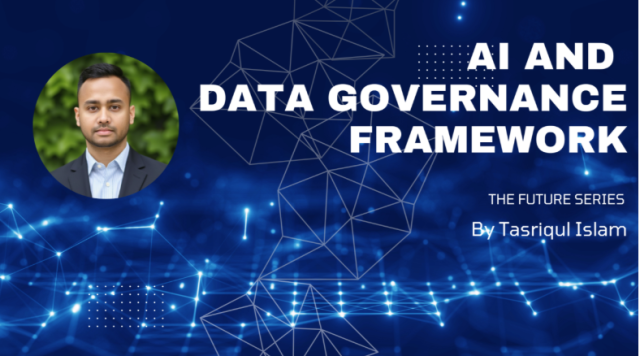
Tasriqul Islam is exceptional in the field of Human-Centered Artificial Intelligence and Data Governance. He is recognized for his interdisciplinary expertise, contributions to the evolution of AI, and commitment to the societal benefits of technology. As a Harvard alumnus with advanced degrees in engineering and international relations, he integrates technical knowledge with policy and ethics in every endeavor, which makes his approach distinct in this complex sector.

He co-founded the Institute for AI Impact and Governance and created HumanMark, an AI evaluation framework that focuses on fairness, empathy, and human-centric metrics. This work establishes new industry standards for responsible AI and has influenced policy beyond the technical community.

He authored the widely used textbook Fundamentals of Machine Learning Techniques, a resource that serves both students and professionals by connecting theoretical foundations to practical application in AI. Tasriqul Islam serves on the editorial boards of three respected international journals. His role in these journals helps shape the global academic and research dialogue in AI and data governance.

Tasriqul Islam has been invited to many academic and industry conferences as a keynote speaker, panelist, and member of advisory committees. Through these roles, he has contributed to defining critical issues in AI ethics, governance, and innovation while guiding international audiences on the future of responsible technology. He is also the Head Adjudicator of a major international AI hackathon, guiding the selection and recognition of AI innovations that address significant global challenges.

His leadership across academia, research, and global forums reflects a rare combination of scholarly impact, original thought, and visionary stewardship :qualities that have earned Tasriqul Islam wide recognition as an influential and forward-thinking expert in AI.

Tasriqul Islam Points
Academic 5
Author 61
Influencer 8
Speaker 0
Entrepreneur 0
Total 74

Points based upon Thinkers360 patent-pending algorithm.

Thought Leader Profile

Portfolio Mix

Company Information

Areas of Expertise

Agentic AI
AGI 32.80
AI 30.79
AI Ethics
AI Governance 31.22
AI Infrastructure 65.54
Autonomous Vehicles
Big Data
Data Center
Generative AI
GovTech
IoT
Open Innovation

Industry Experience

Publications & Experience

1 Article/Blog
Most AI Governance Professionals Are Missing the Point : Here’s What Really Causes Damage and How to Fix It
Linkedin
September 18, 2025
To the AI and data governance community: I see you. The effort and expertise many of you bring to managing AI risks is impressive. But I have to be blunt...too many governance frameworks today are set up for failure.

See publication

Tags: AI, AI Governance, AI Infrastructure

1 Book
FUNDAMENTALS OF MACHINE LEARNING TECHNIQUES
Xoffencerpublication
September 12, 2025
Machine learning is a subfield of computing science that evolved both from the knowledge obtained through the process of learning how to classify data based on that understanding and also from the understanding gained through the process of learning the computational-based concepts of Artificial Intelligence, or AI. Machine learning, also known as ML, is a common abbreviation for the field. To put it another way, machine learning is the process of training computers to learn on their own via their interactions with data without being explicitly taught to do so. This is accomplished through the use of artificial neural networks. Both humans and animals may claim to be the first to conceptualize what we now call learning. There are a lot of similarities to be discovered between the way that machines learn and the way animals learn. In point of fact, many of the methods that are now used in machine learning were first created to imitate the foundations of animal and human learning using computer representations. This was done to further the field of artificial intelligence. The basic scientific concept of habituation, for instance, outlines the process by which an animal progressively ceases reacting to a stimulus that has been repeatedly shown to the animal. If a dog is taught to perform a range of tasks, such as rolling over, sitting, picking up objects, etc., it is considered to be an outstanding example of animal learning since it is capable of considerable learning if it is trained to do so. If a dog is taught to execute a number of tasks, such as rolling over, sitting, picking up items, etc., it is considered to be an excellent example of animal learning. Many people believe that dogs are the best representatives of animal intelligence. As opposed to the preceding example of successful learning, there aren't many real world applications of machine learning that we can point to as evidence that it's a helpful notion in the current world. This is in contrast to the earlier demonstration of successful learning. Virtual personal assistants, traffic predictions using GPS navigation, surveillance of multiple cameras by AI to detect crime or unusual behavior of people, social media uses ML for face recognition and news feed personalization, search engine result refinement, e-mail spam filtering where a machine memorize all the previously labeled spam e-mails by the user, and a lot more applications are just some of the many places where ML is widely used. Other applications include: a lot more applications. By using all of these applications, it has become abundantly evident that making use of knowledge and experience that one already has will result in a more efficient learning process. The close link that ML has to computational statistics, which also plays a vital role, makes the process of making predictions more simpler and more straightforward. Everyone is entitled to wonder "why does a machine need to learn something?" and there is no wrong answer to this question. There are just a few compelling arguments in favor of the need of machine learning. The fact that we just said that the development of learning capabilities in robots may help us better understand how animals and people gain information should not come as a surprise to anybody.

See publication

Tags: AI, AI Infrastructure

1 Journal Publication
EEG Signal Based Human-Computer Interaction based Autonomous Driving Control System
IEEE
April 09, 2025
EEG signal analysis and driving intention prediction are the main challenges of human-centric autonomous intelligent driving control systems. This paper uses spectral characteristics and EEG functional brain networks to recognise straight-line, left-turn, and right-turn driving. The method classifies and identifies driving processes using support vector machines and Gaussian mixture models. Simulated driving results show that the suggested technique accurately identifies many driving activities. Out of 16 individuals, straight-line and turning recognition accuracy is regularly above 82%, peaking at 86.66%. The recognition accuracy for left- and right- and turn motions peaks at 77.95%. Examining critical area dependency during turning processes shows lateralisation differences. Specifically, left turns require more inter-brain region activity than right turns.

See publication

Tags: AGI, AI Governance, AI Infrastructure
Thinkers360 Credentials

3 Badges

Blog

Opportunities

Events

Contact Tasriqul Islam

Book a Video Meeting

Media Kit

Share Profile

Contact Info

  Profile

Tasriqul Islam


Latest Activity

Search
How do I climb the Thinkers360 thought leadership leaderboards?
What enterprise services are offered by Thinkers360?
How can I run a B2B Influencer Marketing campaign on Thinkers360?