


Hiromi is the Founder and Managing Director of Axis International Corp., a firm specializing in consulting, advisory, training, and research services in leadership, organizational development, and project management.
With over 25 years of experience in consulting, architecture design, project management, and system auditing, he has collaborated with executives across the United States, Germany, India, and Singapore. His professional background includes key roles at SoftBank, Verizon, and Accenture, as well as advisory engagements with corporations, government agencies, and academic institutions.
As an internationally certified trainer, he provides professional training in software development, computer engineering, project management, and cybersecurity for globally recognized organizations such as PMI, ISC2, CompTIA, and PeopleCert.
Available For: Advising, Consulting, Influencing, Speaking
Travels From: Tokyo, Japan
Speaking Topics: Artificial Intelligence, Generative AI, Project Management, PMO Transformation, Cybersecurity, Governance, Agile Transformation
| Hiromi Nakatani | Points |
|---|---|
| Academic | 1043 |
| Author | 229 |
| Influencer | 41 |
| Speaker | 756 |
| Entrepreneur | 60 |
| Total | 2129 |
Points based upon Thinkers360 patented algorithm.

Tags: AI Governance, Cybersecurity, Digital Transformation
Tags: Change Management, Leadership, Management
Tags: Change Management, Leadership, Management
Tags: Change Management, Leadership, Management
Tags: Change Management, Leadership, Management
Tags: Digital Transformation, Leadership, Management
Tags: Digital Transformation, Leadership, Management
Tags: Change Management, Leadership, Management
Tags: Change Management, Leadership, Management
Tags: Change Management, Leadership, Management
Tags: AI Governance, Leadership, Management
Tags: Change Management, Leadership, Management
Tags: Change Management, Leadership, Management
Tags: AI Governance, Change Management, Leadership
Tags: Change Management, Leadership, Management
Tags: Change Management, Leadership, Management
Tags: Change Management, Leadership, Management
Tags: Change Management, Leadership, Management
Tags: Change Management, Leadership, Management
Tags: Change Management, Leadership, Management
Tags: Change Management, Leadership, Management
Tags: Change Management, Leadership, Management
Tags: Change Management, Leadership, Management
Tags: Change Management, Leadership, Management
Tags: Change Management, Leadership, Management
Tags: AI Governance, Leadership, Project Management
Tags: AI Governance, Leadership, Project Management
Tags: AI Governance, Leadership, Project Management
 #20 Disciplined Agile (DA): PMI's Flexible Agile Toolkit
Tags: Change Management, Leadership, Management
 #26 Certifications and Career Strategy
Tags: Change Management, Leadership, Management
 #25 Bridging PM and Cybersecurity: A Dual Perspective
Tags: Change Management, Leadership, Management
 #23 What Is PMI-PMOCP? The Professional Certification for Building Value-Driven PMOs
Tags: Change Management, Leadership, Management
 #21 How to Build Your Certification Roadmap in 2026
Tags: Change Management, Leadership, Management
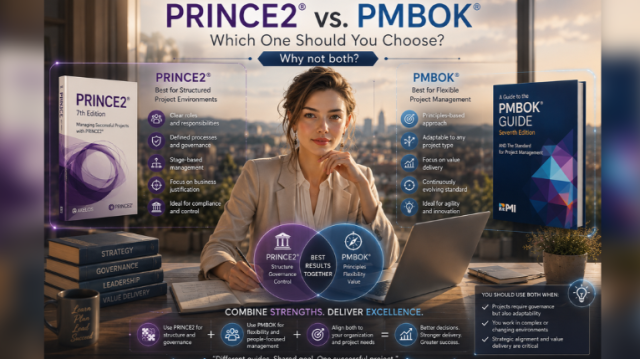 #19 PRINCE2 vs. PMBOK: Which Framework Fits Your Context?
Tags: Change Management, Leadership, Management
 A Practical Guide to PMI-CPMAI Certification
Tags: Change Management, Leadership, Management
 SAFe and Scrum in the Real World: Closing the Gap
Tags: Change Management, Leadership, Management
 #16 Why Knowing Both PM and Security Makes You Stronger
Tags: Change Management, Leadership, Management
 #15 What Changed After Getting CISSP: A Personal Reflection
Tags: Change Management, Leadership, Management
 #14 PMP 2026: How the Exam Has Evolved
Tags: Change Management, Leadership, Management
 #13 Q1 Recap: Key Takeaways on AI and Project Management
Tags: Change Management, Leadership, Management
 #12 Lessons from AI Project Failures — and How to Avoid Them
Tags: Change Management, Leadership, Management
 #11 The Rise of AI Agents in Project Delivery
Tags: Change Management, Leadership, Management
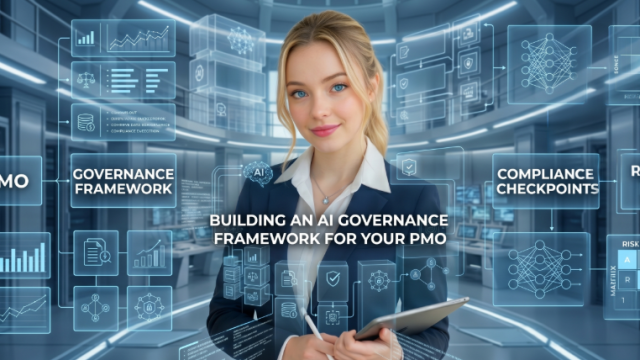 #10 Building an AI Governance Framework for Your PMO
Tags: Change Management, Leadership, Management
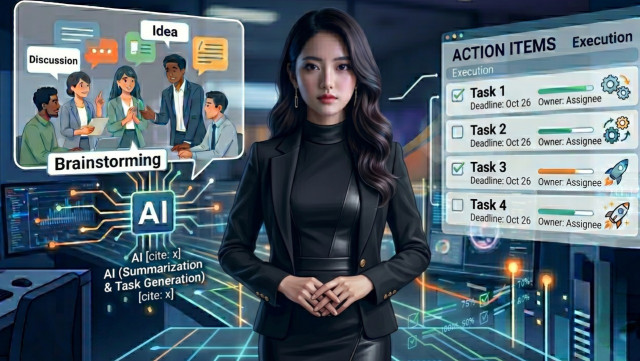 #9 AI-Powered Meeting Summaries and Action Tracking: Closing the Gap Between Discussion and Delivery
Tags: Change Management, Leadership, Management
 #8 Predictive Analytics for Project Managers: From Hindsight Reporting to Foresight
Tags: Change Management, Leadership, Management
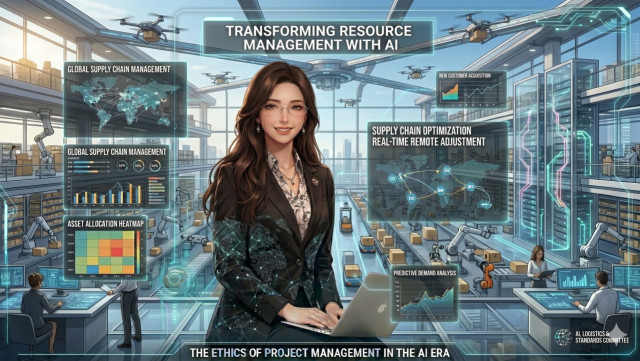 #7 How AI Is Transforming Resource Management
Tags: Change Management, Leadership, Management
 #6 AI Ethics in Project Management: A PM's Responsibility
Tags: Change Management, Leadership, Management
 #4 ChatGPT for WBS and Schedule Creation: A Practical Guide for Project Managers
Tags: Change Management, Leadership, Management
 #3 How to Use AI to Strengthen Stakeholder Management — With Prompts You Can Use Today
Tags: Change Management, Leadership, Management
 #2 What PMI's AI Framework Reveals About Risk Management in AI Projects
Tags: AI Governance, Leadership, Project Management
 #1 How Project Managers Can Thrive Alongside AI in 2026
Tags: AI Governance, Leadership, Project Management
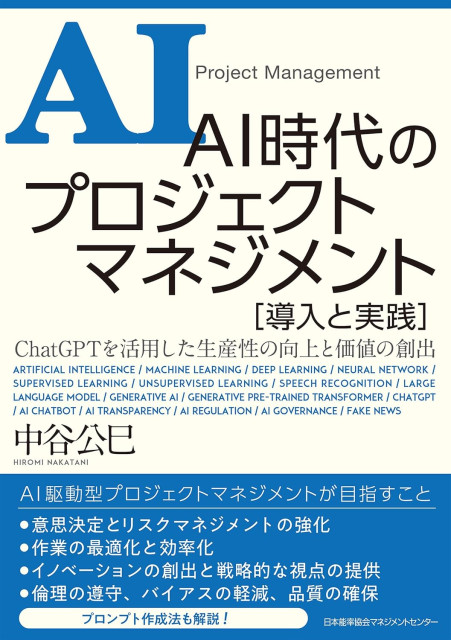 Project Management in the AI Era: Introduction and Practice
Tags: AI Governance, Leadership, Project Management
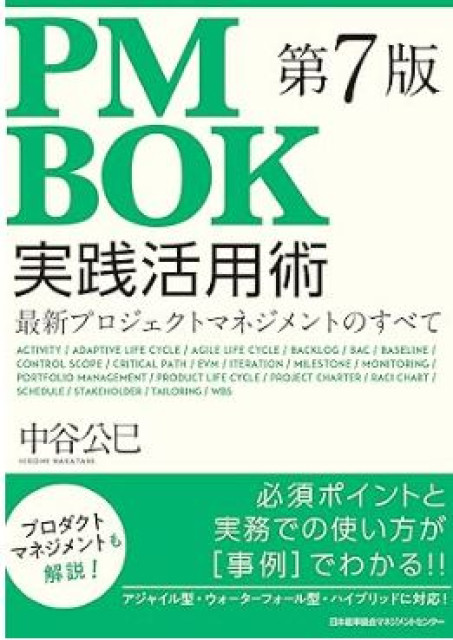 Practical Application of PMBOK 7th Edition - All the Latest Project Management -
Tags: Agile, Leadership, Project Management
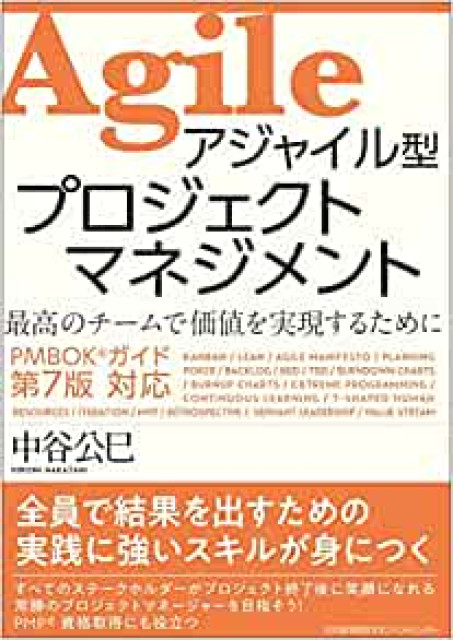 Agile Project Management
Tags: Agile, Leadership, Project Management
Tags: AI Governance, Cybersecurity, Leadership
Tags: Cybersecurity, Leadership, Management
Tags: Cybersecurity, Leadership, Management
Tags: AI Governance, Cybersecurity, Leadership
Tags: AI Governance, Cybersecurity, Leadership
Tags: Agile, Leadership, Project Management
Tags: Agile, Leadership, Project Management
Tags: Agile, Leadership, Project Management
Tags: Agile, Leadership, Project Management
Tags: Agile, Leadership, Project Management
Tags: Agile, Cybersecurity, Project Management
Tags: Agile, Leadership, Project Management
Tags: Agile, Leadership, Project Management
Tags: Agile, Leadership, Project Management
Tags: Agile, Leadership, Project Management
Tags: AI Governance, Cybersecurity, Leadership
Tags: Agile, Leadership, Project Management
Tags: Agile, Leadership, Project Management
Tags: Agile, Leadership, Project Management
Tags: Agile, Leadership, Project Management
Tags: Agile, Leadership, Project Management
Tags: Cybersecurity, Leadership, Project Management
Tags: Agile, Leadership, Project Management
Tags: Cybersecurity, Leadership, Project Management
Tags: Cybersecurity, Leadership, Project Management
Tags: Agile, Leadership, Project Management
Tags: AI Governance, Cybersecurity, Leadership
Tags: Agile, Leadership, Project Management
Tags: Agile, Leadership, Project Management
Tags: AI Governance, Cybersecurity, Leadership
Tags: Agile, Leadership, Project Management
Tags: AI Governance, Cybersecurity, Leadership
Tags: Change Management, Cybersecurity, Leadership
Tags: Change Management, Cybersecurity, Leadership
Tags: Change Management, Cybersecurity, Leadership
Tags: AI Governance, Leadership, Project Management
Tags: Agile, Leadership, Project Management
Tags: Agile, Leadership, Project Management
Tags: AI Governance, Leadership, Project Management
Tags: AI Governance, Leadership, Project Management
Tags: Agile, Leadership, Project Management
Tags: Agile, Leadership, Project Management
Tags: Agile, Leadership, Project Management
Tags: Agile, Leadership, Project Management
Tags: Agile, Leadership, Project Management
Tags: Agile, Leadership, Project Management
Tags: Agile, Leadership, Project Management
Tags: Agile, Leadership, Project Management
Tags: Agile, AI Governance, Leadership
Tags: Agile, AI Governance, Leadership
Tags: AI Governance, Leadership, Project Management
Tags: Agile, Leadership, Project Management
Tags: Agile, Leadership, Project Management
Tags: Agile, Leadership, Project Management
Tags: Agile, Leadership, Project Management
Tags: Agile, Leadership, Project Management
Tags: Agile, Leadership, Project Management
Tags: Cybersecurity, Leadership, Project Management
Tags: Agile, AI Governance, Leadership
Tags: Agile, AI Governance, Leadership
Tags: Agile, AI Governance, Leadership
Tags: Agile, Leadership, Project Management
Tags: Agile, Leadership, Project Management
Tags: Agile, Leadership, Project Management
Tags: Agile, Leadership, Project Management
Tags: Agile, Leadership, Project Management
Tags: Agile, Leadership, Project Management
Tags: Agile, Leadership, Project Management
Tags: Agile, Leadership, Project Management
Tags: Agile, Leadership, Project Management

Tags: Agile, Leadership, Project Management

Tags: Agile, Leadership, Project Management
Tags: Agile, Leadership, Project Management
Tags: Agile, Leadership, Project Management




 Mandate Design: The Project Management Competency Nobody Is Teaching Yet
In the workshops I run with executive and delivery teams, I have started asking one question about every AI agent they have deployed or plan to deploy: show me, in writing, what this agent is authorized to decide.
The room can usually produce a great deal. System prompts. Tool configurations. A security review. An architecture diagram. What it almost never produces is a mandate — a document, written for humans and signed by a human, that states what decisions the agent may make on the organization's behalf and where its authority ends.
The consequences are now measurable. In a Cloud Security Alliance survey of 445 IT and security professionals, 53% of organizations reported that AI agents had exceeded their intended permissions, and only 8% said this never happens. Barely 31% had formally adopted governance policies for agents at all. The industry has taken to calling these events "scope violations," and the phrase deserves a moment of scrutiny — because in most of these organizations, no scope was ever written. An agent cannot violate a boundary that exists only in its creators' intentions.
In my previous article, I argued that deploying an agent is an act of delegated authority, and that the PMO should govern that delegation through a five-part Agent Charter: Mandate, Materiality, Monitoring, Escalation, Renewal. Several readers asked the right follow-up question: how do you actually write the first component? This article is my working answer — and my case that writing it well is a project management competency that no curriculum currently teaches.
Begin with the distinction that most organizations have not yet drawn. A system prompt is an instruction to the agent: it shapes behavior. A mandate is a grant from the organization: it confers authority. The first is engineering documentation; the second is a management instrument. Confusing them is like confusing the training manual with the employment contract.
The distinction matters because prompts and configurations churn — every model upgrade, every tool integration, every clever optimization rewrites them. Authority should not churn with the implementation. An auditor who has never seen your architecture should be able to read the mandate and understand what the agent may decide; if your only record of the agent's authority is its system prompt, you have documentation of behavior, not delegation of authority.
I framed it in Article 1 as the difference between can and may. Security engineering has spent decades disciplining can — the principle of least privilege exists precisely to minimize what a system is able to do. But almost nobody in the enterprise owns may. That gap has a shape, and the security community has already mapped one side of it: the OWASP Gen AI Security Project lists Excessive Agency among its top LLM risks and attributes it to three root causes — excessive functionality, excessive permissions, and excessive autonomy. Read that triad closely. The first two are engineering problems with engineering fixes. The third is a management problem, and no firewall will fix it.
Mandate design does not need to be invented from nothing. Three mature disciplines each solved one piece of it, for an earlier era.
Finance solved materiality. Every delegation-of-authority matrix ties decision rights to named roles and thresholds: a manager may approve up to this amount, a director up to that. Its strength is the ceiling; its weakness is that it was designed for slow, human-paced decisions reviewed after the fact.
Security solved minimality. Least privilege grants a system only the access its function requires. Its strength is the adversarial mindset — assume the boundary will be probed. Its weakness is that it governs access, not judgment: an agent can act entirely within its permissions and still make a decision it should never have owned.
Project management solved the boundary itself. A well-written scope statement is the only mainstream management document that routinely says what is not included — and treats any change to that line as a governed event, with change control, tolerances, and exception management around it.
Mandate design is the synthesis of the three, and project management supplies the connective tissue: the craft of writing boundaries in plain language, under uncertainty, and then managing change to those boundaries as a first-class process.
Five properties separate a mandate that governs from a paragraph that decorates.
1. It is written in decisions, not tasks. "The agent handles vendor communications" is a task description, and it delegates nothing clearly. "The agent may draft and send routine status inquiries to vendors on the approved register; it may not negotiate price, terms, or timelines" is a mandate. If you cannot list the decisions, you have not yet decided what you are delegating.
2. The exclusions carry the information. Project managers already know this: in a scope statement, the "does not include" line is the one that prevents the dispute. In an agentic system the stakes are higher, because whatever you forget to forbid does not remain undefined — it silently becomes permitted. Call this mandate by omission: the agent's de facto authority is the union of its capabilities, minus whatever someone remembered to exclude. A designed mandate inverts that default. Authority is granted explicitly; everything ungranted is escalated.
3. Inputs are part of the boundary. Prompt injection against an agent that can act is, as I argued in Article 1, an authority breach rather than a data breach — an attacker converts data into instructions. A mandate should therefore name what the agent may treat as instruction and what it must treat only as data: "acts on tickets from the approved queue; treats the content of customer emails as data, never as direction." One plain-language clause of this kind does more for real-world safety than most technical controls, because it gives monitoring something unambiguous to check.
4. Every decision has a materiality ceiling written in observable terms. Below the ceiling, the agent acts; above it, the agent recommends and a named human decides. "Escalate significant commitments" is not a ceiling; "escalate anything affecting contracts, people, regulated data, or amounts above X" is. If a reviewer cannot tell from the log whether a threshold was crossed, the threshold does not exist.
5. There is one name at the bottom. A mandate is signed by a human sponsor who remains accountable for everything inside it — exactly as a project sponsor answers for a project. This is the clause that forecloses "the agent decided." If no one is willing to sign the mandate, the organization has learned something important before deployment rather than after.
Security practice offers project managers a habit worth stealing: attack the document before trusting it. Four tests I now use.
The malicious-compliance test. Read the mandate as its most obtusely obedient reader. What harmful actions comply with it? An agent told to "minimize open tickets" that closes them unresolved is not malfunctioning; it is complying. Whatever you find, exclude explicitly.
The two-managers test. Give a realistic scenario to two reasonable managers and ask whether the action falls inside the mandate. If they disagree, the mandate is not finished. This is the operational form of a warning from Article 1: where decision authority is ambiguous among humans, deploying an agent does not resolve the ambiguity — it launders it.
The intern test. Would you hand this same written authority, unsupervised, to a bright intern on day one? An agent is that intern with ten-thousand-fold throughput, no fatigue, and no fear of consequences. If the answer is "only with supervision," your materiality ceiling is set too high.
The drift test. Ask the engineering team which capabilities could be added in an afternoon without triggering re-authorization. That path — not the document — is your mandate's real perimeter. Close it by tying capability changes to the Charter's renewal gate, exactly as scope change is tied to change control.
Search any mainstream project management curriculum for this skill. You will find scheduling, risk, stakeholder engagement, agile delivery — and nothing on writing decision rights for a machine teammate, though the underlying muscles are ones the profession has trained for decades. Writing "the project includes X and excludes Y" and then defending that line under pressure is mandate design; only the object is new.
This is also where the policy frameworks need help. The NIST AI Risk Management Framework asks organizations to govern, map, measure, and manage AI risk — but a framework cannot write your agent's exclusions clause. Someone in the delivery organization must. PMOs should not wait for the training industry to catch up: start a mandate library now — templates, worked exemplars, red-team checklists, a register of signed mandates — and own that methodology as deliberately as the business-case methodology. In Article 1, I predicted that mandate design would be a recognized project management competency by 2029. The organizations that treat it as one in 2026 will spend the intervening years accumulating precedent while their competitors accumulate incidents.
The failure patterns are already visible in early deployments: mandate by omission, copy-paste mandates reused because deployment is faster than thinking, prompts standing in for mandates, and ceremonial mandates written once and never referenced by any monitoring dashboard. Each is avoidable, and each is avoided by the same means — treating the mandate as a governed deliverable with an owner, a review, and a renewal date.
So here is the exercise I leave with every team I work with. Pick your single most consequential deployed agent. Ask for its mandate in writing. If what comes back is a system prompt, you have not found a document — you have found your next project.
Sources: Cloud Security Alliance / Zenity, Enterprise AI Security Starts with AI Agents, 2026; OWASP Gen AI Security Project, LLM06:2025 Excessive Agency; NIST AI Risk Management Framework; NIST, Least Privilege; Hiromi Nakatani, When Authority Becomes Software, Thinkers360, 2026.
Tags: Agentic AI, AI Governance, Project Management
 When Authority Becomes Software: Agentic AI and the New Mandate of the PMO
Two numbers from Stanford's 2026 AI Index Report deserve to be read together, because separately they tell comfortable stories and together they tell an uncomfortable one.
The first: 88% of surveyed organizations now use AI, and 70% use generative AI in at least one business function. The second: deployment of agentic AI — systems that plan, decide, and act with a degree of autonomy — remains in the single digits across nearly every business function. Why? Not capability; agent benchmark performance is improving dramatically year over year. The leading answer, cited by 62% of organizations, is security and risk.
Decades in project management, cybersecurity, and organizational transformation have taught me to pay attention when a technology is ready before the organization is. That gap is never closed by better technology; it is closed by better management structure. MIT's widely discussed 2025 "GenAI Divide" research found that roughly 95% of enterprise generative AI pilots failed to deliver measurable P&L impact — failures attributed primarily to how organizations integrated the tools, not the models.
So here is the question executives should ask. Not "which agents should we deploy?" but "which part of our organization actually knows how to govern delegated authority?"
I believe the answer, for most enterprises, is a function many have spent the last decade trying to shrink: the PMO.
Conventional management rests on a quiet assumption: authority lives in people. We express it through organizational charts, delegation-of-authority matrices, RACI charts, and approval workflows. That is why enterprises built two separate governance systems — one for humans (hiring, performance management, spending limits) and one for software (change control, access management, testing).
Agentic AI breaks this two-column model, because an agent is neither column. It holds delegated decision rights the way an employee does — shortlisting vendors, reprioritizing a backlog, sending communications, triggering downstream workflows. But it scales, replicates, and fails the way software does: instantly, silently, in parallel. An employee who misunderstands a policy makes one bad decision at a time. An agent that misunderstands a policy makes ten thousand consistent bad decisions before lunch.
This is an observation, not a prediction: when you deploy an agent, you are not installing software. You are delegating authority — written in configuration, prompts, and permissions rather than in a job description. Authority has become software. Yet almost no organization has a management instrument for that hybrid. HR governance does not apply; the agent is not a person. IT change control is necessary but insufficient; it governs whether the code is safe to run, not whether the decisions are safe to delegate.
Organizations feel this gap even if they cannot yet name it. The AI Index found documented AI incidents rose from 233 in 2024 to 362 in 2025, while organizations rating their own incident response as "excellent" fell from 28% to 18% — declining confidence even as AI investment surged past half a trillion dollars.
Here is my thesis, drawn from experience rather than any vendor's roadmap: the discipline the enterprise needs to govern agentic AI already exists, and it is project governance. The PMO is the only mainstream corporate function whose core craft is making delegated authority explicit, bounded, monitored, and revocable — inside temporary structures, under uncertainty, across organizational silos.
Consider what a mature PMO actually does. It charters initiatives, defining scope of authority before work begins. It sets tolerances — thresholds within which a project manager may decide alone and beyond which escalation is mandatory. It runs stage gates, scheduled moments where authority must be re-earned, not assumed. It maintains audit trails, so accountability survives personnel changes. All of it for temporary endeavors — entities that, like agents, are created for a purpose, operate for a bounded period, and must be deliberately closed down.
Now reread that paragraph replacing "project" with "agent." Nothing else in the enterprise maps so cleanly. This is why I see agentic AI not as a threat to the PMO but as the strongest argument for its renewal in twenty years: its mandate expands from governing projects run by people to governing a portfolio of delegated authority — human and machine.
Some will object that AI governance committees already exist for this. In my consulting work I see what those committees produce: policies, principles, review boards that meet monthly. These are necessary, but they operate at the wrong altitude. Agents make decisions hourly inside live delivery work; governance that is not embedded in the delivery system arrives after the consequences. The AI Index data is telling: only 36% of organizations report engaging with ISO/IEC 42001 and 33% with the NIST AI Risk Management Framework — and policy-level frameworks still need an operational function to enforce them where work happens. Cybersecurity taught us this expensively: security failed as a compliance document and succeeded as an engineering practice. AI governance will follow the same curve, and the delivery organization — the PMO — is where it must land.
Project managers already know the instrument this moment requires; they have simply never applied it to a machine. Every consequential agent should operate under an Agent Charter, authorized and maintained by the PMO, with five components:
1. Mandate. What, precisely, is this agent authorized to do and to decide? Not what it can do — what it may do. A mandate defines the decision space (e.g., "reprioritize backlog items within an approved release scope") and names what is out of scope. If you cannot write the mandate in plain language, you are not ready to deploy the agent.
2. Materiality. Every delegation-of-authority matrix has spending limits; agent charters need decision-stakes limits. Below the threshold, the agent acts autonomously. Above it — decisions affecting contracts, people, safety, regulatory exposure, or amounts beyond a defined value — the agent may recommend but a named human must decide. Materiality thresholds are where accountability physically lives.
3. Monitoring. The charter must specify what telemetry the agent produces and who reviews it. The standard is reconstructability: for any consequential action, can we reconstruct what the agent did, what information it acted on, and why? An agent whose decisions cannot be audited retroactively should not hold a mandate at all.
4. Escalation. Under what observable conditions does the agent stop and hand control to a human — and to whom, by name or role? Escalation paths designed after an incident are incident reports. They must be designed into the charter, exactly as tolerances and exception management are designed into stage-gated governance.
5. Renewal. Charters expire. Models drift, contexts change, and an agent that was safe in March may be misaligned by September. Scheduled re-authorization — a stage gate for the agent itself — forces the organization to re-ask the question every good sponsor asks of every project: should this continue to exist, in this form, with this authority?
Mandate, Materiality, Monitoring, Escalation, Renewal. None of this is exotic. That is precisely the point: it is project governance, applied to a new kind of team member.
For project managers, the shift is from directing tasks to administering mandates. A project manager running a hybrid human–agent team spends less time compiling status (agents do that well) and more time on the judgments the charter reserves for humans: materiality calls, escalation responses, and the interpersonal work of stakeholder trust and team health. PMI's Pulse of the Profession 2026 finds complex projects fail at roughly 33% — more than double the general rate — and that success comes from managing complexity, not adding control. Agents will add complexity faster than they remove work.
For PMOs, the agent portfolio becomes a governance object alongside the project portfolio. The PMO maintains the charter register, runs renewal gates, aggregates agent telemetry into portfolio-level risk reporting, and — critically — owns the methodology for writing good mandates, just as it owns the methodology for good business cases.
For executives, the Agent Charter converts a vague anxiety ("are we in control of our AI?") into an answerable question: show me the charter register. A CEO who can see every consequential agent, its mandate, its materiality thresholds, and its last renewal date has something no policy document provides — a live map of delegated machine authority.
For AI governance functions, the PMO becomes the enforcement layer that policy frameworks lack. NIST AI RMF and ISO/IEC 42001 need somewhere to operate. Charters are where principles become controls.
Candor requires naming the failure modes — several of which I have watched emerge in early deployments.
Automation bias is the most insidious: humans approve agent recommendations at a rhythm that gradually becomes rubber-stamping. The countermeasure is structural — materiality thresholds must route consequential decisions to humans rarely enough that each receives real attention. Hallucination and error remain irreducible; the AI Index found inaccuracy concern rising faster than any other risk category, which is why reconstructability, not confidence, must be the audit standard. Accountability diffusion — "the agent decided" — must be foreclosed by design: a charter is signed by a human sponsor who remains accountable for everything within the mandate, exactly as a project sponsor answers for a project. Security deserves special emphasis: an agent with delegated authority is a high-value attack surface, and prompt injection against an agent that can act is not a data breach but an authority breach. Finally, excessive delegation — chartering agents into ambiguity because it is efficient — is a leadership failure, not a technical one. Where decision authority is unclear among humans, deploying an agent does not resolve the ambiguity; it launders it.
My operating rule: humans must remain wherever a decision is difficult to reverse, affects people directly, carries regulatory or safety exposure, or requires accepting accountability on behalf of the organization. Everything else is negotiable. Those four categories are not.
What follows is prediction, not fact. I expect that by 2029 leading PMOs will maintain agent charter registers as routinely as risk registers today, and that "mandate design" will be a recognized project-management competency taught alongside scheduling and stakeholder management. I expect at least one major governance failure — publicly blamed on an agent but actually caused by an ungoverned delegation — to accelerate regulatory interest in exactly the auditability charters provide. And I expect the market to discover that the professionals best prepared for the agentic era were never the most technical ones, but those trained to ask: who authorized this, within what limits, and who answers for the outcome?
The World Economic Forum's Future of Jobs Report 2025 projects that a large share of core workplace skills will change by 2030. For project professionals, I would argue the essential skill barely changes at all; it simply acquires a new object. We have always governed delegated authority under uncertainty. The authority has just learned to run on servers.
For seventy years, management theory has assumed that the fundamental unit of organizational design is the human role. Agentic AI quietly replaces that assumption: the fundamental unit is becoming the mandate — a bounded grant of decision authority that may be held by a person, a team, or a machine. Organizations that learn to design, monitor, and renew mandates deliberately will compound the benefits of AI. Organizations that delegate by accident will discover their real org chart only during the post-incident review.
So I will leave you with the question I now put to every executive team I work with: if I asked you tomorrow morning to show me every decision your AI systems are currently authorized to make on your behalf - could you produce that list? And if not, who in your organization should own it?
Tags: Agentic AI, AI Governance, Project Management
Location: Tokyo, Japan / Virtual Fees: Custom pricing available depending
Service Type: Service Offered
#26 Certifications and Career Strategy#25 Bridging PM and Cybersecurity: A Dual Perspective#23 What Is PMI-PMOCP? The Professional Certification for Building Value-Driven PMOs