 THE FIRST CROSS-BORDER E-CNY PAYMENT
Linkedin
August 03, 2026
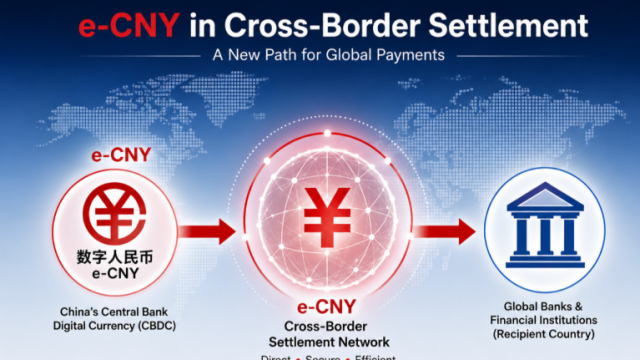
The completion of China's first outbound cross-border payment using the digital yuan (e-CNY) to Malaysia may appear insignificant in monetary value, only 43,000 yuan (approximately US$6,360) for a shipment of fresh durian. Yet history often begins with transactions too small to attract attention.
See publication
Tags: Agentic AI, AI, Digital Transformation
 Fiat Has Entered the Chain: The Coming Battle Between Tokenized Deposits and Crypto Money
LinkedIn
July 31, 2026
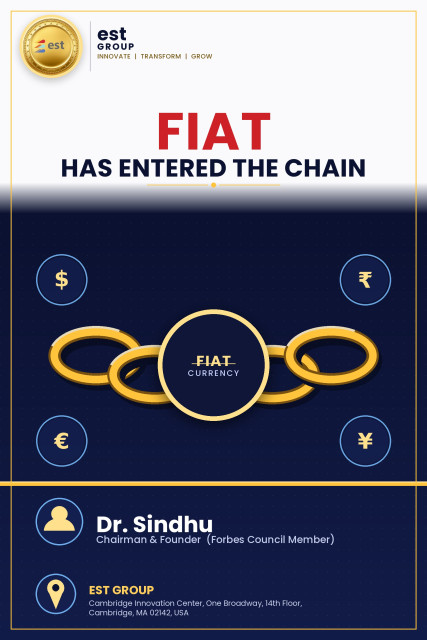
The announcement that JPMorgan, Citi, Bank of America, Wells Fargo, and other major U.S. banks are preparing a shared tokenized deposit network is not a minor banking technology upgrade. It is the formal entry of fiat banking into the blockchain battlefield. According to the Wall Street Journal report, the network is expected to be operated by The Clearing House, may launch in the first half of 2027, and is designed to allow regulated bank deposits to move as blockchain-based tokens on a 24/7 settlement infrastructure. (Wall Street Journal)
This is the moment when the old monetary system stops merely criticizing crypto and begins copying its infrastructure. The battle is no longer “banks versus blockchain.” It is now regulated fiat tokens versus open crypto wallets.
A tokenized deposit is not exactly a stablecoin. It is still a claim on a bank deposit, issued within the banking system. A stablecoin, by contrast, is usually a tokenized claim issued by a private nonbank or bank-backed issuer, often usable across public blockchain wallets. The U.S. GENIUS Act, enacted in July 2025, created a regulatory framework for payment stablecoins while preserving space for banks to issue tokenized deposits.
The real conflict is therefore not technology. Both sides are using tokens, ledgers, wallets, smart contracts, and instant settlement. The conflict is over who controls identity, deposits, liquidity, fees, customer relationships, and settlement finality.
The Battle Is Not Fiat versus Crypto; It Is Control versus Mobility
The great misunderstanding is to call this a war between old money and new money. It is deeper than that.
Crypto gave the world mobility: wallets, instant settlement, programmable value and borderless liquidity.
Fiat institutions bring legality: regulated liability, identity, consumer protection, central bank anchoring and institutional trust.
The new financial order will be born from their collision. Banks will tokenize to prevent deposit flight. Crypto institutions will institutionalize to gain legitimacy. Regulators will permit innovation but demand visibility. Customers will enjoy speed but surrender more data. Local economies will tokenize to defend currency sovereignty. Global investors will move toward tokenized real-world assets.
The final architecture may not be DeFi or CeFi-only. It may be a layered monetary system: central bank money as the anchor, tokenized deposits as institutional settlement money, stablecoins as open-wallet money, and tokenized real-world assets as the new economic surface.
That is why this development matters. The banks are no longer rejecting crypto. They are absorbing its language, copying its rails, and trying to keep the soul of settlement under fiat control.
See publication
Tags: Cryptocurrency, Digital Disruption, FinTech
CLARITY Act: Banking's Contradiction in Code
LinkedIn
July 11, 2026
Commercial banks have historically transformed public deposits into productive credit for households, businesses, and infrastructure.
Deposit funding remains the foundation of lending, liquidity, and financial stability.
The GENIUS Act classifies stablecoins as non-interest-bearing payment instruments to protect bank deposits.
The proposed CLARITY Act regulates digital asset markets but allows exchanges and custodians to share reserve income with customers.
The CLARITY Act reflects a fundamental transition from institution-centric banking to programmable digital finance.
The central policy question is whether the returns generated by safe public assets should remain with financial intermediaries or increasingly flow directly to holders of programmable digital money.
See publication
Tags: Economics, Emerging Technology, FinTech
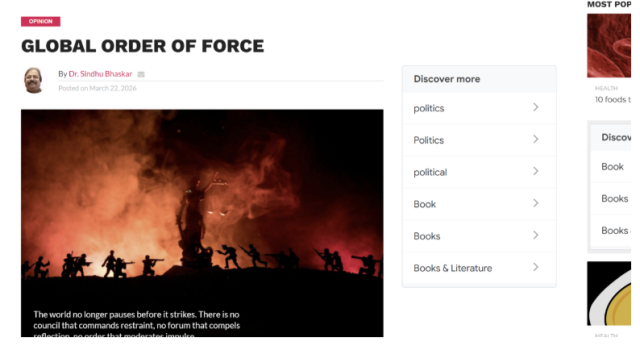 GLOBAL ORDER OF FORCE
Linkedin
March 23, 2026
The world no longer pauses before it strikes. There is no council that commands restraint, no forum that compels reflection, no order that moderates impulse. What once passed for global governance now resembles a hollow echo, institutions watching as power asserts itself without consultation, without consensus, without consequence.
See publication
Tags: Innovation, Leadership
 MAKER-CHECKER DILEMMA OF ENTERPRISE AI: ANTHROPIC’S RISE MAKES AI ITS OWN WATCHDOG
Linkedin
February 06, 2026
What happens when the thing doing the checking is the same thing being checked? This wasn't a philosophical riddle when it started in 2024. It was a concrete problem facing Anthropic, the AI safety company that had built Claude, one of the world's most sophisticated language models. And the answer they were developing would reshape how we think about artificial intelligence in enterprise settings.
See publication
Tags: AI, Leadership, Management
 Fiscal Maturity in an FTA-Driven, Multipolar World
Linkedin
February 01, 2026
The shift from a narrow fiscal-deficit anchor to a debt-to-GDP framework cannot be viewed in isolation from India’s expanding footprint in global trade. As India deepens its engagement through Free Trade Agreements (FTAs) with the EU, the UAE, and Australia, and through ongoing negotiations with the UK and others, it is no longer negotiating as a peripheral economy seeking access.
See publication
Tags: AI, Leadership
 INDIA’S MOMENT OF RECKONING: UNITY AS STRATEGY, REFORM AS SURVIVAL:
Linkedin
January 22, 2026
There are moments in the life of a nation when hesitation becomes more dangerous than error. India is approaching such a moment. The world around it is hardening strategically, economically, and ideologically, while fault lines within the country are being tested by external pressures and internal contradictions. This is not a crisis manufactured by panic. It is a reckoning shaped by history, geography, and power politics.
See publication
Tags: AI, Leadership
 POWER BEFORE LAW IN AN AGE OF CURRENCY WARS
Linkedin
January 06, 2026
he seizure of Venezuela’s President Nicolás Maduro by American forces and his transfer to New York was not an aberration, nor a reckless escalation. It was a declaration. In a world drifting toward fragmented power centers, alternative currencies, and parallel payment rails, the United States has chosen clarity over consensus. It has made clear that the global order will not be negotiated through institutions, ethics, or multilateral processes, but enforced through control of energy, finance, chokepoints, and credible force.
See publication
Tags: AI, Leadership
 RBI’s Proposal to Link BRICS Digital Currencies: A Strategic Inflection Point for India
Linkedin
January 01, 2026
BRICS India 2026 unfolds, wherein the Reserve Bank of India (RBI) has recently proposed an ambitious plan to link the central bank digital currencies (CBDCs) of the BRICS nations, Brazil, Russia, India, China, and South Africa, to make cross-border trade and tourism payments more seamless and less dependent on the U.S. dollar. While this might appear as a technical monetary innovation on the surface, its implications extend deep into how India manages its domestic economic integration, rural trade ecosystems, international trade architecture, and global strategic positioning amid a shifting balance of economic power.
See publication
Tags: AI, Leadership
 STIFLING GIG ECONOMIES, BIGGER UNICORNS: WHEN CONVENIENCE BECOMES A HUMAN COST
Linkedin
December 31, 2025
The gig economy sells a clean story: work when you want, earn on your own terms, be your own boss. The app’s interface feels frictionless, almost humane, with friendly icons, instant payouts, and flexible hours. But on the street, gig work often resembles a different kind of factory: time targets, incentive gates, algorithmic penalties, and a constant transfer of risk from corporate balance sheets to human bodies.
See publication
Tags: AI, Leadership
 NEW MILITARY DOCTRINE IN THE AGE OF DIGITAL CURRENCIES
Linkedin
December 15, 2025
As reported in discussions surrounding the so-called “Trump Military Doctrine,” this reorientation is not merely military—it is monetary, technological, and civilizational. The doctrine aligns tightly with two transformative financial instruments coming out of the U.S. power complex:
See publication
Tags: AI, Leadership
 PRIMEVAL DECENTRALIZATION AND THE AGENTIC DHARMA OF CONSCIOUS AI
Linkedin
October 31, 2025
The Mahabharata portrays Kurukshetra not only as a battlefield of warriors but as the field of cosmic consciousness, where moral algorithms, divine agency, and human intent converge. Every warrior represents a node in the moral network; every action is a data transaction recorded in the universal ledger of karma.
See publication
Tags: Agentic AI, AI
Foreign Currency Settlement System (FCSS)
Linkedin
October 12, 2025
Under the new framework, clearing and settlement in foreign currencies among International Banking Units (IBUs) in GIFT IFSC can be handled via FCSS + CCIL (Clearing Corporation of India) arrangements.
See publication
Tags: AI, Leadership
 ‘WHY’: A Philosophical Mystery
Linkedin
September 12, 2025
For centuries, humanity has asked, “What is the meaning of life?” Yet underlying this question is one even more essential: not what life is, nor who lives it, but why. Friedrich Nietzsche, in Twilight of the Idols (1889), remarked, “He who has a why to live can bear almost any how.” This statement captures the heart of the human condition: the drive for purpose.
See publication
Tags: Agentic AI, Leadership
 DAO, Bitcoin, and Dictatorship: Are Crypto economies fueling Authoritarianism?
Linkedin
August 31, 2025
The emergence of Decentralized Autonomous Organizations (DAOs) and Bitcoin was initially envisioned as a rebellion against centralized and authoritarian control over finance. Bitcoin, with its fixed supply and decentralized validation process, symbolized an escape hatch from state monetary monopolies. DAOs promised community-led governance that could resist capture.
See publication
Tags: Agentic AI, AI
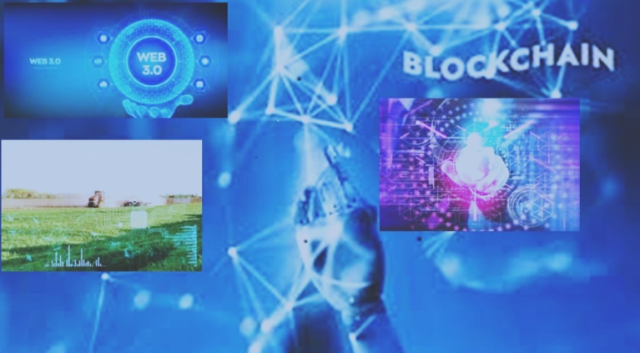 Bridging Rural Finance with Web3: DePIN, Tokenized RWA, Farmer Loans, Carbon Credits, and Semantic Banking
Linkedin
August 20, 2025
Urban industrial processes are increasingly adopting new technology, with a growing emphasis on automation and AI, which can sometimes render large labor forces redundant. It exhibits the brutal side of the industrialized economy. In light of these, it is the fittest of responses that the rural economy creates itself, strengthens itself, and emerges as an actual alternate to the urban industrial economy
See publication
Tags: AI, Digital Transformation
 DePIN & Tokenized RWA: Nation-Backed Collateral Pool towards Contributory Capitalism
Linkedin
August 17, 2025
Both the developed and the underdeveloped nations face the biggest problem of slow and asymmetric development. Urban India and the Global South are rapidly expanding—but growth is often under a cloud.
See publication
Tags: AI, Digital Transformation
 Decentralized Humanism (Dehu): Techno-Economic Warfare Diplomacy
Corporate Investment Times
April 15, 2025
Decentralized Humanism and Techno-Economic Warfare Diplomacy represent emergent global trends reshaping international relations, governance, and socio-economic strategies. These intertwined concepts reflect the shifting paradigms where decentralized governance structures and technology-driven economic strategy increasingly influence traditional geopolitical power balances.
See publication
Tags: Digital Disruption, Digital Transformation, International Relations
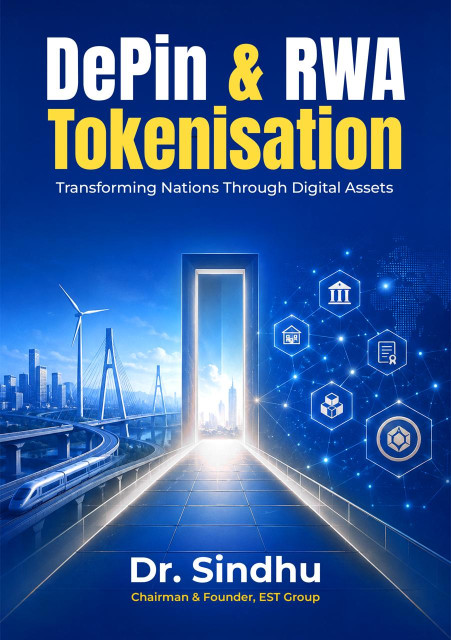 DePin and RWA Tokenisation: Transforming Nations through Digital Assets
Zebra Learn, India
September 30, 2026
What if a nation's physical wealth could join an inclusive digital economy? DePIN & RWA Tokenization: Transforming Nations Through Digital Assets explores how decentralized physical infrastructure networks and real-world asset tokenization can connect technology, finance, and society in a new architecture of participation.
The book connects digital consensus with ideas of collective conscience, solidarity, and social equilibrium, asking how infrastructure, agricultural assets, energy systems, warehouses, urban facilities, and community resources can become transparent, measurable, and economically productive digital assets.
Moving from theory to application, the book examines tokenized rural and urban infrastructure, farmer finance, carbon credits, embedded and semantic banking, community collateral pools and decentralized governance. At its center is the concept of the Value-Holder: a citizen who is not merely a consumer or borrower, but a contributor to, participant in, and beneficiary of productive economic assets.
The book develops the ideas of Contributory and Egalitarian Capitalism - models in which technology can broaden access to value creation while preserving human agency, community participation and social purpose. It offers policymakers, bankers, technologists, investors, academics and development professionals a framework for considering how tokenization could support more inclusive and resilient economies.
The book includes a Foreword by Prof. Dr. Ingrid Vasiliu-Feltes, adding a scholarly perspective to its exploration of technology, society, and economic transformation.
Most importantly, this publication has a purpose beyond its pages: royalties from the book will support homeless children. Every copy therefore participates not only in an intellectual conversation about the future of value, but also in a humanitarian commitment.
Amazon Reference: 9349299380
Directly from the Publishers: https://zebralearn.com/oranges/depin-rwa-tokenisation-6a551ce927f2fa5e05e1f5ac/
See publication
Tags: Blockchain, Digital Transformation, Transformation
Embedded Value Transfer: Neuralink Settlement system
The Digital Economist
November 04, 2025
See publication
Tags: FinTech
DePIN & Tokenized RWA: Building a Nation-Backed Collateral Pool for Egalitarian Rural Lending
LinkedIn
August 10, 2025
In rural economies across the world, where land is rich but liquidity is scarce, a new paradigm is emerging—one where national agricultural and rural assets are democratized, tokenized, and collectively leveraged for the benefit of all. The convergence of DePIN (Decentralized Physical Infrastructure Networks) and Tokenization of Real-World Agricultural Assets (RWA) can radically redefine access to credit, unlock hidden value in rural infrastructure, and lay the foundation for egalitarian capitalism rooted in the soil.
This isn’t just about digitization, it’s economic inclusion at scale. By using DePIN and Tokenized RWA in agriculture:
From idle infrastructure to yielding digital assets
From centralized ownership to community capitalism
This is Web3-enabled nation-building. This is embedded, inclusive finance.
This is the future of shared prosperity. This is not just rural lending, this is rural empowerment. This is India’s Web3-powered Green Revolution, where every village becomes a financial engine, and every asset a ticket to dignity.
See publication
Tags: Blockchain, Digital Transformation, FinTech
Tokenized Farmer Loans: A New Era of Agricultural Finance through EST AGRX
LinkedIn
July 19, 2025
EST AGRX is a next-gen agri-fintech platform pioneering tokenized crop credits, rural stock exchanges, and net-zero agri-solutions (EST Cnet0). EST AGRX has launched a tokenized lending scheme that converts farmer loans into digital assets. This innovative model secures lender capital, attracts high-net-worth individuals (HNIs), and offers insurance-backed protection through a strategic partnership with Talisman Insurance (USA). It marks a shift toward sustainable, decentralized, and risk-mitigated agricultural finance.
See publication
Tags: Digital Transformation, Finance, InsurTech
The U.S. Dollar Reimagined: U.S. Dollar 2.0 and the Geo-Monetary Reset (The Genius Act, Anti-CBDC Act, and Digital Asset Market Clarity Act)
LinkedIn
July 18, 2025
In a bold maneuver to reshape global financial governance and solidify its monetary dominance, the United States has unleashed a legislative trifecta that could define the next chapter of economic diplomacy and financial architecture. Together, these acts not only erect a clear regulatory framework for stablecoins and digital assets but also pronounce a decisive verdict against state-controlled Central Bank Digital Currencies (CBDCs). The resulting policy cocktail aims to expand U.S. dollar hegemony, tokenize liquidity, and reshape global monetary alignment by making private-sector-led dollar-based tokens the dominant instrument of international settlement.
The Genius Act, Anti-CBDC Act, and the Digital Asset Market Clarity Act represent the most strategic financial maneuver by the U.S. since the establishment of the petrodollar agreement. By rejecting state surveillance (CBDC), embracing tokenized private sector innovation, and creating regulatory guardrails, the U.S. lays the groundwork for U.S. Dollar 2.0”—a borderless, tokenized, and programmable version of the American dollar designed to lead a new world of decentralized finance.
See publication
Tags: Cryptocurrency, GovTech, International Relations
TANGIBLE AI vs INTANGIBLE AI: Mapping their role in the Agentic AI Model
Linkedin
May 10, 2025
Artificial Intelligence (AI) has evolved into multifaceted physical and virtual forms. As we develop smarter systems, understanding how these systems function as agents—entities capable of perceiving, reasoning, acting, and learning—becomes critical. This article explores how Tangible Agentic AI and Intangible Agentic AI correspond to the Agentic Model, a foundational framework in autonomous system design.
The distinction between Tangible AI and Intangible AI can be deeply understood when viewed through the lens of the Agentic AI model, which focuses on AI systems as agents capable of perceiving, reasoning, acting, and learning. Let’s explore this in detail, integrating relevant examples, quotations, and illustrations of how these concepts align.
See publication
Tags: Agentic AI, Emerging Technology, Generative AI
 Chairman and Founder
Est-Grp
November 01, 2019
He started his career journey as a global leader and transformed the financial ecosystem through digital evolution, fintech revolution, and financial inclusion. And, now he is leading an initiative to impact a majority of the world’s population in the rural and farming sector, with an initial beginning in India where two-thirds of India’s population needs intervention.
See publication
Tags: Agentic AI, AI





 Board Member
 PROGRAMMABLE VALUE TRANSFER AND ARCHITECTURAL GLOBAL CONTROL OF MONEY