Unlock access to Thinkers360 AI to fast-track your search for analysts and influencers.
This feature is available for Enterprise Lite and Enterprise Members Only.
Upgrade to Enterprise Lite or Enterprise to see complete company ranking data for your organization and competitors. Plus, elevate your profile with always-on content amplification engineered to boost your SEO, AIO, and generative search footprint.
You have been temporarily restricted. Please be more thoughtful when adding content for your portfolio. Your portfolio and digital media kit and should be reflective of the professional image you wish to convey. Accounts may be temporarily restricted if we receive reports of spamming or if the system detects excessive entries.
Membership
Publish your original ideas on the Thinkers360 platform!
This feature is available for Pro and Pro-Plus Members Only.
Speaker Bureau functionality whereby individuals can be featured speakers within our Speaker Bureau service and enterprises can find and work with speakers.
This feature is available for Pro, Pro-Plus, Premium and Enterprise Members Only.
Highlight your featured products and services within our company directory for enhanced visibility to active B2B buyers worldwide as well as improved
SEO, AIO and generative search footprint.
This feature is available for Pro, Pro Plus, Premium and Enterprise Members Only.
Publish on the Web’s #1 Thought Leadership Blog.Join the elite. Ranked the top thought leadership blog by Feedspot (2021–2025), Thinkers360 offers you more than just a platform - it offers authority. Share your insights with our community and tap into a combined network of over 100M followers through our peer-to-peer marketplace.
You’ve reached your daily limit for entering quotes. Please only add personally-authored content which is reflective of your digital media kit and thought leadership portfolio.
Thinkers360 Content Library
For full access to the Thinkers360 content library, please join ourContent Planor become a contributor by posting your own personally-authored content into the system viaAdd PublicationorImport Publication.
Dashboard
Unlock your personalized dashboard including metrics for your member blogs and press releases as well as all the features and benefits of our member plans!
Jack E. Gold is Founder and Principal Analyst at J.Gold Associates, LLC., covering the many aspects of enterprise and consumer computing and emerging technologies. Mr. Gold has been a technology analyst for more than 35 years, and has more than 50 years of experience in the computer and electronics industries. He is an internationally recognized authority on Mobile Technology and Wireless Communications, Cloud Computing, Semiconductors, Security, Artificial Intelligence (AI), Personal Computing, Enterprise Operations and ROI/TCO research. He conducts market research and analysis, and advises numerous clients on the many aspects of technology deployment, including product positioning and competitive analysis, strategic business analysis, strategic planning initiatives, architecture, product evaluation/selection and enterprise application strategies. His expert analysis of market trends and events has been extensively quoted in many of the world’s leading business and technical media, including USA Today, Wall Street Journal, AFP, Reuters, Computerworld, eWeek, VentureBeat, Fox Business, Fortune, and many others. His frequent research reports, newsletters and blog postings have also been featured in many of the same media outlets. Mr. Gold has a BSEE from Rochester Institute of Technology and an MBA from Clark University.
Available For: Advising, Authoring, Consulting, Influencing, Speaking Travels From: Boston, MA
Dell Wants to Make Enterprise Data More Resilient
Linkedin
November 18, 2022
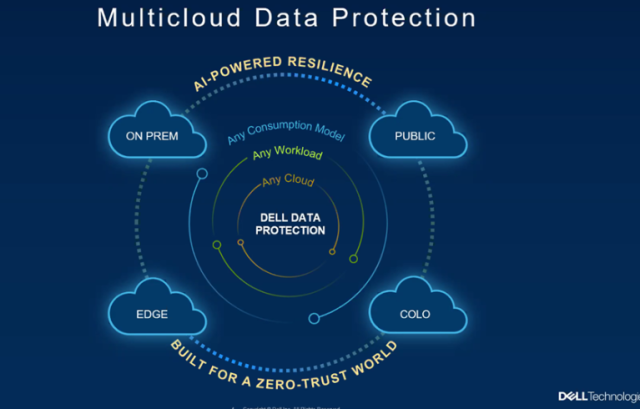
Most organizations have a very serious problem when it comes to data resiliency and preventing business disruptions due to data loss. In a recent Dell Technologies GDPI report, the average cost of a data loss was over $1M, which our research shows to be a very low estimate given the potential to reputational damage and business operations disruption such an event could cause an enterprise.
Tags: Agentic AI, AI Infrastructure, Business Strategy
Nvidia’s Impressive H100 MLPerf Benchmark
Linkedin
November 11, 2022
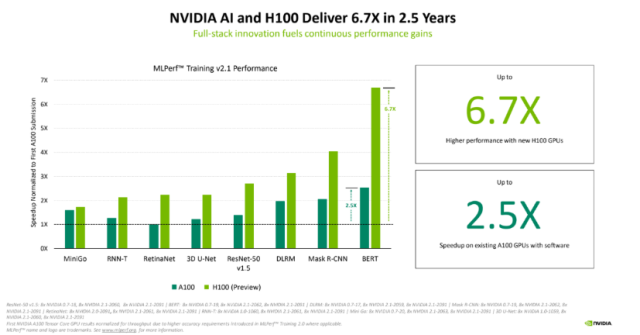
In the complex world of AI/ML processing, it can be hard to compare products from various vendors due to the wide range of models and workloads in use. MLPerf is a consortium of major industry players and research organizations that provides agreed-upon benchmark tests to try and standardize test results across various vendor offerings to give users a chance to evaluate competing performance claims.
Tags: Agentic AI, AI Infrastructure, Business Strategy
Cloudera CDP One: Creating Data Lakehouses as a Service
Linkedin
August 25, 2022
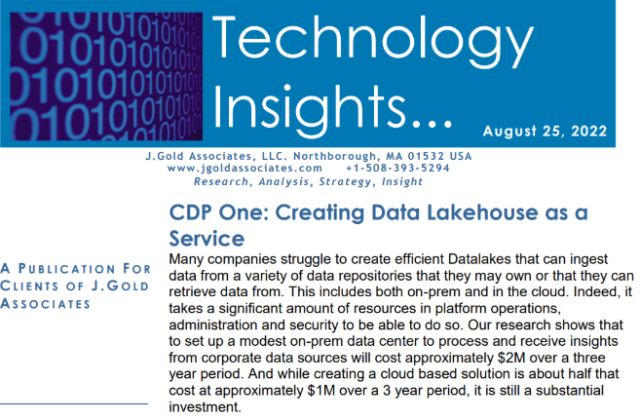
Many companies struggle to create efficient hashtag#Datalakes that can ingest data from a variety of data repositories that they may own or that they can retrieve data from. This includes both hashtag#onpremise and in the hashtag#cloud. Indeed, it takes a significant amount of resources in platform operations, administration and security to be able to do so. Our research shows that to set up a modest on-prem hashtag#datacenter to process and receive insights from corporate data sources will cost approximately $2M over a three year period. And while creating a cloud based solution is about half that cost at approximately $1M over a 3 year period, it is still a substantial investment.
Intel Redefines the Numbers
Linkedin
July 27, 2021
The following is from our J.Gold Associates, LLC. July 26, 2021 Technology Currents research note that analyzes the recent Intel announcements. To obtain a copy or to sign up for our mailing list, send an email to: info (at) jgoldassociates (dot) com
Tags: Business Strategy, Engineering, Manufacturing
Excerpts of our July, 2020 Technology Brief Newsletter from J.Gold Associates:
Linkedin
August 07, 2020
Android Gets to Work
“…We’re seeing a large uptick in use of Android mobile devices in many different business cases… Samsung and Panasonic have shown their ability to produce working-class devices that are both attractive and offer a better lifecycle cost for many organization. Enterprises must evaluate the overall lifecycle cost (we have a model to do so) before making a choice and should do so in the early stages of adoption, or face avoidable escalating lifecycle costs.....”
Highlights of our recent research reports and publications
Linkedin
November 07, 2019
November 7, 2019
Below you’ll find brief excerpts from J.Gold Associates recently published reports and articles.
Please let us know if you’d like copies of any (or all) of the reports.
As always, we’re happy to discuss these topics with you, or other topics that are specific to your needs. Simply contact us at info@jgoldassociates.com.
Highlights of recent research articles and newsletters:
The Trouble with Enterprise Extended Reality (XR)
Linkedin
September 17, 2019
There are significant potential benefits to using Augmented Reality (AR) and Virtual Reality (VR) in corporate settings (together known as Extended Reality or XR, and sometimes referred to as mixed reality). Compelling benefits can be had in such solutions as training, services and repairs, inspection services, medical diagnosis, knowledge transfer, and many others.
New Research Available from J.Gold Associates
Linkedin
November 02, 2018
We periodically publish editions of J.Gold Associates’ Technology Brief newsletters and Technology Flash reports. These reports provide analysis of key market trends and technology issues which we research and that we believe are important to our clients.
Tags: Business Strategy, Cloud, Mergers and Acquisitions
New J.Gold Associates Research Now Available:
Linkedin
December 04, 2017
New J.Gold Associates Research Now Available:
We periodically publish editions of J.Gold Associates’ Technology Brief newsletters and Technology Flash reports. These reports briefly highlight and provide analysis of key market trends and technology issues which we research and that we believe are important to our clients.
Enterprise AI Use Requires Thinking Differently About Wireless Broadband Connectivity
Linkedin
September 16, 2026
Generally speaking, most cellular wireless networks are currently judged on download bandwidth and how well they handle typical social media interactions like video and multimedia chat. These are the most used consumer functions. For enterprise users however, it’s more about being able to access corporate apps and personal productivity solutions that are often based in the cloud. For these users, availability and reliability of connection is the most important criteria, with less focus on raw bandwidth. And indeed, with newer technology available with 5G enhanced networks resulting from the deployment of standalone core infrastructure, enhanced business capabilities like connectivity prioritization, secured access and dedicated resources are available. But as we increasingly move towards an AI-enabled application environment, the use of AI will impose a number of new requirements on staying connected associated with an increasingly “work from anywhere on any device” world. And perhaps no area of connectivity will be more affected by market needs than wireless broadband. We expect the effects on business use over the next 2-3 years to be significant.
Google Gemini AI Goes Vertical, Expanding an Industry Trend
Linkedin
September 02, 2026
The market for enterprise AI is shifting away from large general purpose models (LLMs) used primarily for chat interactions towards more specialized and vertically optimized and trained workflow solutions. The major cloud providers of AI systems have recently begun targeting what they perceive as the most lucrative and attractive vertical industries for deployment, and therefore increased revenue generation. Amazon Web Services (AWS) has released optimized versions for Healthcare and Manufacturing, among others, while Microsoft has been concentrating on Retail. Google is now releasing optimized Google Gemini Enterprise`` versions that are targeted at the Financial Services and Legal verticals, both of which are heavy users of AI services and have large revenue potential. Google’s efforts in creating tuned AI for specialized vertical industries offers major benefits for its customers.
Microsoft Targets Escalating Agentic AI Costs
Linkedin
August 31, 2026
Microsoft is feeling the heat. And it’s not just Microsoft. Virtually all of the AI providers are moving towards making their products more affordable. Enterprises are becoming acutely aware of the escalating costs of using AI. As they increasingly move towards an Agentic AI environment, where we expect enterprises to deploy dozens to hundreds of AI agents in the next 12-18 months, cost of use is becoming a major issue. Indeed, some early users find that the cost of Agentic AI can exceed the cost of employee salaries within a few months of use.
Intel and Google Cloud Expand their Collaboration to Accelerate Intel’s AI-Enabled Transformation, and Perhaps More....
Linkedin
August 03, 2026
The announcement stated that this collaboration leverages Gemini Enterprise and Google Cloud to expand Intel’s AI workforce capabilities via scalable agentic workflows across core business functions. But that may only be the currently visible component of what may be a long term deeper partnership.
AMD Advances its AI Market Advantage
Linkedin
July 28, 2026
AI should not be seen as a one problem market focused on the next big frontier model enablement. We expect the market for AI to diversify greatly in the next 2-3 years, as workloads shift dramatically from training solutions to inference-based and agent solutions, which will encompass at least 65%-75% of the workloads. This includes a shift to open and small language models for purpose-built solutions at the edge and in physical AI. That means suppliers of AI-centric processing equipment and enabling technology will need to be broadly focused beyond the currently dominant share of investments in high performance training systems and hyperscaler cloud based instances. In the future, AI will be a much more hybrid environment.
HPE Discover – Positioned to Power the Agentic Enterprise
Linkedin
June 17, 2026
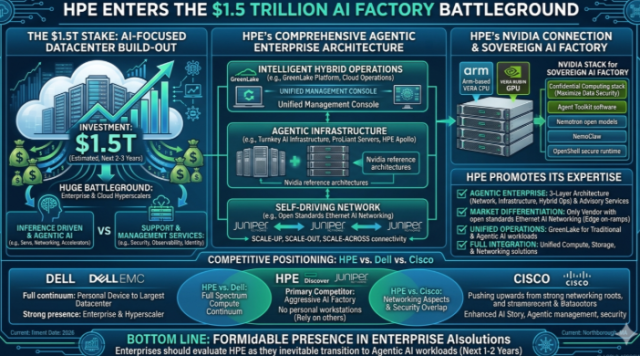
AI is a leading component of most computing system vendors revenues going forward, as the amount of money being dedicated to the build out of AI focused datacenters will remain massive for at least the next 2-3 years, with as much as $1.5T estimated to be invested. This represents a huge battleground for the major providers of computing infrastructure to attack, both in the enterprise and in the cloud hyperscaler markets especially as we transform into inference driven and agentic AI dominance. The compute stack is a major component of this potential market opportunity (e.g., computing, networking, AI accelerated processors), but support and management services represent an increasing part of the equation (e.g., management, identity, security, observability).
Can mimik Change the Agentic AI Equation?
Linkedin
June 15, 2026
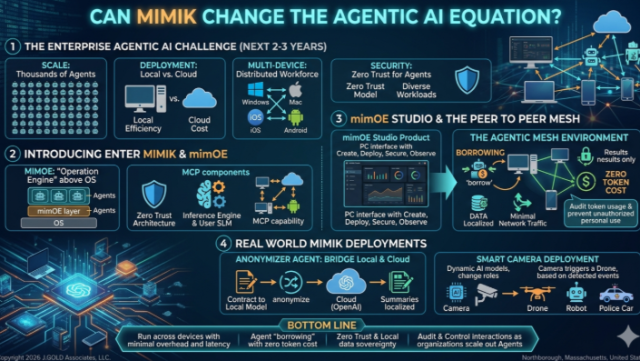
We expect that within the next 2-3 years, the majority of enterprises will have hundreds to thousands of Agentic AI instances running in their organizations. That creates a significant challenge for organizations that require an ability to build, secure and manage those agents, while also deploying them in the most cost effective manner. For many organizations, that means running the agentic workloads on local machines rather than in a cloud-first environment. Further, it requires that enterprises provide a way to run those agents across multiple devices (e.g., Windows, Mac, iOS, Android), just as they do currently with their traditional workforce applications. This requires a peer to peer mesh approach to agentic operations that enables distributed resources to fully interact with minimal overhead. Finally, identifying and securing such diverse workloads requires a zero-trust model for agents, just as organizations do for their personnel. This last point may be one of the hardest challenges to overcome.
Cisco Live: Becoming the Core AI Stack for Enterprises and Hyperscalers
Linkedin
June 02, 2026
Among the announcements at Cisco Live, Cisco expanded on its ambitions to become the central stack powering the cloud and enterprise AI world. Cisco announced a comprehensive AI infrastructure strategy centered on full-stack integration across compute, networking, security, and operations, targeting enterprise, sovereign cloud, and neo-cloud deployments with validated designs that reduce deployment time, in some cases from 3 months to hours. Moreover, it is implementing a series of pre-configured AI stack implementations that organizations can quickly implement by offering blueprints and partner enabled solutions for a variety of industries. This is both an extension of its ambitions to become a premiere security infrastructure player in AI, but also an acknowledgement that it has a number of core tools and capabilities it’s been building over the years that directly enable its customer’s reliance on its connectivity and management expertise.
Tags: Agentic AI, AI Infrastructure, Cybersecurity
AWS Targets Industrial-scale Manufacturing and Supply Chain AI
Linkedin
May 27, 2026
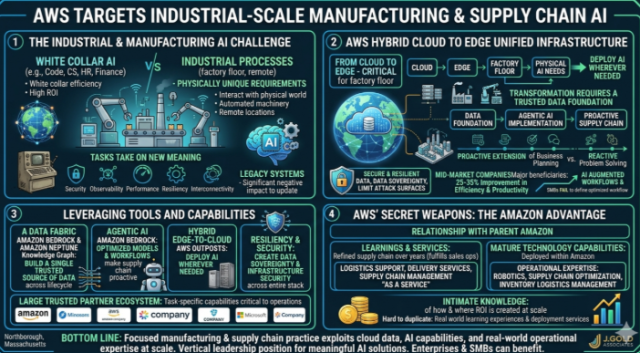
While many enterprises are deploying AI and agentic AI solutions, the majority of systems to date have focused on white collar efficiency efforts. Enabling functions such as code development, customer service, HR, finance, etc. are all worthy endeavors and can result in significant ROI if done correctly. But one market area where AI has struggled to have more of a major impact has been in manufacturing and industrial processes. These solutions often consist of company unique requirements that include interacting with the physical world and creating processes that are frequently run with automated machinery and in remote locations. Tasks like security, observability, performance, resiliency and interconnectivity all take on new meaning in these physically defined environments. Further, any AI models must be trained to work within the physical world, and that is not the case for most current frontier models that are optimized for knowledge worker assistance. Finally, most industrial systems have been in place for a relatively long period of time and as such, may create significant negative impact when trying to update operations with AI solutions.
Google I/O puts Google’s AI Strategy into Focus
Linkedin
May 22, 2026
At the recent Google I/O conference, Google provided major insights into how it is rethinking its AI offerings for an increasingly diverse marketplace powered not just by its traditional chatbots and search offerings, but by transitioning to an Agentic AI and multimodal future. Indeed, features of its Gemini core AI platform have been enhanced to include new models and agents that work seamlessly in its browsers, but also interface with the growing installed base of Google Workspace users and with a widening array of data types like video, voice, and physical world models. These are major and necessary upgrades that put Google at the forefront of new features in an increasingly competitive market as it pushes back on AI based productivity enhancements from Microsoft, OpenAI, Anthropic, etc. The overall theme of the conference focused heavily on Google’s efforts in autonomous agents, multimodal upgrades, new creative tools, as well as new hardware to extend AI to personal appliances (e.g., Android XR glasses).
Tags: Agentic AI, Business Strategy, Generative AI
Dell Advances a Hybrid AI Vision
Linkedin
May 19, 2026
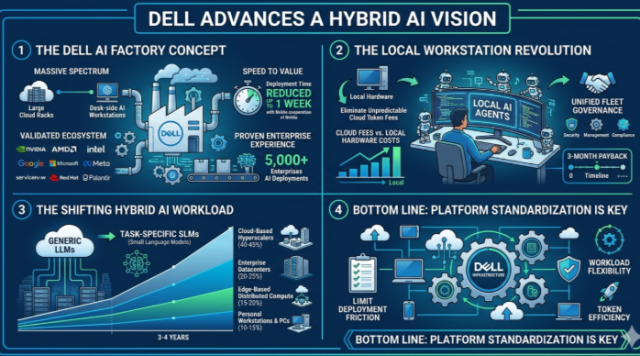
At the recent Dell Technologies World conference, Dell continued its push to be the most complete AI supplier of computing infrastructure and deployment capabilities, extending its AI Factory solution portfolio to new products and services. We believe that Dell is the only vendor in the unique position to be able to offer AI compute from the largest cloud rack-scale compute down to individual desk side and personal AI computing stations, as well as capabilities in storage, security, networking and professional services. And importantly, it provides an easy on-ramp for enterprises to deploy AI solutions more quickly and with reduced efforts
Qualcomm’s Provides a Vision for 6G, but is it Realistic?
Linkedin
May 11, 2026
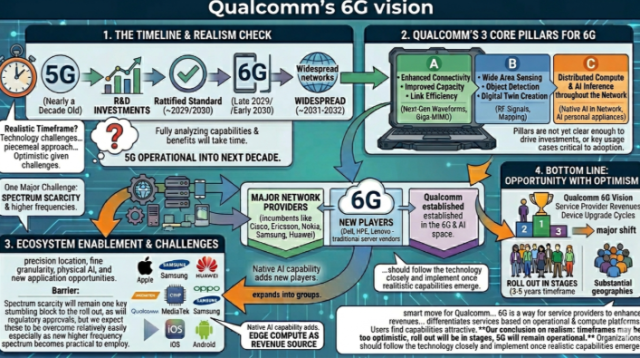
Many carriers have just recently completed their full 5G enablement, rather than maintaining the often encountered piecemeal approach of “5G on top of 4G core”. Now that 5G is nearly a decade old, the industry has started looking at 6G as the next phase. The question is, will 6G provide enough benefits beyond 5G to make the huge investments required worthwhile? And will the operators be able to recover enough revenues to warrant spending the massive amounts of investment necessary for spectrum and infrastructure? Of course, 6G is early in the definition process and still several years away. We don’t expect a ratified standard before 2029/2030, and once ratified, devices are unlikely to emerge before late 2029 or early 2030, with actual widespread 6G networks not being common for 1-2 years after that. We actually think this may be an optimistic timeframe, given the many technology challenges in making 6G viable. So fully analyzing the capabilities and benefits of 6G will take some time.
Why Custom TPUs Make Sense for Google and Why Enterprises Should Care
Linkedin
May 06, 2026
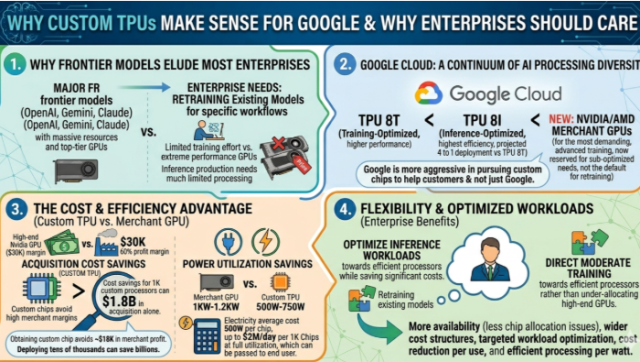
The AI race has taken over the cloud world, with massive investments and enterprises pursuing new applications areas. Yet for all the hype, many of the best uses for AI and the benefits they could create remain elusive. One reason is that building large models for personalized enterprise use takes an inordinate amount of resources. Indeed, it’s why major frontier models like OpenAI ChatGPT , Google Gemini , Anthropic Claude , etc., have all spent incredible amounts of time and resources to build their models. And that’s often required the highest performance GPUs that could be made available from NVIDIA or AMD .
Amazon Quick Desktop Redefines AWS Personal AI
Linkedin
May 01, 2026
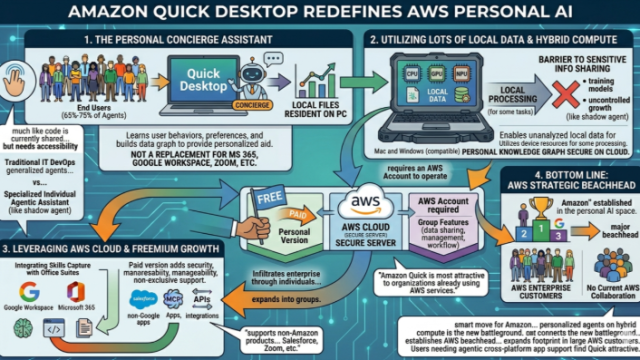
We expect personal AI, driven by agents, to grow tremendously over the next 1-2 years, and especially in organizations that require complex workflows. But it’s no longer just about big cloud infrastructure, fast Internet connections and lots of cloud based apps when it comes to AI agents. Increasingly it’s a multi-cloud, hybrid compute world, particularly with the incorporation of AI friendly hardware in personal devices. Increasingly, AI is getting personal and customizable to the unique needs of individuals. Amazon recently released Quick Desktop to make more of its AI functionality available to users directly on their Windows PC or Mac computer, and to compete with similar offerings being introduced by AI suppliers, especially from Microsoft, but also from Google , Anthropic , OpenAI , and other AI providers.
Google Limits the Enterprise Risk of Deploying Agentic AI
Linkedin
April 29, 2026
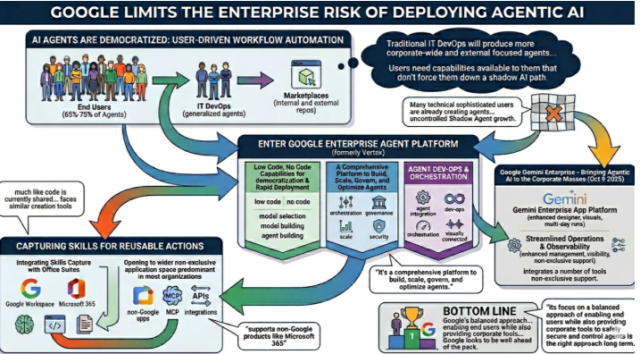
Many organizations are exploring the use of Agentic AI to increase productivity and decrease the overhead of keeping corporate systems working smoothly. And while agents are still relatively new to most organizations, many technically sophisticated users are already creating agents through products like the open sourced OpenClaw and other AI tools and methods, even though IT may not yet enable agent creation. The result is that many organizations risk a potential for uncontrolled “Shadow Agent” growth, with its significant privacy, security and operations impacts. Google Cloud is looking to limit this risk for enterprises.
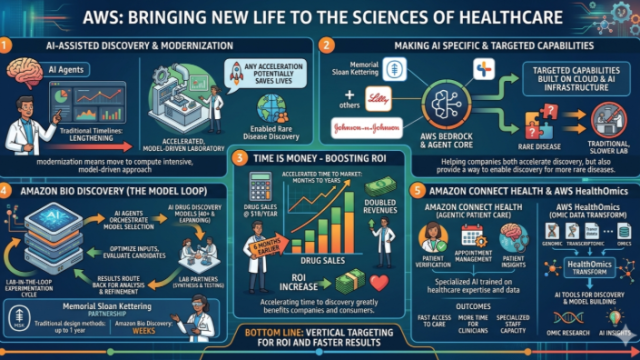
AWS Brings New Life to the Sciences of Healthcare
Linkedin
April 20, 2026
At a recent conference in NYC, Amazon Web Services (AWS) announced a number of new products that are aimed at bringing the life sciences and healthcare into the modern era of AI assisted discovery. Indeed, modernization of the life sciences industry means moving increasingly towards a compute intensive, model driven approach that includes AI and Agentic AI services to accelerate auto discovery and front end experimental processes. With current timelines for new discoveries lengthening due to increasingly complex research and testing regimens, any acceleration of the process is not only welcome but potentially saves lives. It also enables a much broader discovery process for diseases that previously were not widespread enough in the population to focus on. The implications for AI accelerated discovery and assistance with testing and approvals for new patient care regimens are massive.
Making AI More Specific
While many healthcare and life sciences companies already use AWS capabilities, the AWS Healthcare and Life Sciences group is releasing some targeted capabilities built on their cloud and AI infrastructure like Bedrock and Agent Core. By doing so, they are helping companies like Memorial Sloan Kettering, Lilly, Johnson and Johnson and many others both accelerate discovery, but also provide a way to enable discovery for more rare diseases that affect smaller groups and may not be economically feasible to explore with older physical lab based methodologies.
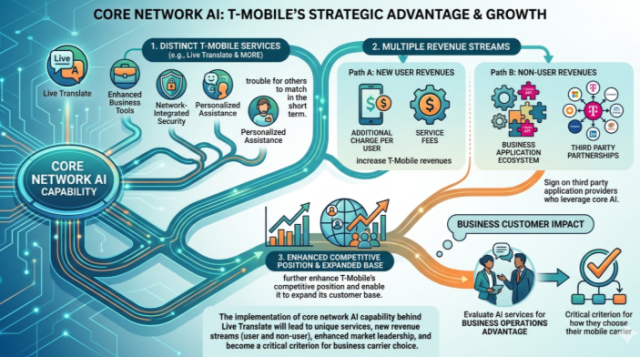
T-Mobile is AI to the Core
Linkedin
April 13, 2026
Mobile networks are no longer just about who has the fastest or most reliable connectivity. Indeed, most have also implemented value added services that customers are growing not only accustomed to, but many also consider no longer optional. The inclusion of such services has made carrier network infrastructure not only about radios and billing, but much more about compute cycles and core network embedded applications. T-Mobile is a leader in making its stand alone core network not only a better experience for connectivity, but increasingly a platform for value added services that set it apart from competitors.
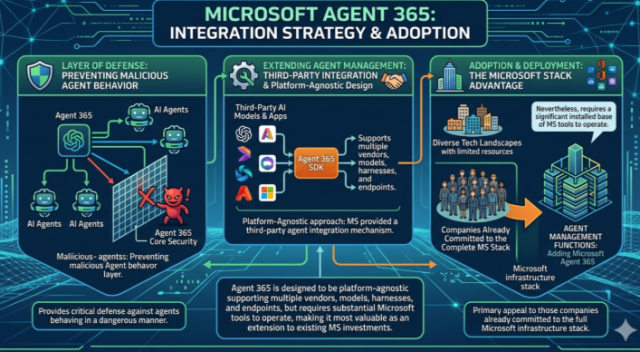
Microsoft’s Agent 365 Wants to be the Enterprise Agent Control Plane
Linkedin
April 10, 2026
AI Agents present a very significant challenge to most organizations. While they may be seen as helpful productivity boosters, they can also do very significant damage to data and company assets if not managed and secured effectively. Agents can often access highly sensitive data, can spawn their own agents to interact with which may not be carefully controlled or properly executed, and can even act as dangerous implementers of material destruction when interacting with physical systems. Further, with many employees now creating “Shadow Agents” through the use of open source tools like OpenClaw, it’s imperative that organizations deploy effective management tools to keep any agents operating safely and within company guidelines. What’s needed is a control plane for Agents.
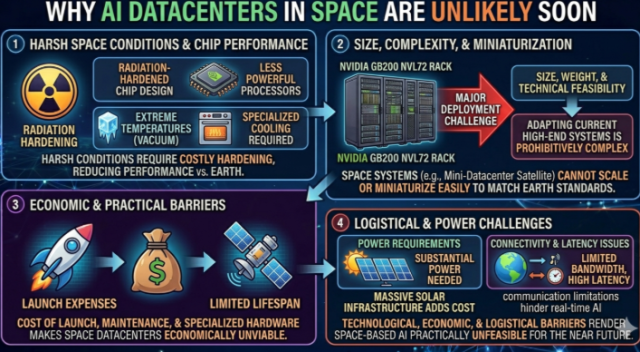
Why we likely won't see AI Datacenters in Space anytime soon
Linkedin
March 30, 2026
Our research report on why its unlikely we will see massive AI datacenters in space, as some have predicted. Below is a summary, but if you'd like a copy of the complete report, email us at info (at) jgoldassociates (dot) com, or DM me...
Summarizing “Why we likely won't see AI Datacenters in Space anytime soon”
Tags: AI Infrastructure, Data Center, Emerging Technology
Cisco: Agentic AI’s Security Center of Gravity?
Linkedin
March 30, 2026
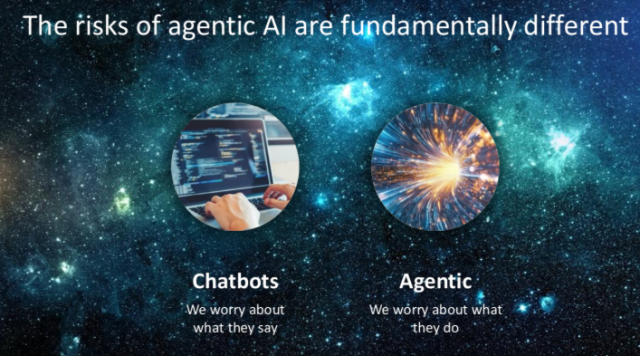
In the next 1-2 years, we expect AI Agents to become commonplace in most enterprises. As we move from the current primarily Chabot AI usage model into Agentic AI solutions that have operational capabilities, the risk to enterprise security and operations is significant. Indeed, the amount of potential damage agents can do grows exponentially compared to the use of chatbots. No longer just providing data discovery, Agentic AI can alter data and implement unique applications for specific purposes. Agentic AI presents a solution that, if badly designed, compromised, and/or modified beyond its stated purpose, can have ripple effects beyond the specific use it was designed for. Further, agents often engage with other agents or even spawn their own agents in pursuit of their tasks.
HP Fills a Major Hole in PC Security
Linkedin
March 26, 2026
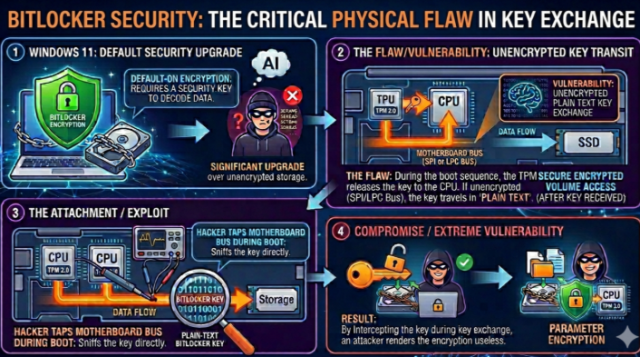
Most PC users, and especially higher level professionals, have significant amounts of sensitive data stored on their PCs. These PC users, particularly when employing modern OSes like Microsoft’s #Windows11, assume their on-device data is secure and prevented from any exposure. Indeed, Windows 11 uses #BitLocker turned on by default to encrypt data stored on the hard drive and requires a security key to access and decode this data. But while this is a major upgrade of security compared to old style unencrypted storage on the device which would allow anyone with access to the device to view and/or transfer the data, there remains a very significant flaw in how BitLocker security is implemented.
Ransomware and SMB – It's Not Just a Big Company Problem!
Linkedin
March 20, 2026
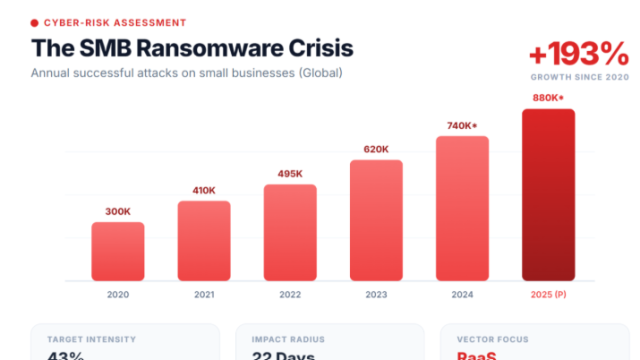
Typically when we hear about ransomware, it’s some large organization that has paid millions of dollars to get their data back so they can continue their business operations, or paid a ransom so their private data won’t be made public. This makes it seem like it’s only a problem for large enterprises that can pay, or have the means to fight back with large investment in IT remediation. But in reality, it’s not just a big company problem anymore. There is a fast growing ransomware “market” for bad actors to attack small to medium business (SMB). And the potential effects for SMB are far more dramatic and indeed often devastating. SMBs face an existential threat to staying in business if attacked by ransomware, and the chances of being attacked are increasing.
Google is now the Cloud Security Wiz
Linkedin
March 16, 2026
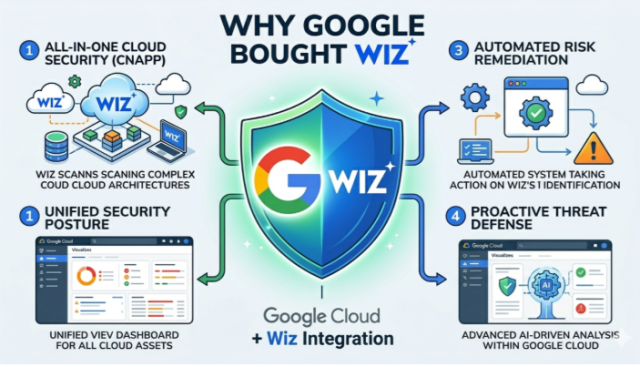
Google Cloud continues to make competitive strides in its efforts to become the premiere cloud platform for enterprise users. Its growth rate continues to surpass the number two platform, Microsoft Azure which is heavily reliant on a few large AI customers, and Google Cloud’s position has been enhanced by the emerging trend of multi-cloud environments. A growing consideration by enterprises when selecting any cloud platform has become Security, particularly as we move to an AI computing model.
Tags: Cloud, Cybersecurity, Mergers and Acquisitions
Nvidia Wants 6G Infrastructure Built on Open AI Structures. But do they Really?
Linkedin
March 02, 2026
We are starting to see the ramp-up of efforts to define what next generation 6G might become. It's still fairly early and there is much yet to be defined, but we are seeing glimpses of what’s likely to be included. Like most technology these days, AI is starting to take a central role. At MWC Barcelona, Nvidia is promoting its “open” vision that the next generation 6G wireless technology be built with AI as a fundamental component of networks and services. We agree that this will most definitely be a crucial component of 6G. We’re already seeing AI be included in advanced 5G networks to improve operations and service reliability and even offering new embedded services (e.g., T-Mobile Live Translate), so next generation networks will have even more focus on AI’s benefits.
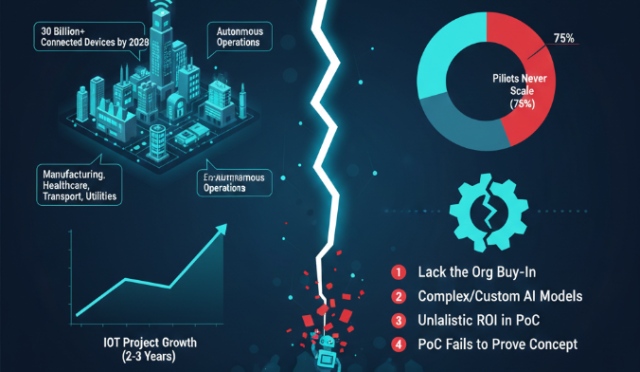
Why the Majority of AI-Powered IoT Projects Fail
Linkedin
February 16, 2026
The convergence of Artificial Intelligence and the Internet of Things (AIoT) promises transformative efficiency and predictive capabilities. We expect to see a major uptick in IoT projects in the next 2-3 years as AI-driven operational support and analysis takes hold. Indeed, we expect there to be 30 billion or more connected IoT devices installed by 2028/2029, as instrumentations and autonomous objects proliferate. With enterprises in manufacturing, healthcare, transportation, utilities and more increasingly focused on operational improvements, incrementing a wide range of operational components with the promise of AI being able to interpret the data created and then operate those devices in an autonomous fashion for corporate benefit is a major opportunity.
Join Thinkers360 for free! Are you a Reader/Writer, Thought Leader/Influencer (looking to increase your earnings), or an Enterprise User (looking to work with experts)?



 Dell Wants to Make Enterprise Data More Resilient
 Nvidia’s Impressive H100 MLPerf Benchmark
 Cloudera CDP One: Creating Data Lakehouses as a Service
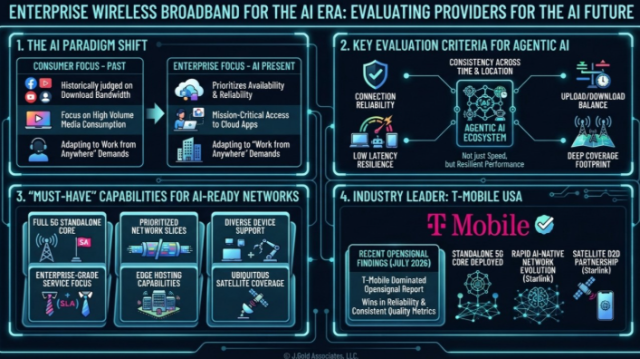 Enterprise AI Use Requires Thinking Differently About Wireless Broadband Connectivity
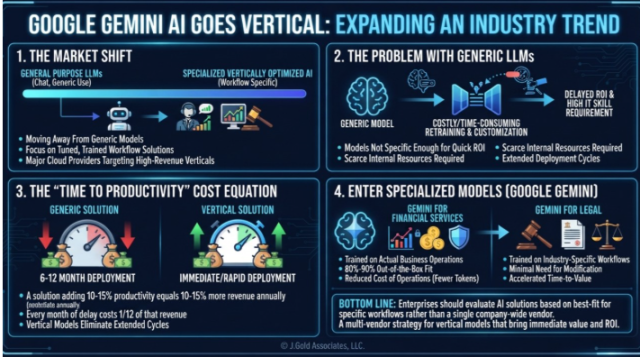 Google Gemini AI Goes Vertical, Expanding an Industry Trend
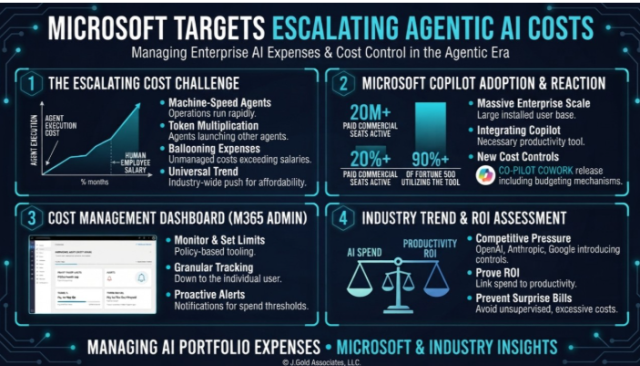 Microsoft Targets Escalating Agentic AI Costs
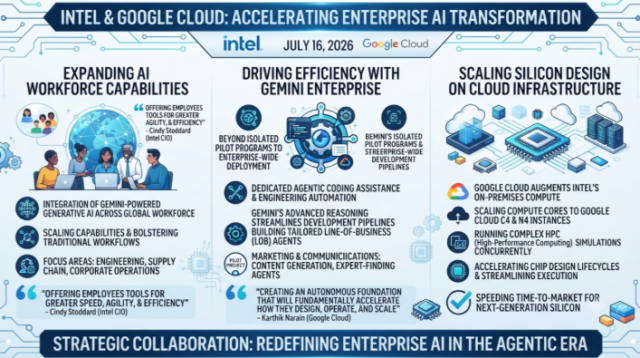 Intel and Google Cloud Expand their Collaboration to Accelerate Intel’s AI-Enabled Transformation, and Perhaps More....
 AMD Advances its AI Market Advantage
 HPE Discover – Positioned to Power the Agentic Enterprise
 Cisco Live: Becoming the Core AI Stack for Enterprises and Hyperscalers
 AWS Targets Industrial-scale Manufacturing and Supply Chain AI
 Google I/O puts Google’s AI Strategy into Focus
 Dell Advances a Hybrid AI Vision
 Qualcomm’s Provides a Vision for 6G, but is it Realistic?
 Why Custom TPUs Make Sense for Google and Why Enterprises Should Care
 Amazon Quick Desktop Redefines AWS Personal AI
 Google Limits the Enterprise Risk of Deploying Agentic AI
 AWS Brings New Life to the Sciences of Healthcare
 T-Mobile is AI to the Core
 Microsoft’s Agent 365 Wants to be the Enterprise Agent Control Plane
 Why we likely won't see AI Datacenters in Space anytime soon
 Cisco: Agentic AI’s Security Center of Gravity?
 HP Fills a Major Hole in PC Security
 Ransomware and SMB – It's Not Just a Big Company Problem!
 Google is now the Cloud Security Wiz
 Nvidia Wants 6G Infrastructure Built on Open AI Structures. But do they Really?
 Why the Majority of AI-Powered IoT Projects Fail



 Technology Insights